
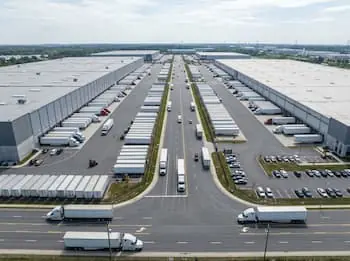
There are many buildings valued by the logistics industry. One building is a mainstay not just for the logistics industry but for businesses of almost every kind. The other one is a newer type of building that has taken the logistics industry by storm, especially in the wake of eCommerce and next-day (and same-day) parcel shipping.
These buildings are warehouses and distribution centers, respectively.
Many people get confused by the distinction between warehouses and distribution centers, believing they are the same thing. However, that is further from the truth. Warehouses and distribution centers are two very different buildings; while they share a similar function of storing goods until they are ready to be shipped, there are important differences between them.
Deciding between warehouses vs distribution centers can significantly impact how your business manages final-mile shipping. To understand which facility is right for your business, however, first we need to examine their differences.
Features of a Warehouse
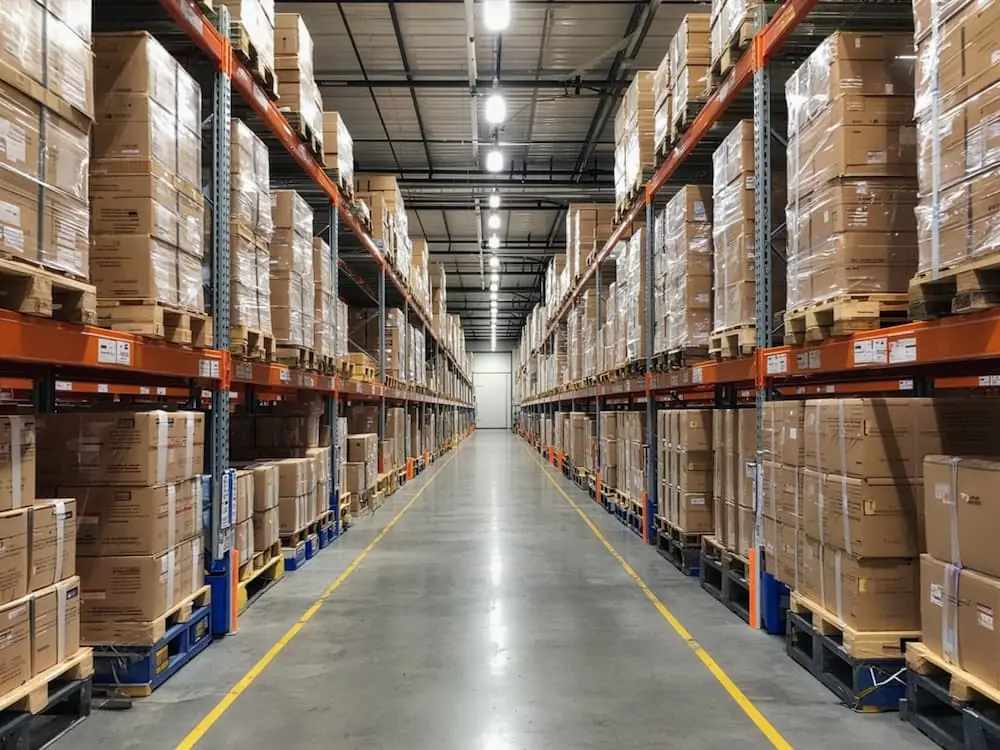
Warehouses are long-term storage facilities that hold large quantities of goods sent by manufacturers and held until the company that keeps them is ready to ship them to customers. They are usually located near transportation hubs, such as highways, airports, and docks, to facilitate the transport of goods from the warehouse to a terminal.
Each type of inventory is stored in a specific location in a warehouse. This way, when it’s time to pick goods for an order, warehouse staff can find them easily using warehouse management systems (WMS), barcode and RFID scanning, and using various picking methods, such as batch picking (picking up the same goods for multiple items at once) and zone picking (warehouse workers only pick up goods in their assigned area).
Large quantities of goods stored in a warehouse can remain for weeks or months before being shipped. Having products stored for that long can risk loss from environmental factors and theft. To prevent this, warehouses implement strict security measures and preservation technology, such as refrigerators and temperature-controlled modules, to keep products protected and intact.
Features of a Distribution Center
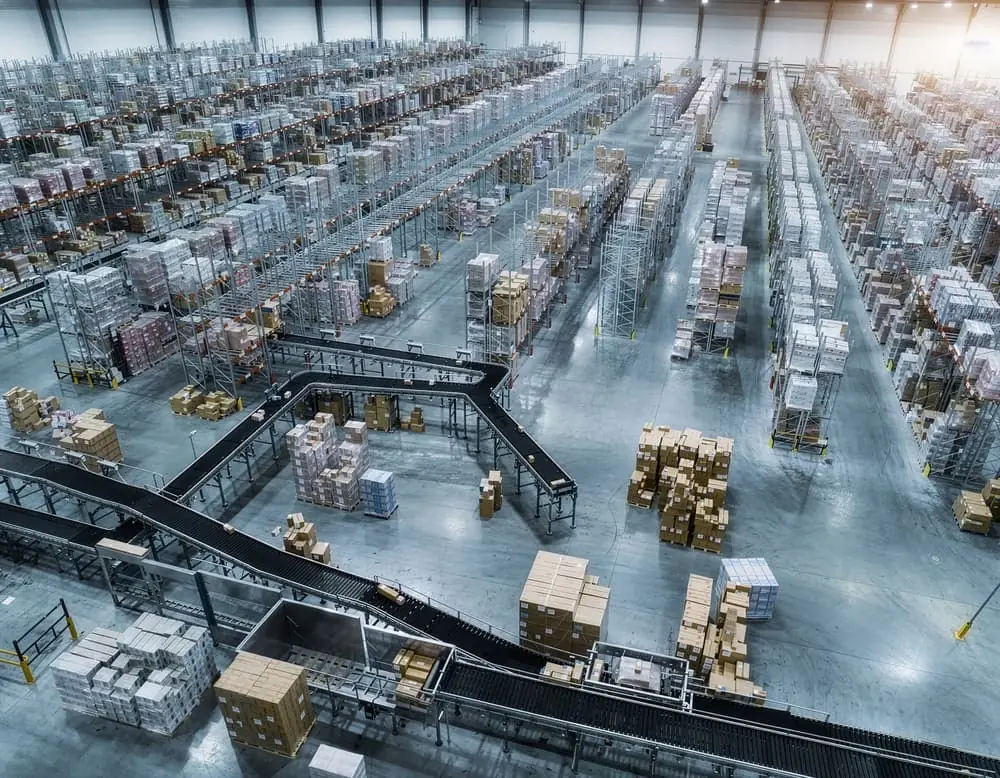
Distribution centers are best described as an expanded warehouse. Not only can you store goods, but you can also use the space to prepare orders for shipping. In addition to storing and picking goods for orders, distribution centers also pack items into parcel packaging, restock inventory, and manage returns.
A company will usually own multiple distribution centers, spread across the areas it delivers to, so products can be shipped to stores and customers quickly and easily. Because of this, products are frequently moved around, meaning those held in a distribution center are there for only a short time.
Some businesses, such as major retailers, can manage their distribution centers independently. Smaller businesses, such as eCommerce websites, usually rely on a 3PL or another logistics broker to handle it.

Differences Between Warehouses and Distribution Centers
As stated before, people often confuse warehouses and distribution centers, treating them as one and the same. While some distribution centers can be considered warehouses, the reverse is not true. The two facilities differ significantly in how they operate and their overall goals. Here are some of the major differences between warehouses and distribution centers:
Purpose
The main purpose of a warehouse is to securely store products until a business is ready to distribute them to a store or customer. Warehouses are designed for long-term storage, ensuring that goods are kept safe and organized for efficient distribution. Typical warehouses do not handle any other aspect of the logistics process, only being used for its main purpose.
A distribution center may perform functions similar to those of a warehouse, but its main purpose is to fulfill B2B and B2C shipping orders by processing goods and preparing them for distribution. They do more than typical warehouse as they are intended to be a bigger part of the order fulfillment process.
Operations
Warehouses have very few duties beyond receiving, tagging, storing, and retrieving goods. Goods can be held for weeks, even months, before being transported, meaning warehouse staff spend most of the time protecting and securing goods from loss and theft.
Distribution centers provide more services than traditional warehouses. In addition to storage, they also offer picking, packaging, and return management. Unlike warehouses, which are designed for long-term storage, distribution centers operate on a demand-driven pace to fulfill orders more efficiently. Therefore, products are not kept that long, seeing a relatively quick turnaround.
Technology
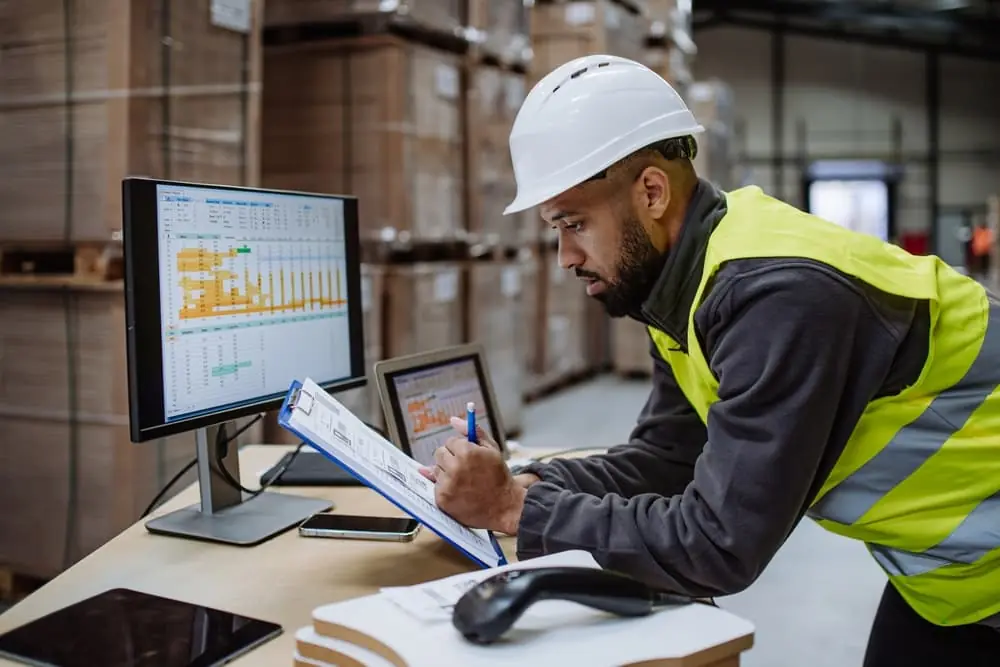
Warehouses commonly use Warehouse Management Systems (WMS) software to enhance daily operations, including tracking inventory, receiving goods, and retrieving items as needed. Staff rely on this technology to manage inventory levels and assign tasks efficiently. However, a warehouse may not always need advanced WMS software and can rely on scalable technology with lower upfront costs.
Distribution centers, however, rely heavily on advanced technology to manage the tasks they must perform. Aside from using feature-heavy WMS software, distribution centers also use:
- Picking technology, such as pick-to-light LED lights, to help workers find goods on the shelves
- RFID and barcode scanning; IoT sensors to track the condition of goods
- Automation to help move inventory throughout the center
- AI and machine learning programs for forecasting and work optimization.
Provided Services
Warehouses do not usually provide transportation for shipping in or out of the facility. The business that owns or leases the warehouse must provide the transportation itself through a contract with a 3PL or by using its own assets.
Distribution centers work with carriers or 3PLs to improve outbound logistics. They use techniques like cross-docking, which transfers goods directly from supplier trucks to outbound trucks with minimal storage time, and consolidation, which groups orders for efficient transportation to the same area.
Role in the Supply Chain
Warehouses have been the backbone of logistics and the supply chain for decades. They are a lull before the chaos that is freight transportation. Companies use warehouses to store inventory in preparation for seasonal demand and to keep an eye on inventory levels as products are released.
Distribution centers are a newer type of facility for logistics, but they have become quite valuable. Aside from storing inventory, distribution centers also serve as transportation hubs, directly transferring goods to retailers and customers and creating an omnichannel supply chain in the process.

How To Decide: Distribution Centers vs Warehouses
Now that we’ve clarified the differences between warehouses vs distribution centers, one question remains: which facility best suits your business needs? Both types of facilities serve specialized functions and offer specific services, so your choice will ultimately depend on what you are looking for.
Warehouses primarily serve as large storage facilities for manufactured goods. In addition to receiving and retrieving items, the main activities in a warehouse are monitoring inventory levels and assessing product conditions. There are no additional logistics services, meaning transportation to and from a warehouse must be done separately.
In summary, these facilities are ideal for businesses that have manufactured goods but are not yet ready to release them to the market. They also benefit manufacturers that require space to store raw materials, as well as companies that need to ship bulk orders rather than individual items. By storing goods in a warehouse, businesses can ensure their safety while enabling strategic product releases.
Distribution centers, meanwhile, are more like carrier terminals. Goods are constantly moving in and out, only allowing short-term storage. In exchange, they offer a broader range of services and accommodate transportation and logistics services from 3PLs or partner carriers.
This means distribution centers are best for businesses focused on speedy deliveries and require more services than just storage. ECommerce businesses are best suited for distribution centers, as they can deliver to customers in a timely manner and handle all final-mile preparations.
Conclusion
Choosing between a warehouse and a distribution center depends on your inventory and shipping needs. If long-term storage and product protection are priorities, a warehouse is ideal. For faster order processing, short-term storage, and better eCommerce support, a distribution
Both facilities play crucial roles in the supply chain, serving different needs. Warehouses focus on storing goods, while distribution centers prioritize quick movement to customers. Recognizing the difference helps businesses make better decisions about costs, delivery, customer service, and logistics performance.
Warehouses vs distribution centers isn’t just a battle for the best logistics building; it is a strategic business decision about whether your team needs long-term protection and assurance or fast, reliable services. Whatever choice you make will reflect your overall performance, so choose wisely!