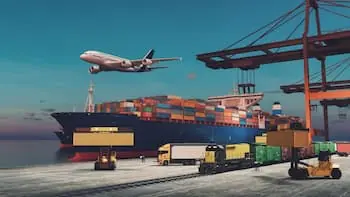
Operations are going, and there is no time to stop… at least as long as you have the tools you need. Logistics operates like a well-oiled machine, and equipment is the cogs. When those get short, nothing can work properly. The entire supply chain depends on having the right equipment in the right place at the right time.
In 2026, that balance has been pushed to its limits. Containers are missing at origin, reefers are stuck waiting for plugs, chassis disappear from terminals, trailers stall at borders, and ULDs pile up at overloaded airports. Every mode is feeling the squeeze at once, and even the smallest disruption in equipment circulation creates ripple effects that slow production, delay schedules, and frustrate customers.
What used to be occasional tightness has become a widespread shortage touching ocean, road, and air freight transportation. When equipment falls short, freight cannot move, and when freight cannot move, supply chains lose the rhythm they rely on. Let’s take a look at the equipment troubles plaguing each transportation type and see how the freight equipment squeeze is affecting each mode long-term.
Ocean Travel Shortages
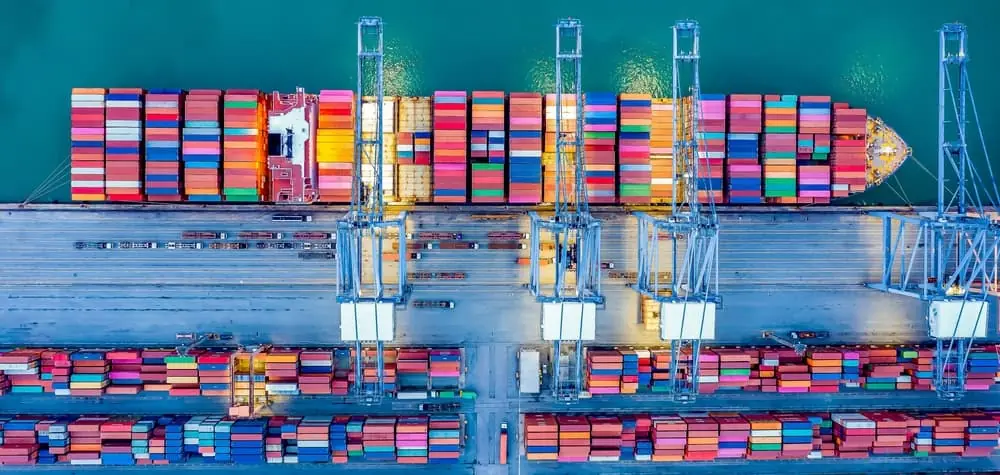
Everyone in the world, in one shape or another, engages in mass shipping. The most common transportation method for mass shipping is often by sea. In 2026, roughly 80% of global trade by volume and about 60% of global trade by value. This is huge and impacts every modern country, but when equipment isn’t available, freight can’t move.
Ocean trade is facing a shortage of 40-foot containers, one of the most in-demand box sizes used for retail, consumer goods, and high-value SKUs. These boxes aren’t just what’s preferred; they are what most global supply chains use, as regulations and many chains are built around 40HC capacity.
When not available, these containers are boxed in big-box retail, e-commerce fulfillment, and seasonal inventories, which creates shortages, delays schedules, and angers customers. We can’t say they just aren’t moving; major origin points such as Shanghai, Ningbo, and Yantian report no containers available for days at a time. Meanwhile, destinations experience long dwell times, keeping containers idle and tightening capacity.
40FT Freight containers are not the only limited-space equipment running short. Reefers are essential for maintaining the integrity of food, pharmaceuticals, chemicals, and high-tech components. One simply cannot exchange a reefer for a 40HC. When reefers are unavailable, this directly disrupts temperature-sensitive supply chains that cannot simply switch to standard dry containers and often incur significantly higher penalties for delays or spoilage.
Unlike 40HC containers, which sit idle for long periods while cargo is moved, reefers are always on the go. The issue with reefers isn’t that they’re idle somewhere; it’s just that the plugs for these containers at ports are fully booked, which makes it harder to get them in and ready to go out for shipping. This is due to carriers repositioning to higher-margin lanes, which significantly reduces access to standard SKUs and often limits when and how they move.
This limitation has led to some origins requiring pre-booking weeks in advance, which is considered far earlier than normal. Volatile timeframes do not work for reefer freight. If temperature-controlled freight gets bumped to later sailings, it risks shelf‑life windows.
While equipment shortages are expected from time to time, they have gotten out of control in 2026. The geopolitical climate has led to substantially longer detours slowing container and reefer return cycles; rerouting around the Red Sea adds, on average, 10-14 days to the trip, as many of the usual ‘straight’ routes have a base transit time of 25-30 days.
Blank sailings have begun to reduce circulation. Carriers cancel sailings to stabilize rates, but this removes both vessels and returning equipment from rotations. This trade imbalance has led to a higher volume of exports from Asia, with little to no timely returns to refill and send out. This is exacerbated by the fact that Asia exports much more than it imports.
While Asia is not the only region affected, it takes the biggest hit in blank sailings. Without regular deliveries of empty boxes (empties), destinations become full of empties, and origins are delayed because they have nothing to fill and ship. Asian manufacturing centers face sudden equipment deficits because local factories cannot pack new export orders without returning empties.
Shippers can protect their chains by considering the time and energy required to get these boxes out. To be ahead of the sails:
– Book Earlier: Unlike many other modes, expedited doesn’t work in ocean freight. It gets there when it gets there and is first come, first served. Get ahead of the rest and secure space 2–3 weeks in advance during tight seasons. By making early bookings, you give carriers time to position equipment at your origin.
– Diversify Ports: By shifting freight to other local ports, you can avoid dependence on a single port and reduce the impact of regional equipment shortages.
– Use Alternate Container Sizes When Able: While 40HC is the most common and preferred, the 20-foot container is often more readily available.
– Watch NVOCC Equipment Pools: An NVOCC (Non‑Vessel Operating Common Carrier) doesn’t operate ships, but they control or access large pools of containers across multiple carriers.
Even when things get tight, you can plan and be ahead of the waves!
Chassis & Trailer Shortages
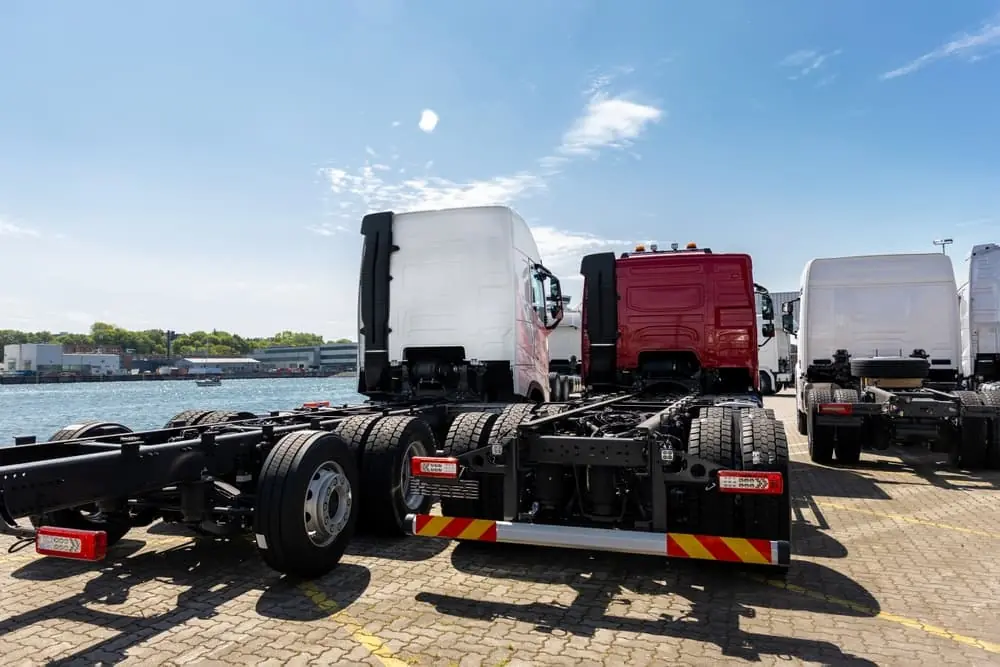
Ocean freight carriers aren’t the only ones dealing with shortages. On roadways, chassis and trailers are also in limited supply! 20- and 40-ft chassis are the backbone of port drayage, rail ramp pickups, and inland container moves. Without a chassis, a container cannot leave the terminal, even if the freight is ready.
These shortages show up in operations when drivers arrive at terminals and find nothing available, leaving containers that need to be moved sitting idle. This pause in operations doesn’t come without consequences. Often, this leads to additional fees and additional labor costs as drivers come and go for a container that can’t move.
Ports and inland ramps suddenly experience gridlock as chassis pools run dry. This heavily impacts importers moving high-volume consumer goods and intermodal users heavily in areas such as Chicago, Dallas, Atlanta, and Memphis.
This is followed by a shortage of dry van trailers, which move 80% of all domestic freight. Unlike with containers and chassis, availability isn’t only based on whether the equipment is there. For some services, such as partial loads or less-than-truckload carriers, loads may be declined due to ‘no trailer availability’.
Drop-trailer programs break down when trailers aren’t returned, leading to live loads that congest docks and incur detention fees. This, combined with an already volatile market, causes spot rates to rise as carriers prioritize high-yield freight over low-yield freight.
Border trailers are also seeing an increase in limitations as customs clearance has become increasingly difficult to process. Many drivers are waiting in queues for 24-48 hours. With an imbalance between imports and exports, Mexico sees an extremely disproportionate trailer trade, resulting in many trailers stranded in the US with no return loads.
While trailers and chassis face limitations due to the imbalance between imports and exports from origin to destination, that is not the only bump in the road. Distribution centers and warehouses with limited dock space are often slow to unload, resulting in longer dwell times and fewer equipment returns to port in a timely manner.
Inland ramp congestion happens across intermodal modes. When railway ramps run out of equipment, containers have to sit stacked for days, increasing not only missed windows but also demurrage and storage fees. Not only does this waste your time, but it also impacts your operational margins.
Like with ocean equipment shortages, there are things you can do to mitigate these shortages from impacting your operations:
– Pre-schedule Pickups and Drop-offs: Predictable schedules help carriers position chassis and trailers for us. This reduces the risk of “no equipment available” at terminals.
– Utilize Drop-Trailer Programs: Avoid live-load bottlenecks at distribution centers and allow carriers to swap trailers quickly.
– Shift to Intermodal Modes: Often, intermodal has stronger chassis pools and reduces pressure on drayage services. This often works best for predictable, non-urgent freight.
– Diversify Carriers: Avoid dependence on a single mode or carrier. This gives shippers the advantage of pivoting when one provider’s pools run dry.
– Leverage Near-Port/Near-Border Cross-Docks: Improves equipment rotation for both carriers and shippers.
Chassis and trailer shortages aren’t just problems for ports but a supply chain issue worldwide! When shipments stop moving, delays happen, timelines are ruined, and everyone involved is frustrated.
Air Freight Shortages
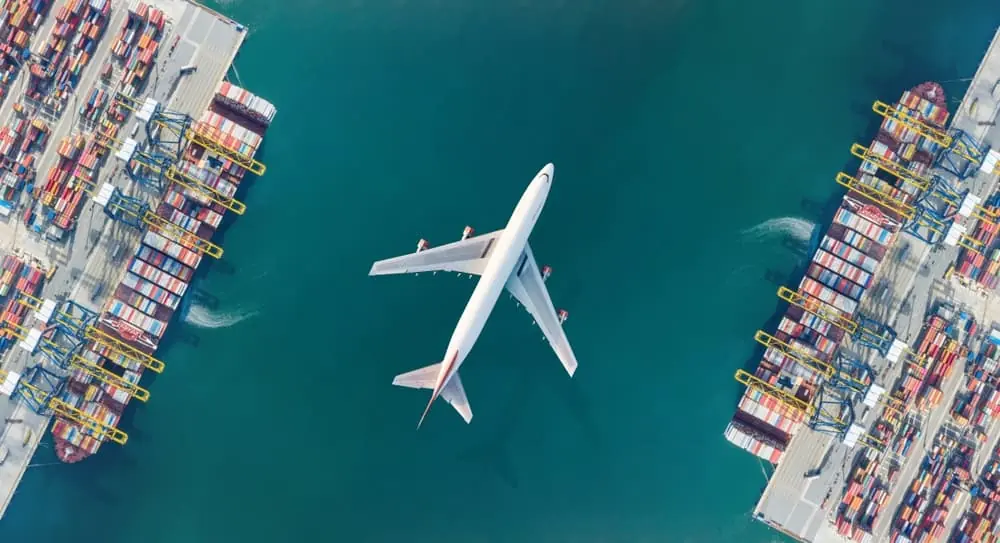
It’s a bird! It’s a plane! It’s a… that’s it, a plane. There are thousands upon thousands of flights a day; it’s hard to imagine that air freight also suffers from shortages, but it does.
ULDs, or Unit Load Devices, serve as containers for air freight. They are essential for consolidated cargo, high-tech shipments, and e‑commerce replenishment. ULDs (AMEs, AMJs, PAGs) are heavily relied on to load cargo safely and efficiently.
When they are short, freight cannot be loaded onto the aircraft. This is because ULDs not only hold items but also serve as a safety measure, with certified lock-in systems to prevent them from shifting during flight and causing damage even on a short flight. When ULD allocations are delayed, freight can roll to the next flight, adding 24-72 hours to the delivery on average.
The shortage doesn’t end with standard boxes; it also extends to temperature-controlled containers. These help preserve perishable items such as food, pharmaceuticals, and high-value electronics. Without them, those products cannot move and incur significant losses if not properly stored. This shortage completely halts this.
The shortages of ULDs and temperature-controlled containers stem from an increase in high-tech shipments, with data centers and technical innovation items such as AI hardware, semiconductors, EV batteries, robotics, and high-value electronics moving in massive volumes right now.
Compared to other freight, these products require a ULD to ship and are often flown on premium services, which locks up equipment for longer cycles. While tech demand is up double digits every year, ULDs struggle to keep pace.
With major hubs moving large quantities when overloaded, airport congestion leads to delayed equipment turnover. Warehouses are full, ramp space is limited, and ground crews can’t keep up with demand. When cargo sits, so do ULDs; when ULDs sit, equipment doesn’t circulate.
Shippers can protect their supply chains by:
– Book Air Capacity Earlier: By booking an average of 7-10 days earlier, you can secure the equipment needed for your freight.
– Shift Non-urgent Freight To Other Modes: By moving your non-urgent freight to other modes such as ocean freight or intermodal, you free up space for critical shipments and can avoid paying premium rates for freight that doesn’t need air.
– Precondition Temperature-Sensitive Cargo: Pre-cooled cargo and insulated packaging reduce reliance on active containers.
– Use Secondary Airports When Possible: Primary hubs move enormous volumes of freight; Secondary airports often operate with more space, faster turns, and better access to ULDs and temperature-controlled units.
– Build Multi-Carrier Routing Options: Avoid dependency on a single airline’s ULD pool. Diversify across integrators, passenger belly freight, and freight operators.
Air freight equipment shortages are driven by tech demand, airport congestion, fuel volatility, and seasonal pressure. Shippers who plan by booking early, diversify carriers, and use strong forwarders stay protected while everyone else gets stuck waiting for ULDs that never arrive.
Conclusion
The freight equipment squeeze across freight transportation shows just how quickly a well-oiled supply chain can grind to a halt when the tools that keep it moving fall short. Containers, reefers, chassis, trailers, ULDs, and temperature‑controlled units are not background details. They are the cogs that keep global freight turning. When any one of them becomes scarce, schedules slip, dwell grows, and operations feel the pressure from origin to final mile.
The good news is that shippers are not powerless. Early planning, smarter port and carrier diversification, tighter warehouse discipline, and stronger forecasting all help keep freight flowing even when the market is strained.
Equipment shortages will continue to surface, but they do not have to derail your network. With proactive decisions and a clear understanding of where bottlenecks form, shippers can stay ahead of disruptions and keep their supply chains moving with confidence.