

Fuel volatility is rewriting the rules of freight. Shippers are being forced to rethink every aspect of their operations, from routing to carrier mix, as oil volatility intensifies. As of 2026, crude oil prices are above historical averages.
What does that mean for trucking operations? Market Pressure. Diesel prices are continuously squeezing trucking margins and destabilizing operational costs. This wave triggered capacity shakeouts, and even a small price jump now equals higher surcharges, tighter windows, and unpredictable spot rates.
This isn’t just another fuel spike; it’s a structural shock. Global instability and Middle East tensions have pushed the fuel market into multi-year highs, creating week‑to‑week volatility across DOE fuel index updates. Major carriers are raising surcharges, while smaller fleets face severe cash‑flow strain and accelerated exits. Shippers, meanwhile, are absorbing higher costs and reduced reliability as the market enters a cost‑shock cycle where all services tighten at once.
These pressures set the stage for a deeper question that every shipper is now asking. What is actually driving this surge, and why is it hitting the market harder than previous fuel spikes.
To understand the current disruption, we need to look at the underlying forces pushing diesel into multi‑year highs and creating the cost shock cycle that is reshaping capacity, pricing, and service reliability a driving diesel to multi‑year highs and creating a cost-shock.
What Is Driving the Current Price Surge
In 2026, we are facing multiple issues, including rising diesel prices driven by global instability and geopolitical tensions, which heavily impact oil transport. Prices have surged to multi-year highs due to the conflict in the Middle East. Difficulties getting oil to certain processing areas have created week-to-week volatility, according to DOE fuel index updates.
Major carriers have now introduced increased fuel surcharges in response to these challenges. Many small fleets and businesses are experiencing severe marginal compression, which is accelerating carrier exits. On the other hand, shippers are reporting higher spot rates, reduced service consistency, and more aggressive surcharge adjustments.
The 2026 spike is creating a “cost‑shock cycle” in which fuel, capacity, and service reliability all tighten simultaneously, leading to widening regional disparities. West Coast and Gulf Coast markets are seeing the steepest increases, though every market worldwide is experiencing issues.

How Does This Compare to Previous Surges
2026 is not the first time we have had spikes in diesel cost. There have been several spikes in the last 30 years.
In 2008, during the global financial crisis, diesel prices hit record highs due to global demand and ongoing financial instability. While the supply chain was less interconnected than it is today, we often saw carrier failure spike. These failures contributed to carrier exits through bankruptcy, liquidation, and driver displacement.
Following the pandemic and the Russia-Ukraine conflict in 2022, the spikes were driven by war-related disruptions and refinery shortages. As in 2008, carriers faced high fuel costs, but governments were able to supplement government resources and emergency releases to soften the blow. The pandemic left the market in a fragile state. Amplifying the impact.
That brings us to our previous spike, in 2024. As businesses sought to recover from the pandemic, regional shortages persisted due to ongoing refinery outages and inflationary pressures. While the spike itself was very short-lived, those exposed were faced with higher costs, which normalized after they were back online.
Carriers experienced margin compression, but capacity did not collapse at the scale seen in 2026. In the past, small fleets and owner-operators were typically the first to exit the market during a surge. In 2008 and 2022, numerous small fleets and operators shut down due to cash flow constraints. When financial pressures mount, the market also sees larger fleets acquiring smaller carriers, accelerating carrier consolidation.
What makes 2026 different from previous surges? Today, the issue is not economical or health related as it was in 2022 and 2024; it is directly impacted by geopolitical conflict.
This diesel fuel spike is impacting an already fragile supply chain amid years of rising financial concerns, while simultaneously, shippers and carriers alike are facing cost shocks from every aspect of business: fuel, labor, insurance, and equipment.
Carriers Impacted
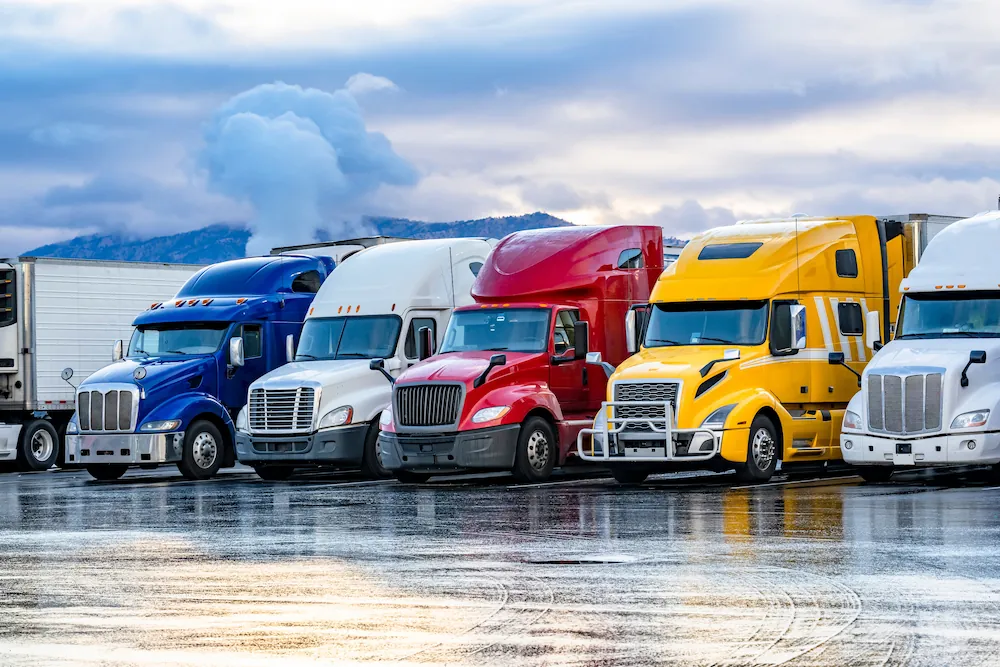
Carriers are directly affected by rising fuel costs, which are compressing margins. When this happens, it becomes extremely difficult for smaller carriers to turn a profit. Even with fuel cards and discounts, many cannot keep pace with the rapid increase in prices. Cash‑flow strain increases as carriers must pay for fuel upfront while waiting weeks for shipper payments.
Some carriers that rely on older, less fuel-efficient equipment are more exposed to price swings, as prices have risen from week to week. Combined with the volatility in fuel costs at this time, carriers delay maintenance or equipment upgrades to offset rising fuel costs, increasing the risk of breakdowns and service failures.
Beyond margins, carriers are becoming limited in capacity. Rising diesel costs are quickening carrier exits from the market, especially among those with little financial buffers. As smaller fleets are shutting down, capacity is tightening, and competition for space begins.
Logistics as a whole will see carrier consolidation as larger fleets absorb smaller operators. Regional capacity imbalances are on the horizon as peak season swings into full force, with rural and long-haul lanes hit by high fuel costs and consumption. This will lead to seasonal surges (produce, retail, construction) becoming more volatile as fewer carriers are available to absorb demand spikes.
To reduce empty miles, carriers will tighten routing and optimize backhauls. In doing so, however, many will reject low-margin freight as they move focus towards fuel-efficient driving practices, such as controlling speeds and reducing idling.
Fleets that adjust dispatching strategies to prioritize shorter, more profitable lanes are ahead of the margin-shrinking curve. At the same time, some carriers will shift to higher‑margin freight segments (hazmat, reefer, expedited) to offset fuel‑driven cost increases.
To cut costs and meet margins, long-haul carriers will shorten their operating radius, reducing the risk of regional price disparities and fuel costs. In some cases, the fleets may use this time to transition or experiment with alternative fuels, hybrid units, or aerodynamic upgrades to reduce long‑term fuel dependency. They may even begin renegotiating contracts to include less frequent fuel surcharge adjustments or fuel‑indexed pricing.
Shippers can expect prolonged transit times as carriers reroute to avoid high-risk, war-torn, or heavily congested fuel markets. Consolidating loads or reducing service frequency will be a tactic that more carriers will utilize to preserve profitability.
In the context of preservation, driver turnover will become more of an issue when carriers cannot offset rising operating costs with competitive pay. Some carriers may implement stricter appointment windows or reduce flexibility to control fuel burn and dwell time to make every gallon count.

So How Are Shippers Impacted?
When prices rise, carriers will offset the price surges by passing the costs onto the shipper in the form of increased or additional fees. Major carriers have implemented or raised fuel surcharges on diesel spikes, complicating cost forecasting as fuel prices rise.
Many will also face heavy spot-market volatility when rates rise quickly, as seen especially on long-haul routes. Contract rates will lag as carriers try to forecast a volatile market with little to no light at the end of the tunnel. Cost mismatches will be common until the market levels out.
Shippers face challenges in service reliability while carriers consolidate loads or reduce services on low-margin lanes. Longer transit times and reduced flexibility will become more common as carriers place restrictions on what they can accommodate.

Broader Supply Chain Effects
No matter where you are in the supply chain, the rising cost of fuel will impact all operations. Warehouses and shippers alike are looking into inventory strategy shifts. These shifts would be based on carriers charging higher transportation costs to push shippers to adjust inventory placements. This also encourages some to move to work regional warehousing rather than long-haul due to the cost alone.
Models shift in response to increased interest in other lanes, such as intermodal, consolidation, and short-haul alternatives. While alternative routes and modes are a solid go-to for adjustments, some shippers who are being proactive in the fuel conflict are growing exploration of electric or alternative‑fuel fleets.
Although ultimately the industry goal is to go green, there is heavy budgeting pressure. Fuel volatility disrupts annual transportation budgets, which requires financial teams to update models more frequently. The market has shifted, with conflicts growing, and the current geopolitical climate is unpredictable, leaving many carriers and shippers worried about their operations.

What To Expect If Diesel Prices Continue Rising
Expectations are low, but what should you be prepared for if fuel prices keep rising? As mentioned above, carriers are the first to absorb the higher shipping costs, which are then passed to shippers; you can expect this to continue. High surcharges and more frequent adjustments will be the norm; carriers can no longer rely on daily changes, and the market now moves hour by hour!
This volatility will also lead to more carrier exits and consolidation as smaller carriers try to adapt. Capacity will tighten as a result, adding pressure to high-fuel-consumption routes such as long-haul. It should also be noted that more freight shipments may shift to intermodal or regional distribution strategies, or carriers may shorten their operating area or reject low‑margin, long‑haul freight to limit fuel consumption.
Shippers may shift to multi‑node distribution, regional hubs, or nearshoring to reduce fuel‑heavy miles and improve inventory placement strategies, which will evolve to minimize long‑haul dependency. While the goal of changing modes is to limit fuel consumption, other facilities and services, such as warehouses, drayage, and last mile, will raise their rates to offset their own fuel costs.
During these times, we may see fleets rapidly invest in fuel‑efficiency tools, telematics, and idle‑reduction tech, as well as in electric, hybrid, and renewable diesel options, which will grow as long‑term hedges.
The trucking industry as a whole has already begun transitioning to predictive analytics and TMS platforms, and it is anticipated that these tools will be used more heavily to optimize routing and fuel spend. The technology doesn’t end there; finance teams will update transportation budgets more frequently as fuel volatility persists, using a system that leverages predictive analytics, machine learning, and historical data to forecast future logistics costs.

How Shippers Can Stay Protected
When the fuel market becomes unpredictable, shippers need to protect themselves. While the fuel industry can not guarantee that the market will stabilize, you, as a shipper, can proactively plan to minimize surcharges, fees, and crises.
During times of market volatility, shippers can protect themselves by negotiating transparent fuel surcharges. Review and negotiate to ensure the surcharge rate is at market value and not an arbitrary number to raise your shipment cost. To do so, monitor DOE fuel index trends and verify with your carrier the rate at which they charge additional fuel (or fees in general).
Diversify your carrier network. When fuel is limited, it’s first-come, first-served, and relying on a single carrier will leave you behind. Diversification isn’t limited to carriers either! Shift your transportation model to intermodal, which can provide savings between 10-15%. If model diversification isn’t for you, you can consolidate your loads to reduce overall fuel consumption.
Be prepared for slower transit times. Ship as early as you can; while geopolitical conflicts rise, carriers will be more picky on what loads they will accept based on risk, cost, and time frame. Work with your logistics team to strengthen routing and consolidation strategies to reduce empty miles. Just be aware that many carriers will begin “slow steaming” in maritime transport or reduced speeds in trucking, which saves fuel but increases transit times.
Most importantly, build in a buffer; we know the market in 2026 is unpredictable, and poor planning won’t cut it! By implementing analytical technology, you can monitor market conditions in real time. Investing in a Transportation Management System (TMS) to monitor fuel usage, audit freight bills, and identify inefficiencies. Shippers need to build contingency budgets for fuel-driven rate spikes, and using the right tools can keep them trucking along even in volatile markets.
Conclusion
The 2026 diesel surge is reshaping trucking in real time. Fuel volatility, geopolitical conflict, and long‑standing supply chain fragility have combined to create a cost‑shock cycle that is tightening capacity, raising surcharges, and disrupting service across every mode.
Carriers are absorbing margin pressure and exiting the market at an accelerated rate, while shippers face higher costs, slower transit times, and reduced flexibility, but volatility doesn’t have to dictate the end.
Shippers who diversify carriers and modes, strengthen planning discipline, improve visibility, and invest in predictive technology can protect their budgets and maintain stability even as fuel markets swing.
In a year defined by uncertainty, resilience becomes the strongest advantage, and the shippers who plan ahead will be the ones who stay moving when the market doesn’t.