

Owning a business is no easy feat. It takes time, dedication, and ambition, but that alone can only get you so far. Across the nation, the logistics industry is seeing longtime industry-leading companies close their doors.
In just a few short years, the logistics playbook has been completely rewritten, scrapped, and redrafted, with edits made every day. This isn’t bad luck; it’s a ripple effect from steady logistical operations and steady business into swinging markets with no heads-up when the direction changes.
To understand why the modern freight landscape is in widespread restructuring, we need to look at how the recent pandemic boom paved the way for the unprecedented ‘Freight Recession and how carriers responded.

The Freight Recession
Since 2022, the trucking industry has experienced a steep downturn. This was guided by what is now known as the Pandemic Boom, which began around 2020 and lasted until the next year. Individuals and businesses became dependent on government stimulus, with a heavy shift towards ecommerce in response to lockdown efforts.
With more funds and more items to purchase, spot rates spiked as a huge influx of new business flooded the market. This oversaturated the market, inflating purchase volumes and the need to meet delivery requirements.
However, the pandemic surge eventually ran out of steam as citizens were no longer subject to pandemic restrictions and were no longer receiving government monetary assistance, leading to a dramatic collapse in demand in 2022. This created massive excess capacity as an influx of for-hire carriers flooded the roads just as retail inventories began piling up.
The near 96% increase in new carriers forced many veteran carriers to slash rates to secure shipments, sacrificing profit margins and taking continuous losses just to stay on the road. This has changed: in 2023, we saw major retailers place stop-sale orders to clear out overstock, which led to fewer trucks being needed.
This heavy cut in margins and available shipments led to historical closures as the hardships of the recession hit carriers. Yellow Corporation, a nearly century-old LTL giant, went bankrupt in 2023 and shut down operations. This alone raised fears that it would lead to supply-chain gridlock, as their trucks were now sitting idle. This led to initial spikes that forced shippers to accept significant rate hikes, as Yellow was known for its below-market rates. Competitors took advantage of their downfall, creating the current rates we see today.
Prolonged soft volumes, which began at the start of the recession in 2022, had created the longest downturn in the modern history of trucking. Many carriers were pushed into the red, as Yellow was, and many of them faced bankruptcy as Yellow did.
The recession led to innovative trucking practices, such as maintaining financial reserves and working with brokers to access diversified rates, lanes, and operations that fit your needs. As of 2026, the market is still stabilizing, with prices remaining relatively flat. Many carriers have to rely on higher rates to recover what they have lost in capacity.

Lacking Cushioning
As mentioned above, the market faced drastic changes, from carriers closing to changes in the rates at which they operate. This isn’t an issue that stayed in 2022; many carriers are still facing the after-effects of the recession. While rates rise, carriers face higher operating costs, making it difficult to keep up with changing rates and needs.
2026 has marked a turning point, as the freight recession was not only about rates and capacity but also about fuel availability. When fuel prices become volatile, the unpredictability erodes any remaining margin they may have had. Compounding these issues are volatile commercial insurance premiums. This massive legal liability has been pushed directly into carrier premiums, which then pass those along to shippers. The premiums aren’t the only thing going up.
As logistics technology advances, Advanced Driver-Assisted Systems (ADAS), such as radar sensors, cameras, and collision-warning systems, are becoming standard. However, when these components are damaged, they are incredibly costly to repair or replace, turning minor fender-benders into major financial hits.
Smaller carriers are especially vulnerable, as they often lack the same cushion to self-insure or absorb the cost of accidents that massive mega-fleets do. This becomes a huge issue, as many commercial insurance premiums account for 7% to 10% of a carrier’s operating costs. If operating on standard miles, even a small hike can add pennies to dollars per mile in overhead.
Small monetary charges like that add up, cutting directly into operations. As a result, in recent years, the already-staggering short lifespan of freight carriers has gone from nearly a decade to an average of 1.5 to 3 years. This high turnover is well known in logistics: about 50% of new carriers fail within the first 18 months, and 85% close or have their authority revoked within 5 years.
Aging carriers also feel the pressure. As fleets age, equipment and operations must be updated, which is itself a huge upfront expense. This is due to older machines becoming more costly to maintain and operate, creating a financial trap by driving up maintenance costs and requiring upfront capital expenditures that strapped carriers simply cannot fund.
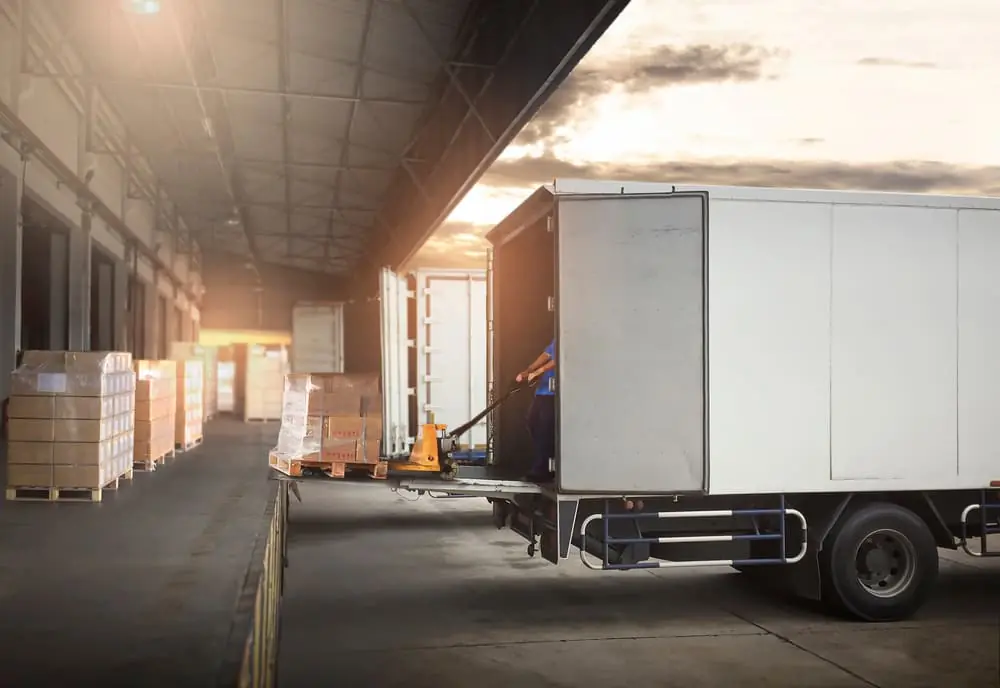
Distribution, Warehouses, and Inventory, Oh MY!
As we transition from pandemic-era business practices, we have seen that the market has become more volatile. During the pandemic, the surge in ecommerce forced many distributors to maintain a ‘just-in-case’ stock, leading to over-ordering as trends developed and fell. Now, as the market is leveling off, we see many distributors and large retailers transitioning back to the pre-pandemic practice of just-in-time restocking.
This shift causes whiplash as capacity and volumes drop and surge randomly. This makes lane focusing nearly impossible. Many distribution centers adapted their operations during the early e-commerce boom.
While many warehouses and holding facilities were expanding capacity to meet demand and mitigate the bullwhip effect, which was causing minor supply chain adjustments to be wildly amplified. Retailers and distributors that were holding just-in-case (JIC) inventory had transitioned from just-in-time (JIT) inventory, which promoted facilities to hold small amounts of stock. This subsequent stock, following the surge, led to additional holding costs.
Companies now face the financial depreciation of that stock as it sits, while trends come and go. In some cases, they can remarket or sell off the held merchandise, but that would be at a lower ROI (return on investment) as there is little to no market for the sitting stock. These facilities had expanded to accommodate large stock levels and operate efficiently. Some upgraded infrastructure in the facilities, including automated systems that now sit underutilized.
What was once a safe operational hedge has now become dead stock and dead operational weight. Many facilities are incurring high fixed costs due to expanded footprints, upgraded automation, and labor structures, while margins continue to shrink. With volumes unstable and inventory strategies shifting again, leaders are being forced to make hard calls about capacity rightsizing, inventory liquidation, and network consolidation to keep the operation financially balanced.

You Can Only Blame So Much on Business
While no single person is guiding the closure of logistics companies, we can’t strictly blame it on the equipment. Decisions made based on rush trends have led to a heavy number of closures, as major business models were changed with little supporting evidence that they would last.
During the pandemic, the decision to shift from just-in-time to just-in-case led to high upfront costs with no guarantee that market value would remain. While this created false demand signals, consumers’ spending quickly dwindled, leading to huge amounts of deadstock.
The blame isn’t solely on retailers trying to stay ahead of the curve. Real estate agents and executives assumed the pandemic boom would last indefinitely, and these optimistic forecasts led business owners to commit to long-term leases and to overbuild industrial hubs. This is where many began to see operating margins degrade.
This was followed by misguided infrastructure upgrades. Facility managers approved heavy capital expenditures in a rush to implement automated systems to address temporary labor shortages. Humans pushed for multi-million-dollar projects without a buffer for flexibility. As the surge began to drop, companies faced massive amounts of fixed debt and underutilized technology that could not be resold or repurposed. These firm adjustments meant to take hold of the supply chain ended up placing many executives in financial chokeholds while margins continued to crumble.
Rigid financial restructuring did not help. While operations were seeking relief from tight budgets, the leadership boards prioritized immediate balance-sheet health to appease shareholders. What followed were massive layoffs and wholesale facility closures.
The structural choice shifted the financial burden of the market downturn onto the regional workforce, leading to significant economic losses for local communities. Prioritizing shareholder balance over operational resilience results in weakened networks that struggle to maintain staffing and capacity, making recovery after market declines nearly impossible.
This temporary reassurance was prioritized over long-term scaling to maintain operations, leading many to file for bankruptcy or close after the post-pandemic boom.

What the New Normal Looks Like
Today, we see many generational logistics companies closing their doors, leading to a broad shift towards smaller, more flexible networks. The oversized operation footprint of the pandemic has been transformed into leaner footprints that match today’s volatile demand without the heavy overhead that businesses may not be able to maintain as the freight recession continues.
Companies that seek longevity, not just spot-market volatility, are transitioning to ‘rightsizing strategies’. Not focusing on simple expansion, but scaling according to current needs rather than historical averages/forecasted surges, which are unreliable and often send signals too late.
While automation was pushed as a major infrastructure priority, it wasn’t left behind during the pandemic. There has been an increased reliance on automation in logistics, but rather than a blanket solution, it is a justified investment where volume calls for it.
As a whole, the industry has adopted a much more cautious approach to capacity planning. By combining dynamic scenario modeling with a risk-balanced strategy, the logistics sector is finally prioritizing long-term resilience over rushed, short-sighted growth.

Conclusion
The closures we are seeing across the logistics sector are not isolated events. They are the result of years of overexpansion, volatile demand, rising operating costs, and pandemic-era decisions that were never built for long‑term stability.
Companies that once thrived are now carrying the weight of oversized facilities, expensive technology, and inventory strategies that no longer match today’s market. Communities built around these networks are feeling the strain as facilities close and carriers disappear. The industry is now entering a period of correction, where resilience, careful planning, and flexible operations matter more than rapid growth.
The companies that adapt to this new reality will be the ones that remain standing as the freight landscape continues to evolve.