
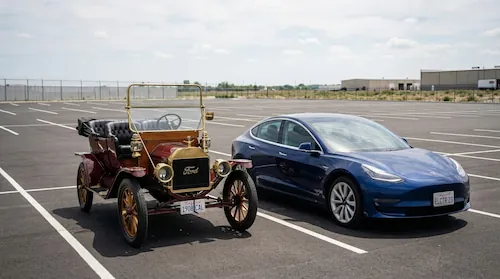
The History of Freight Auto Transportation
If you’ve ever passed a car dealership, you know how impressive their new lineups can be. All those shiny, sparkly vehicles with no flaws to be seen are just waiting to be bought and taken for a spin.
However, those shiny cars had a tumultuous journey getting to the dealership. Transporting cars from the assembly line to showrooms is challenging due to their complex design and weight. This has led to the growth of an efficient logistics industry serving car manufacturers, dealers, and drivers.
The development of the auto freight transportation industry was not instantaneous. Its history is closely linked to the evolution of semi trailers, bi-level and tri-level railcars, and modern auto cargo ships. These specialized vehicles were created to enhance the efficiency of automobile transportation and to revolutionize logistics forever.
To understand the history of auto freight transportation, however, we must first examine the history of automobile development.
The Origins of the Automobile
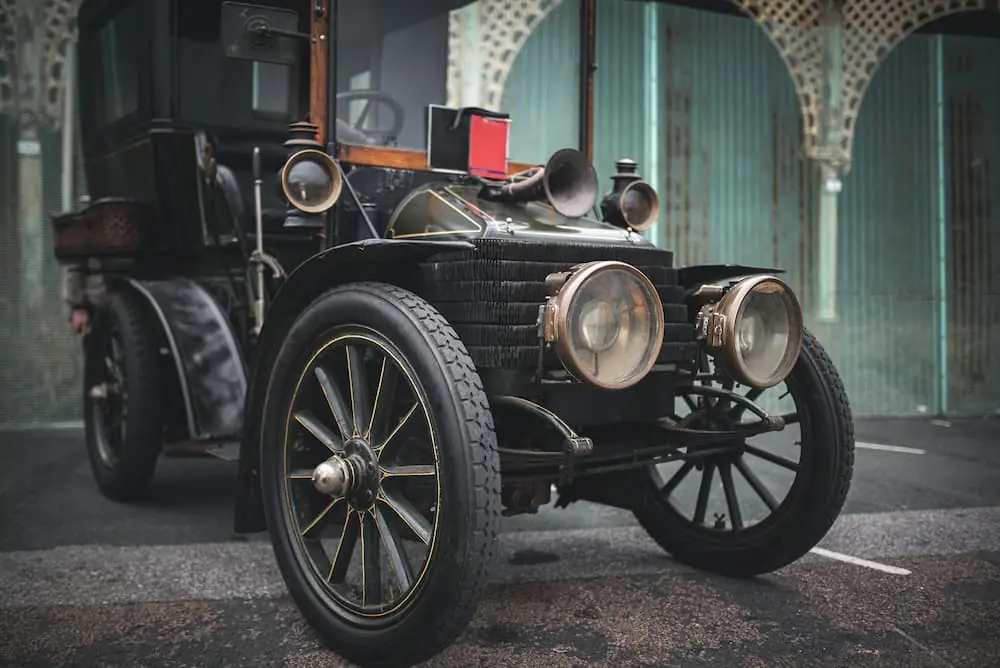
The answer to the question “who invented the car” is not Henry Ford; while he did contribute greatly to the evolution of auto manufacturing (and we will come back to his contributions in a moment), he was not the one to actually create the automobile.
The credit for that goes to Nicholas-Joseph Cugnot, a French inventor in the late 18th century. The credit goes to Nicholas-Joseph Cugnot, a late 18th-century French inventor who created the “fardier de Cugnot,” a steam-powered vehicle for the French Army. It could travel about 5 miles per hour and carry 4 tons, but was unstable, leading to the project’s abandonment.
Development of a self-propelled vehicle continued among other inventors throughout the next century, until German inventor Karl Benz created the first gasoline-powered automobile in 1885. About 20 years later, Ransom Olds’ 1901 Oldsmobile would become the 1st line of mass-produced cars, while Henry Ford would create the first assembly line for his cars shortly after.
The imaginary automobile was becoming a reality. However, the budding industry would soon hit a snag: getting these cars to their customers.
The Semi Trailer and Auto Freight Transportation
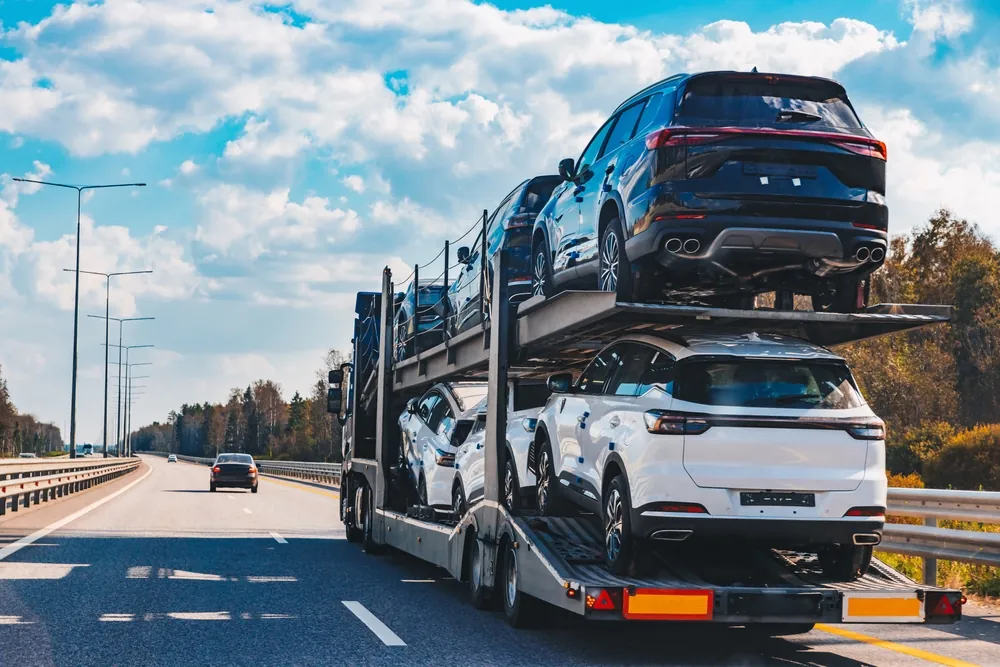
As mass-produced automobiles became increasingly common, manufacturers needed a more efficient way to deliver them to customers. Driving the cars directly to customers would lead to wear and tear on the vehicles and add unnecessary mileage, making transportation both costly and time-consuming.
Alexander Winton, a Scottish inventor and automobile designer in late-19th-century Cleveland, Ohio, sold his first line of “horseless carriages” in 1896. He, too, needed a way to deliver them to his customers, who were spread throughout the country, without driving them out.
His solution was to design a flat cart with two rear wheels, mount it atop the engine of a modified car (the precursor to the modern tractor truck), and attach it with a hitch. While it took three people to attach the cart and the cart could move only one vehicle at a time, it was still a revolutionary invention that made shipping cars much easier.
Winton would sell his manufactured semi-trucks in 1899. Other inventors would improve Winton’s design for automobile semi-trailers over the next few decades, including car salesman George Cassen’s four-car auto trailer and Mack Trucks’ durable tractor trucks.
Rail and Auto Freight Transportation
Trucks were initially designed to transport cars quickly, but trains also played a role in car transportation, albeit with challenges. In the early days, automobiles were packed haphazardly into rail cars, often resulting in damage due to overcrowding.
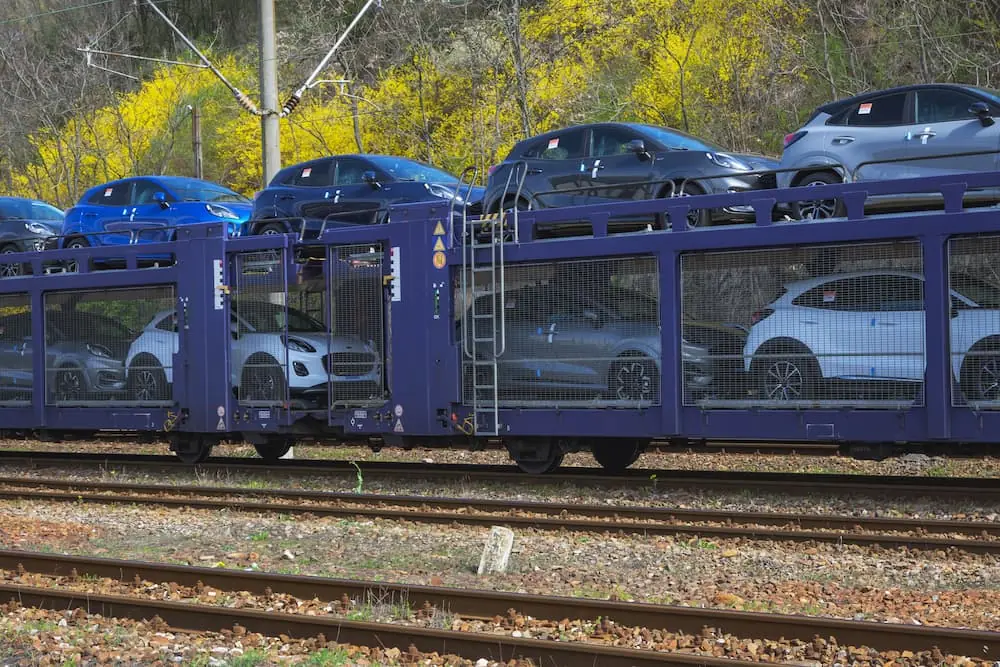
By the 1950s, a breakthrough occurred when Volkswagen collaborated with German railroads to create a two-level flat car, the first auto rack, capable of carrying 10 vehicles. That same year, Evans Products introduced a bi-level autoloader with a top deck for six cars, which evolved into the bi-level carriers used by Canadian National.
A few years later, the first tri-level auto boxcar was developed through a partnership between the Saint-Louis-San Francisco Railroad and Pullman-Standard, allowing for the transport of 12 vehicles. These innovations laid out the groundwork for modern enclosed auto racks.
International Transport and Auto Freight Transportation
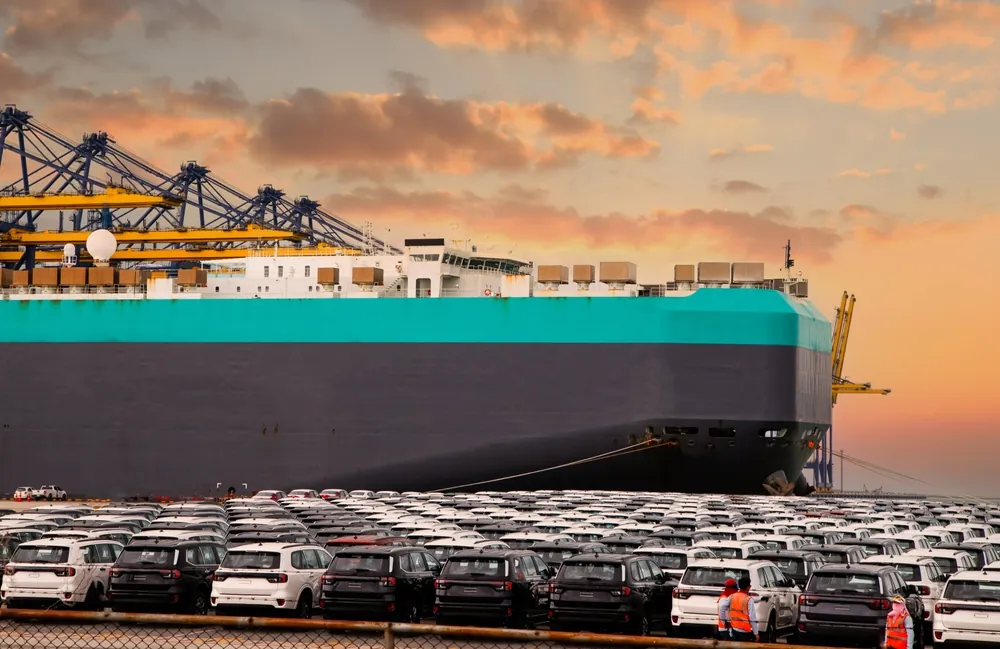
By the mid-20th century, domestic auto shipping by truck and train had advanced, but international shipping still faced challenges. The introduction of cargo planes and specialized ships in the 1960s greatly improved the efficiency of long-distance shipping.
Cargo planes transitioned to commercial use after World War II, with jumbo jets like the Boeing 747 able to transport 4 to 5 vehicles on pallets, delivering them within hours to a couple of days. However, this method remained expensive, primarily used by luxury car owners and brands.
In the 1950s and 60s, cargo ships evolved to transport a range of goods, including specialized auto carriers. The USNS Comet, launched in 1957, was one of the first motorized roll-on/roll-off carriers for the U.S. Navy.
Other carriers followed, with K Line building Japan’s first pure car carrier in 1970 and launching the European Highway, the largest full-auto carrier at the time, in 1973, prompting improvements in auto carrier capacity throughout the 20th century.
What Can We Learn from the History of Auto Freight Transportation?
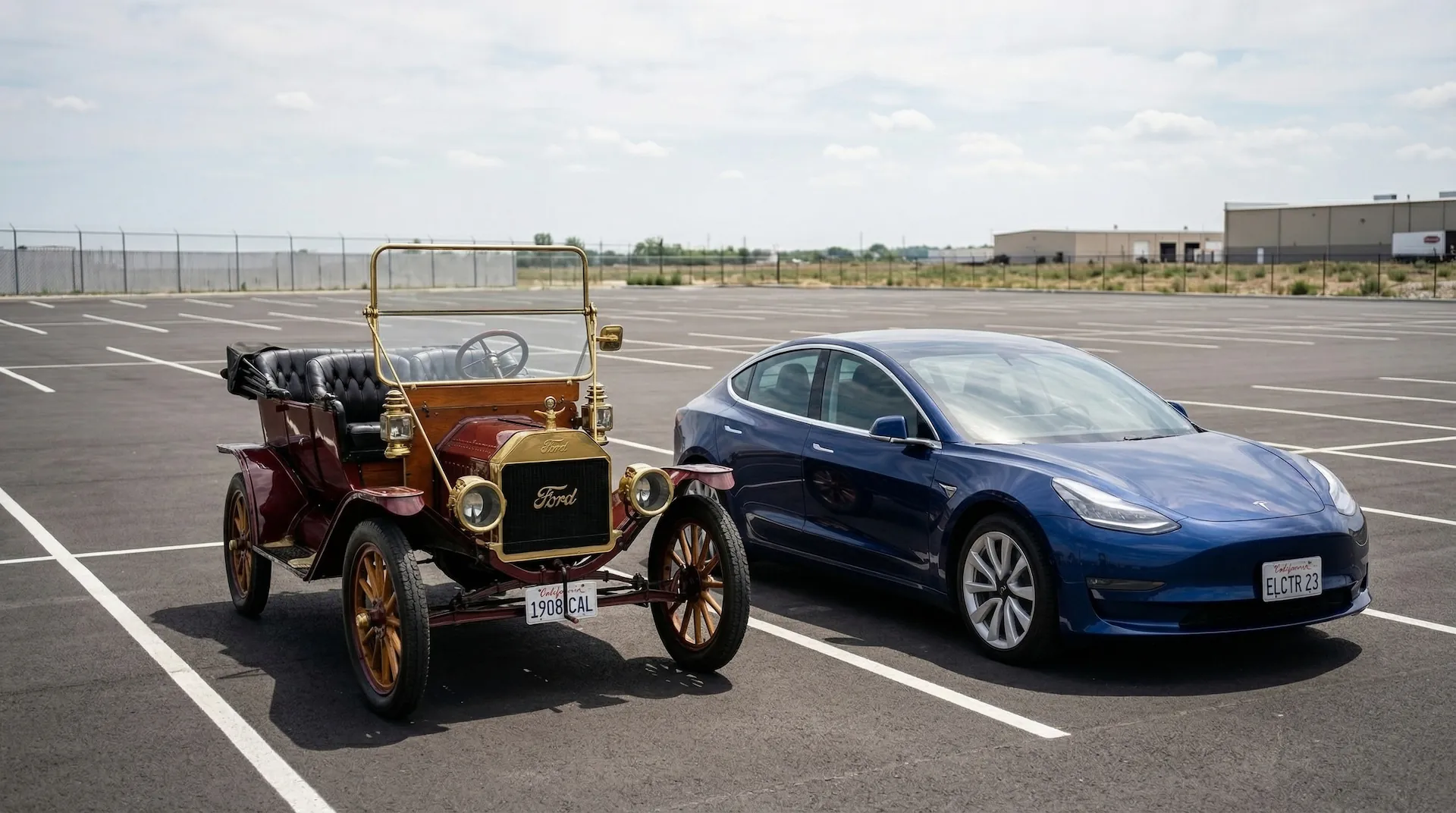
The history of auto freight transportation is more than just a tale of car manufacturing; it serves as a reminder to today’s auto manufacturers and shippers of how much the industry has evolved since its peak. However, there are valuable lessons that they and logistics professionals in the auto transportation sector can learn. Here are a few important takeaways:
Logistics Innovation Follows Industry Growth
When automobile production ramped up in the early 20th century, transporting vehicles from assembly lines to customers became a significant challenge. As a result, manufacturers and inventors needed to get creative to ensure safe and efficient transportation of cars. From Alexander Winton’s early semi-trailer design to the development of bi-level and tri-level railcars to the construction of large cargo ships and airplanes, the automotive and logistics industries had to evolve together to maintain efficient supply chains.
Specialized Equipment Drives Efficiency
Early efforts to transport automobiles by rail often resulted in damage because cramped standard freight cars were used. Similarly, cars driven directly to customers incurred wear and tear, increasing costs. To improve efficiency and safety, specialized equipment like auto racks and dedicated auto carriers was developed. These innovations increased capacity, reduced damage and handling time, and enhanced reliability and operational efficiency, just as they do today.
Multimodal Transportation Creates Global Reach
Trucks, trains, cargo ships, and cargo airplanes have played a distinct role in moving vehicles from manufacturing plants to dealerships and customers around the world. Combining these modes of transportation, instead of relying on one, is just as innovative an idea as putting cars on a cart or a multi-level rail car was back in the day. By integrating these modes, manufacturers can create an interconnected logistics network that supports the global automotive industry while balancing speed, cost, and capacity.

Today’s Auto Freight Transportation Industry
The auto freight transportation industry has evolved significantly over the past century. In 2025, approximately 91.7 million light (standard car) vehicles were sold, all of which needed to be transported globally. Fortunately, advancements in technology, such as AI, machine learning, and automation, have made vehicle transportation much more efficient and faster.
However, as we continue to advance auto transportation, we must also remember to look back at where we started. The transportation of cars originated from a logistical challenge and has evolved into a vital sub-industry within the automotive and logistics sectors.
The history of auto freight transportation highlights the interconnectedness of these industries, emphasizing the ongoing need for manufacturers and dealerships to enhance efficiency and speed in car transportation.
So when you see a dealership with shiny, brand-new cars on display, remember that these cars had a complex and interesting journey to be parked there, both in the past and in the present.