
It was a late Friday afternoon. The paperwork was signed, the trailer doors were shut, and another shipment rolled into the night. On paper, everything was clean: the freight moving, the schedule intact, but then Monday arrived and two days had vanished without a trace.
Little did they know it was the start of every receiver’s worst nightmare: a late shipment. The shipment left on time on Friday, but the taillights hit the intersection and the freight wasn’t heading to its destination. No, the weekend brought a new plan: straight into the holding cell.
These carriers run tight ships, meaning that even if your freight is picked up for an overnight shipment on Friday, it can still sit in a terminal or truck over the weekend. This meant the shipment wasn’t lost. It was simply headed toward a destination that wouldn’t answer its door until Monday.
The truck kept moving through the night, but little did we know the shipment’s journey had already stopped. Warehouses and other logistics teams often work on a skeleton crew over the weekend, if any crew is on site at all. Without inbound clerks, drivers, and inventory control staff home leaving the porch light on, inbound trailers cannot be touched. While the inbound team has clocked out, the shipments sit unchecked and unloaded until staff hours resume.
When the skeleton crew is in, it’s often just the outbound guys trying to push orders out while the inbound gate stays locked. While the tracking screen shows a pretty lie: “In Transit,” this is where the difference is between freight that is moving and freight that is getting somewhere.
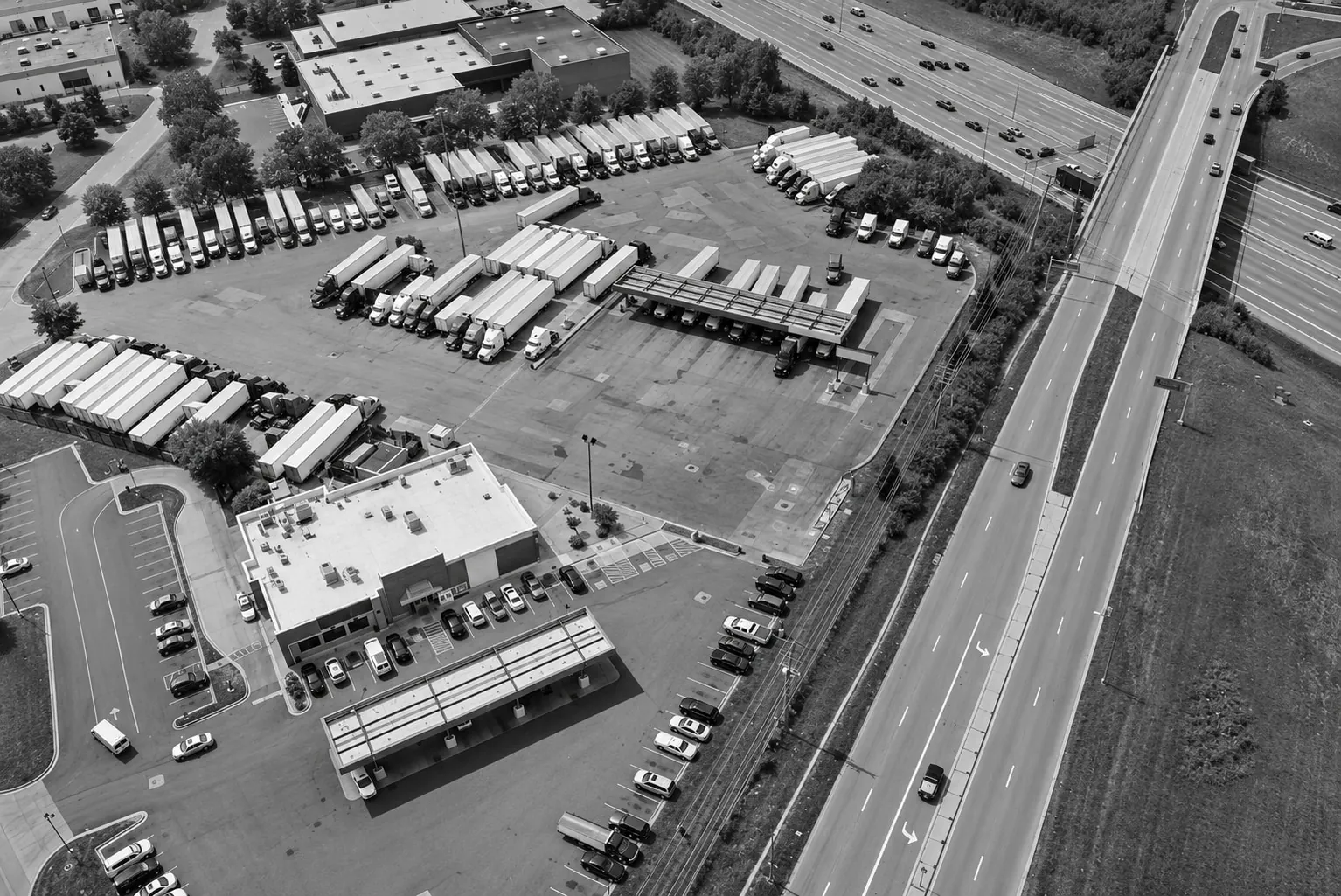
A trailer parked behind a chain-link fence in a lot ten miles from the nearest receiving dock isn’t making progress; it’s just doing hard time in a drop lot, burning daylight and racking up storage fees while it waits for the Monday morning bailout.

Missing in “Transit”
On the tracking screen, the case still looks alive. That green dot showing movement across the lane, timestamps keep refreshing, and it’s ‘in transit’. To the untrained eye at the desk, this means everything is on track, but they don’t realize that the shipment has already been lost to the weekend void.
Out on the road, the clock never stops, semis burn fuel through the rain, and freight trains rattle across state lines at 3 a.m.; the problem is the rest of the world runs on a different schedule where at 5 pm on a Friday lights are off, and bolts are locked, vanishing until Monday. In logistics, it’s still just another day.
When a 24/7 highway is forced into a five-day workweek, somebody has to carry the weekend, and in this business, it’s called weekend dwell time. This is where good schedules come to die. The terminal freezes when carriers do late pickups on freight, LTL (less-than-truckload) pallets, and intermodal boxes being dumped onto concrete floors until the Monday shift clocks in.
Truckload also faces holds: full truckloads make it all the way to the destination city, only to sit in a barbed-wire-gated lot because, by Saturday at dawn, all you can do is wait until Monday, since no one is handing out a receiving appointment until Monday morning.
The weekend lockdown will start to carve into operating margins. Just because the wheels stop moving doesn’t mean that the meter stopped running. Behind those closed gates, a hidden tab keeps climbing. Terminals and rail ramps, even when staff isn’t present, don’t take weekends off and will quietly stack up detention, demurrage, and storage fees while no one is looking.
Every trailer touched at this point, no matter the reason, such as being shuffled or reslotted, is additional handling, extra labor, and one more chance for damaged goods. The cold, hard truth that most shippers miss is that movement is not the same as progress.

The 7 A.M. Shakedown
By sunrise on Monday, every shipment is looking for the same thing: An open dock and someone willing to unload it. The weekend is now dead and buried, the deadbolts are open, and the porch light is off; it’s time to get back to it. There is just one catch: every truck that rolled through the weekend and over the night, ready to get going, arrives at the gate before the coffee pot is even warm.
Two days of uninterrupted highway miles don’t just disappear in the morning fog; they add up. By 7 a.m., the access roads are packed with idling trucks, air-hissing brakes, all while lining out the guard shack trying to get through. Monday morning by this point has turned into a mess of bottlenecks and choked-out docks, which create:
- – Appointment Gridlock: Two days of backlogged arrivals try to squeeze into a single eight-hour receiving window. This turns a clean schedule into a brawl over open doors.
- – Yard/Trailer Backlogs: Packed drop lots that are bumper to bumper, with Friday roll-over and Saturday drop-offs all waiting to be processed before Monday’s fresh arrivals.
- – Post-Weekend Ghost Crew: On the day that every hand is needed on deck, receiving supervisors face thin rosters of workers, and Monday morning call-outs and labor shortages delay an already backlogged schedule.
- – Detention and Storage Meters: Drivers who lose time in queue start running the detention clock, which, combined with unworked containers and idle trailers, racks up storage/per-diem tabs.
All of this can combine, leading to stock sitting 30 ft outside the closed bay door and being treated as if it’s across an ocean, causing replenishment halts, production drops, and stockouts to creep into the system. In this business, surviving the weekend doesn’t give you a head start if you didn’t plan for the Monday motions.
The late-week shipment turns into a weekend hold that leads to your relationships being strained. Broken promises stack on top of the frustration of a late load. When what was labeled as a ‘guaranteed’ overnight shipment doesn’t make it, it leaves businesses having to explain to customers why they couldn’t meet expectations, making them and you look unreliable.
Cracking the Weekend Case
In the freight backlog, getting out of the mess of it doesn’t take a miracle. It takes clear planning and knowing which doors are locked before you send the rig barreling towards them blind. The habits you have on Friday are what generate the madness on Monday.
Strategic operations leaders in logistics know better than to just toss a load into the weekend unthinkingly and hope for luck. They plan, knowing that to keep your freight moving while everyone else is parked, you should plan your shipment not for when it should arrive, but around closures that may cause delays along the way. Quit treating Friday as a dumping ground to clear the floor and pull them to Thursday, or pushing to Monday to avoid your freight sitting to rot in a lot for two days.
If pushing and pulling shipments don’t work, draw a hard chalk line before the sun goes down on Friday. If a shipment doesn’t make the cut to a live dock or an actively moving weekend linehaul, keep it safe under your own roof instead of handing it over to a dark building.
Some carriers can also help with the backlog by deploying designated skeleton crews; even a half-shift on Saturday can break the Monday ambush. Processing Friday leftovers before the weekend fully sets in gives teams a clean bay and empty lots before the weekday ambush.
Shippers can also help avoid additional fees, such as detention, by coordinating pre-shipment appointments. Every port gate, rail ramp, and hub plays by its own rules before your shipment leaves the lot; this includes accounting for time zone changes and verifying the appointment before signing the BOL, or you will end up paying storage fees on days when no one is even there to hold a key.
For pre-shipment appointments, before your trailer even leaves, you coordinate with the receiver so a team is ready to unload, get the shipment in and out, and keep the driver from facing a locked gate at dawn. Should the clock be breathing down your neck, skip the sleepy terminals and route through active 24/7 cross-dock hubs that never turn out the lights.
What seems obvious but is often forgotten is that the week follows the same days every week. Meaning that when building your shipment schedule, it must be planned by calendar day, not mileage charts. Once the weekend is accounted for, you can stop being blinded by weekend holds and missing appointments on Monday.

Case Closed: Freight Moves by the Calendar, Not the Clock
The funny thing about the weekend freight problem is that it isn’t a mystery at all. The same thing happens every week. Warehouses close, receiving teams go home, gates lock, and thousands of shipments enter a waiting game they never planned for. Yet every Monday, businesses are still surprised when freight that traveled all weekend ends up sitting just outside the door.
The companies that avoid these headaches aren’t necessarily moving freight faster. They’re moving smarter. They understand that a shipment’s journey is dictated by calendars and operating hours just as much as miles and transit times. In logistics, freight doesn’t stop moving when the truck stops. It stops when nobody is there to receive it. Understanding that difference can mean the difference between a smooth delivery and another case lost to the weekend.