
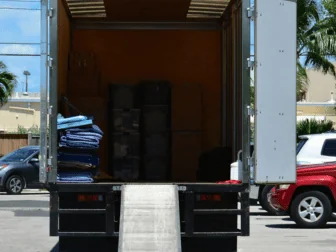
The time has come. The nest is empty, but all those boxes on the lawn might be a problem. At one point or another, everyone moves. This could be offices, homes, or shops; either way, boxes are packed, and someone needs to move them.
This is where you have a choice: hire a moving company or book your shipment with an LTL freight carrier. Many shippers think that they are the same or can do the same thing; however, not every shipment can be moved by movers, and not every service movers offer do carriers offer.
What’s the difference: Moving Company vs LTL Freight
Not every shipment is equal, and some require additional TLC. Not every company offers that care, however. When determining if a moving company or a freight carrier is better for you, you must first ask: What am I shipping? How is it packed? Do I need help?
These will allow teams to better understand and determine what works best. Moving companies are built for household moves, offering services such as labor, packaging, loading and unloading, transportation, and sometimes even unpacking. However, they are limited by truck space and often are unable to move oversized or awkward loads.
Compared to LTL (less-than-truckload) freight carriers, which do not offer packaging or unpacking, freight must be loaded, staged, and ready to go. Carriers are also very conscious of space, meaning that before you can even plan your shipment, it must be measured and weighed, packed, and inspected before it can even be considered ready to go.
Unlike moving companies, which are often limited in service area, LTL carriers can ship to nearly any facility, be it terminal-to-terminal or business-to-business, but when it comes to home-to-home, moving companies excel. When it comes to price, LTL is lower because you are only paying for the space you take up on the truck rather than a whole team and truck (just keep in mind that carriers do not do full-service like moving companies).
This breaks down the primary differences to be:
| Choose This | When You Need |
|---|---|
| Moving Company | Help packing, loading, moving, unloading, and placing household goods. |
| LTL Freight | A packed, palletized, or crated shipment moved from pickup to delivery. |
When might one be better?
Determining which service you need can be overwhelming. If you want a team to handle the move, not just the transportation, then relying on a moving company is best for you. It will also work better for those who are doing full moves of houses, apartments, and facilities.
Unlike LTL carriers, which offer no labor or moving services, moving companies are trained to package items safely, organize items by room, and consolidate small items that LTL freight cannot move. Items that are not crated, palletized, or boxed will not be moved by freight companies, as they are not designed to handle loose household goods, whereas movers are trained to handle them.
While LTL isn’t built for full-home household moves, it excels at. However, it is optimized for large, awkward, and pre-packaged items such as furniture, large appliances, tools, and more. The key here is that everything must be freight-ready!
When it comes to claims, not every claim is the same. Moving companies are required to provide interstate movers with information, such as the “Your Rights and Responsibilities When You Move” booklet and the “Ready to Move” brochure, before the move, as stated by the FMCSA, so that you may know your rights. Even at the state level, movers are regulated and must hold an active operations license to operate within the state of movement.
For LTL Freight, it’s a little different: while moving companies offer services and coverage for both them and their clients, freight insurance is limited liability unless purchased or added on, and it must follow NMFC rules. This also forces shippers to provide as much proof as possible, since the carrier had it for a limited time, while moving companies face lower denial rates because the items were in the movers’ care from nearly the start to the finish.
When picking a company, it is important to review their documents and not agree until you understand everything, because a full household move is not just transportation. It often involves estimates, inventories, liability options, pickup dates, delivery windows, and signed moving documents. Understanding everything you are covered for in the event of an emergency is the first line of defense in claims and often includes full coverage
Packaging Requirements
Each shipment preference, regardless of how much effort they put in, has limitations and requirements for moving your things.
Moving companies often will take care of the boxing but do require the basics of wrapping, padding, and boxing, and their teams handle the loading and unloading – no pallet needed!
LTL freight carriers have a bit more they require. Unlike moving vans, which are smaller and used for one move at a time. LTL is renting a small space on a big truck, meaning all your items MUST be combined, boxed, crated, shrink-wrapped, labeled, and documented.
The key difference can be boiled down to liability context and the burden of proof. For household claims, if damage is noticed or items are missing, they can be filed up to an average of 9 months. For LTL, the longer you wait to report damage, the less likely you will be to win the claim. For concealed damage, the NMFC states you must report within 5 days to claim. While household moving claims give you months to file, LTL claims often give you only hours or days.
Unlike moving companies, who package and move the items when freight is shipped, it must be ready to ship, meaning packed and inspected. When the carrier ‘only’ picks it up and drops it off, the claim is often that the damage was caused by poor packaging rather than by their handling.
Conclusion
Choosing between a moving company and an LTL freight carrier starts with understanding what you are shipping and how it needs to be handled. Movers specialize in household goods, hands-on labor, and full-service support, while LTL carriers focus on efficiency, space management, and freight-ready items that are boxed, crated, or palletized.
Treating these services as interchangeable is where most shippers run into trouble. Claims, liability, packaging rules, and delivery requirements all shift depending on the option you choose. When shippers take the time to match their shipment to the right service and prepare it correctly, they avoid delays, protect their items, and keep their move on track from start to finish.
FreightCenter helps with freight shipping!
We can compare options for items that are packed, crated, palletized, or ready for freight handling.
If you are shipping one large item, several boxes, business equipment, furniture, appliances, or palletized personal effects, FreightCenter can help you compare freight rates and service options based on your shipment details.
Have these details ready before getting a quote:
- Pickup ZIP code
- Delivery ZIP code
- Item description
- Packed dimensions
- Total packed weight
- Number of boxes, pallets, crates, or pieces
- Pickup and delivery location type
- Liftgate, inside delivery, or appointment needs
The clearer your shipment details are, the easier it is to compare the right freight options.