
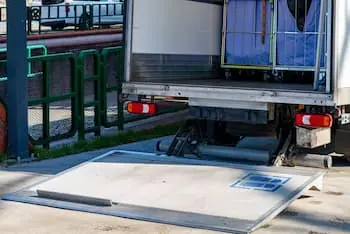
Rings, pins, clips, belts, tires, and liftgates may seem like they have nothing in common, but when a shipment adds an accessorial, it’s just the logistical version of accessorizing, as every BOL needs a statement piece. However, in Q4, we are facing a crisis as accessorials costs rise across nearly every aspect, from limited access to reclass; everyone is feeling the impact.
Logistics is already under pressure in 2026, CSCMP’s State of Logistics report says. Fuel volatility and an ever-changing geopolitical climate are making certain lanes, routes, and equipment unavailable. What was once considered larger equipment, such as 40ft containers and chassis, is hitting closer to home, as peak season shows that congestion and last-mile unpredictability are driving fee spikes and limitations we have never seen before.
This has only been exacerbated as more individuals and businesses operating in or from residential or limited-access areas have emerged in recent years. Still, the infrastructure around them has not kept pace. This leads to shipper frustration, as they are hit with surprise invoice adjustments. Many shippers do not realize that a business registered at a residential location is not a commercial address, which can lead to billing adjustments to reflect the delivery properly.
In 2026, high-value and high-volume shipments have increased, creating additional touchpoints for inspections, liftgates, or specialized services that add not only cost but liability with every hand, fork, or pallet that touches them. Carriers pass this increased liability and pressure onto shippers, who absorb the higher fees to cover rising labor costs, insurance, training, and equipment costs.
Amid peak-season volatility, accessorial control is key to keeping costs down. Let’s explore what is happening in Q4 and why having greater power over your accessorials will be beneficial to you and your business.

Understanding Rising Carrier Fees
As shippers face higher fees on accessorials, as they stack up, it can seem intimidating to the point of asking, “Why do you even need all of this?” Well, they aren’t enforced to inconvenience your operations, but rather to help carriers recover from rising fuel, insurance, and equipment maintenance costs.
When capacity gets tight and equipment is limited, some carriers will raise the cost of their current accessorial equipment services. This is not only to maintain and upgrade their equipment more frequently due to increased use, but also to prevent some shippers and receivers from using it and to encourage them to seek other, more cost-efficient options. While that may sound like a bad business model, operations must keep in mind that every interaction their staff or equipment has is another touchpoint they must account for.
As touchpoints increase, so does the risk of carrier-caused damage, which directly impacts not only margins but also customer relationships, because every chip on the pallet erodes trust. Operations can avoid these hidden fees by accessing their workflows before delivery by:
– Ensuring you have a way to unload or request a liftgate in advance. When requested on-site, fees are higher and/or the truck will not have one, which requires a rescheduled pickup/delivery.
– Confirm with your carrier whether your address is considered limited-access or residential. Due to narrow roadways, low-hanging power lines and branches, and multiple or secure entry points, it is harder for drivers to pass through, so carriers charge more.
– Verify weight and dimensions. Whenever freight is incorrectly measured, it can lead to a truck being over-regulated for weight. Those who do not ensure that they are correct face penalties.
– Appointments/Detention fees are added to shipments when carriers who prefer an open schedule are required to arrive within a 2-4 hour window or when drivers are forced to sit due to prolonged unloading times.
These only stack up when operations fail to account for the little details that prove costly, especially as the industry moves into Q4.

How Operational Discipline Prevents Surprise Costs
Committing to disciplined operations does not end when your freight leaves the door or when it arrives. It begins with the first order, tracking number, and thoughts on shipping. This is because disciplined operations maintain or control every minute detail in their network, including freight preparation, documentation, and delivery requirements, so that carriers have no opportunity to add surprise fees. It’s not a matter of protection but about consistency, accuracy, and eliminating the element of surprise.
Accessorials aren’t added for no reason; they’re there because every shipment is different and requires special care to meet its specifications. When shipping snow globes, you probably don’t want them to be below the pallet of bowling balls. While this may seem obvious, it is what could happen if operations lack data discipline. One of the most common fees/adjustments is from bad data, not bad carriers.
To avoid this, ensure that your freight is properly measured in both size and weight through a standardized, documented process that proves that you not only checked but also provides a first line of defense should a claim be filed.
Density, density, density. Too many people are dense about density. Density verification is extremely important and relies on the correct weight and dimensions of the freight. Even an inch, oz, or a piece of wood chipping out of place will lead to a reweigh and possibly a reclass fee. NMFC is tied to the shipment’s specific density range; your freight must fall within that classification restriction or be reclassified, which adjusts the bracket used to charge it.
The class itself directly impacts cost. When reclassification is required, it means higher costs, reclass/reweigh fees, delayed billing, and reduced defensibility of your claim. However, accessorials change not only because of weight and class but also because of size; when freight is oversized, unstable, or improperly packaged, fees spike.
You can control this by ensuring your freight is consistent in height and width to fit on the pallet, with weight distributed evenly to prevent tipping. If you’re shipping something lightweight or fragile, use stronger materials or crating for better protection and to help with freight-class classification.
If those aren’t options, use shrink wrap to tightly layer and wrap the shipment to keep everything in place and prevent shifting during shipping. Should you be shipping oversized or awkward shapes, try to ensure there is no pallet overhang and that the pallet is stable, as these are usually the first signs you will face a reclass.
However, with operational discipline, you can avoid surprise accessorials, since most last-mile additions stem from workflow gaps rather than carrier decisions. Operations can avoid these by conducting pre-ship inspections to catch and correct packaging errors before staging in an open, accessible area.
Once staged, ensure that all documentation is in order. This includes having printed copies of the paperwork, timestamped images, and freight labeled in a visible, flat, accessible area for clear identification. When checking documentation, this is your final check to ensure that you have selected the correct accessorials.
This checks not only your freight but also your facilities. If you do not have a dock, forklift, or jack, you will need a liftgate. If your address is in a residential or limited area, a fee applies. If you need an appointment time, schedule it! By verifying everything from timelines to touchpoints, operations can avoid detention time and get freight to receivers right when they’re ready.

Why Fees Spike in Q4
Q4 isn’t just another fun way to say the end of the year. It means the end of the operational year and the final stretch to meet their financial and operational goals. It’s also the time to clean up any bad habits before the new quarter begins.
In logistics, this quickly tightens operations, as Q4 isn’t just the final stretch but has historically been part of peak-season congestion, when terminals overflow as inbound and outbound traffic outpaces capacity. This is only exacerbated by the current driver shortage in 2026, forcing carriers to prioritize profitable, predictable freight.
When operations have a shipment history that frequently faces claims and reweigh/reclass fees, they will be less likely to be booked as carriers seek more secure loads. When operations plan and account for every detail, they not only save money but also secure capacity.
Additional fees may seem like a personal attack, especially in such a volatile market, but they ensure that the proper equipment and the labor to operate it safely are scheduled. If you plan your shipment but have no way to load it, operations will incur a liftgate fee or, if unprepared, may not have a liftgate available, forcing not only a liftgate fee but possibly additional fees for repick-up/delivery.
Carriers have to ensure everything runs smoothly, which means having the right equipment, staff, and time window. When the end of the year is underway and peak season is in full swing, carriers respond by raising accessorials, enforcing more rules aggressively, and prioritizing freight that is easy, accurate, and predictable.
This behavior is only enforced more strictly when more issues arise, such as:
– Liftgate fees rise, and equipment becomes scarce or overused.
– An increase in limited access/residental when drivers face repeated delays.
– Appointment fees rise due to tight windows and the need to manage congestion.
– Reweight and reclass fees as carriers enforce density rules to protect margins.
– Detention fees increase as docks are understaffed or windows are missed.
This isn’t personal, but structural as carriers try to protect their networks as shippers and receivers try to keep theirs moving.

Action Plan to Avoid Peak Surcharges
Shippers don’t need to panic when Q4 price rises hit. By planning now, operations can ease in with a defensible, operations-driven approach, grounded in forecasting and efficiency, ready for whatever the final stretch may throw at you.
Before Q4 begins, audit your carriers’ fee schedules and service alerts. The key is to know what is coming before it hits. By auditing your peak season operations, you can identify carriers who may have a history of raising fees early, ones that have struggled with residential or limited access freight, or anything from density enforcement habits to seeing who adds ‘temporary seasonal surcharges’.
Audits turn carrier behavior from random occurrences to consistent patterns, taking operations from surprise to forecast. However, forecasting will do nothing for you if you don’t also know how to operate around bottlenecks. Terminal congestion is one of the top predictors of delays, failures, or additional fees. Shippers can stay ahead by monitoring service alerts, volume holds, and checking for any weather-related delays so that proactive operations can immediately:
– Shift to a different carrier.
– Reroute through a less congested terminal.
– Utilize terminal pickup to avoid last-mile delays.
– Switch what lanes are traveled on.
While congestion is expected, it is often predictable and avoidable. While all carriers have some accessorials, not every carrier is universal, and understanding this can help you avoid fees with the right carrier. Some carriers who excel in short-haul, high-touch, or residential may struggle in weather-sensitive regions, high-value areas, or areas with limited access. Not all carriers are the same, and lane-specific routing needs to be picked based on performance, not brand name alone.
Shippers that use lane-specific routing match with a carrier that excels in that lane, which can reduce congestion, fees/surcharges, time, and adjustments, saving operations time, margins, and customer satisfaction. This strategic play-off combines operational discipline with carrier awareness to reduce claims, delays, and accessorial fees by maintaining strong customer relationships and keeping operations manageable for Q4.

Final Takeaway
In Q4, accessorials go up because networks tighten, equipment becomes scarce, and every touchpoint is higher risk. Yet shippers do have some power. Accurate measurement, smart packaging, accessorial verification, and congestion-planning operations can turn unpredictable fees into predictable outcomes.
Q4 isn’t just the end of the year. This is the ultimate test of preparation, consistency, and awareness. At the market’s most volatile, shippers combine disciplined operations with smart carrier forecasting to protect margins, secure capacity, and keep freight moving.