
In this article, we will explore 5 Common Freight Packaging Mistakes, packaging fails, and how to prevent them. Poor freight packaging can result in damaged products, pickup refusals, shipping delays, reweighing or reclassification charges, damage to other freight, or freight claims that are difficult or denied. The most common freight packaging mistakes include using the wrong pallet, allowing freight to overhang, failing to secure a load, using insufficient cushioning, choosing an undersized crate, and relying on shrink wrap as the only form of protection. To better understand common freight packaging mistakes, we will use real packaging examples to illustrate what went wrong and how you, as a shipper, can correct these problems.
Why Proper Freight Packaging Matters
Proper Freight Packaging Matters for several reasons. First, when freight is being transported, it may be moved multiple times. With this in mind, it’s important that the freight is secure so as not to shift or get damaged during transport. Also, all pallets need to be accessible by forklifts or pallet jacks. In addition, shipments may potentially be placed beside or beneath other freight, so packaging plays a role in the ability for other freight to be transported. When packaging your freight, the item should be protected from vibration, shifting, compression, punctures, or routine handling.
What Can Happen When Freight Is Packaged Incorrectly?
When freight is packaged incorrectly, a carrier can refuse to pick it up. Also, the freight can become damaged in transit. It is equally important to be mindful that improperly packaged freight can damage another shipment. The costs of not packaging your freight correctly can add up quickly when you factor in logistics. Your delivery may be delayed, and additional handling charges may be assessed.
5 Common Freight Packaging Mistakes
1. Using Stretch Wrap as a Substitute for Protective Packaging
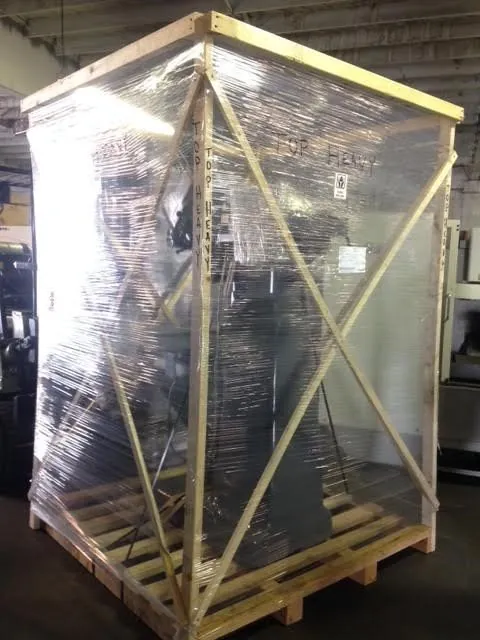
This shipper decided to use stretch wrap in order to create protective walls around their freight. Although stretch wrap holds a load together, it does not replace a box, crate, protective panel, padding, or any other form of structural packaging. With this being said, exposed machinery remains vulnerable to impacts and potential collision with nearby freight.
To prevent damage to the freight, it must be secured on a properly sized pallet. Exposed controls, hoses, corners, or any other delicate components should be protected. To protect this type of shipment, cushioning, blankets, or a crate may be needed to secure the freight. Once the load is secured, it should be wrapped to a pallet.
2. Placing One Shipment Across Multiple Pallets
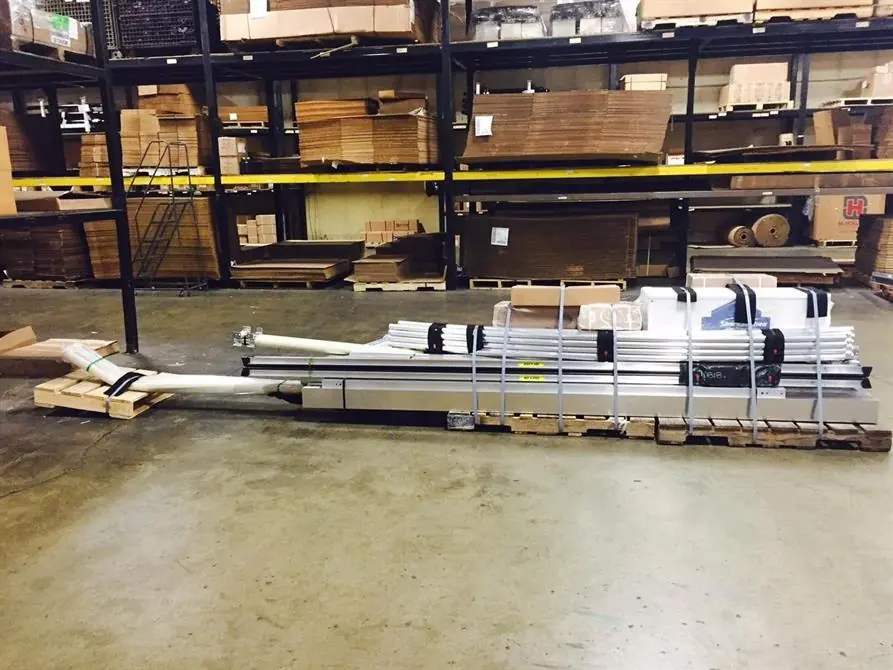
In the photo above, you can see that the freight was placed across several separate pallets because no single pallet was long enough. This is an issue for multiple reasons. The first is that since three pallets are being used to secure the shipment, they may move independently. Also, the load may be difficult or impossible to move with a pallet jack. In addition, weight may be distributed unevenly, making it almost impossible to secure the shipment. In the photo, you can observe that there are straps holding the product together, but it is not secured to a stable base since three pallets are being used.
In order to prevent this shipping failure, it’s important to use a continuous skid or a custom pallet. Another possibility to avoid this is to consider using a crate or a custom wooden base for unusually long freight. Also, you should make sure that the load can
be lifted safely. With three pallets, it would make it almost impossible to move this freight. Last but certainly not least, you should confirm the equipment requirements before your freight pickup.
It might take more time to put together a proper freight shipment. However, doing so the right way will save you money in the long run and reduce the costs of having your freight returned or having a carrier refuse to pick it up. It’s important to keep in mind that you want your package to arrive at its destination properly secured and safely transported.
3. Allowing Freight to Overhang the Pallet
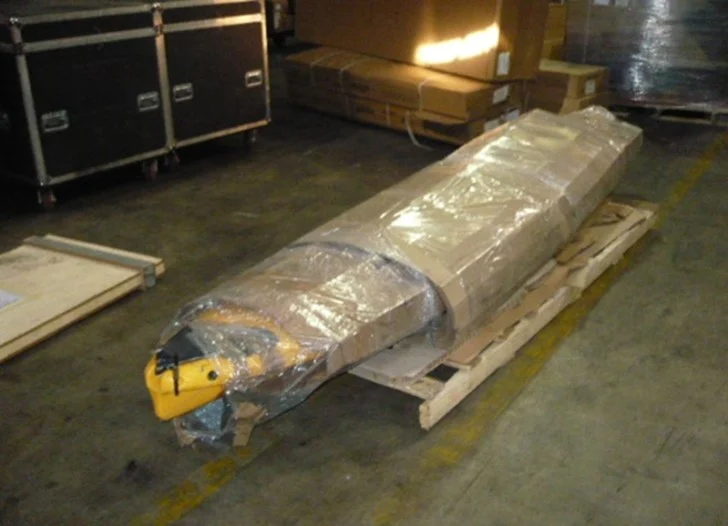
In the photo above, you can see the kayak extending and hanging over the pallet. This is an issue because exposed portions of the kayak can be struck by forklifts or nearby freight. In addition, when there is overhang, the support underneath the product is reduced. When a package overhangs a pallet or is not packaged correctly, it will make the shipment harder to stack or position. Also, with an overhang, the package is more prone to damage or to damaging other freight. With this in mind, the carrier may refuse the load altogether.
To prevent this kind of issue with an overhanging product, there are a few preventive steps to consider. First, when selecting a pallet or skid, make sure it is large enough to accommodate the entire item you are trying to ship. Also, the boxes and products, in the case of the above photo, the kayak, should be within the pallet perimeter. If you are trying to ship certain products that won’t fit in standard packaging, it’s important to consider custom packaging for unusually long or irregularly shaped items. Finally, when shipping certain products, consider using reinforced boxes or crates instead of forcing them onto a standard pallet.
4. Using a Crate That Is Too Small

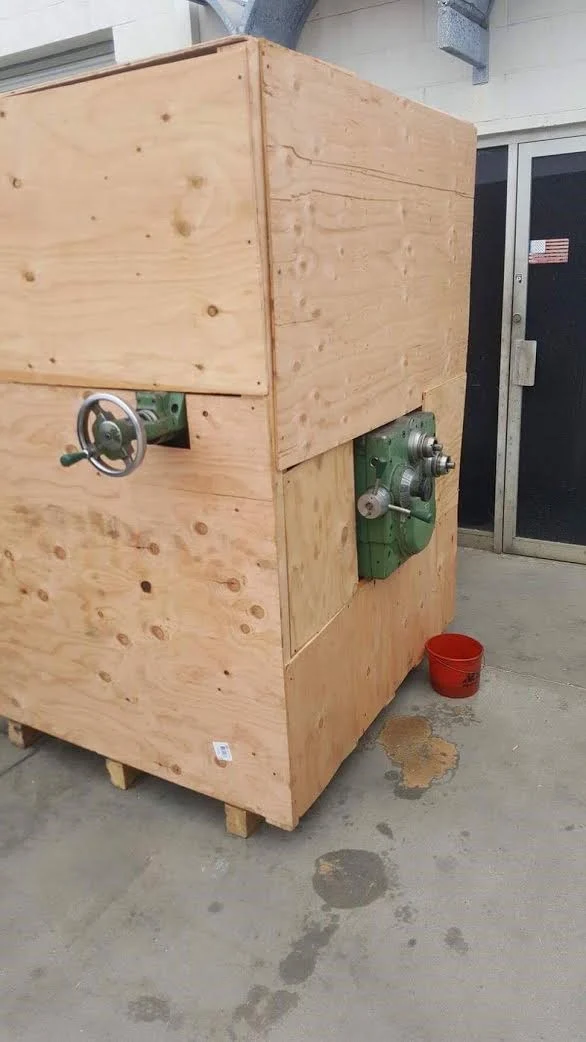
In the picture above, you can see that although the freight or machine is packaged in a reinforced crate, parts of the machine are outside of the crate. There are quite a few reasons why this is a problem. Exposed components of the machine can be bent, crushed, or even torn away. Not to mention, the parts that are sticking out of the freight may damage surrounding freight. Also, because the machine isn’t secured in the crate, it is more likely to move during transport, posing a safety hazard and increasing the risk of colliding with or damaging other freight. When using a crate, it’s important to use the appropriate size for the item you want to ship.
To prevent this type of freight issue, it’s important to measure the item at its widest, longest, and tallest points. When measuring, be sure to include components in the measurement that are protruding, like the parts of machinery above that are sticking outside of the crate. In addition, enough room should be made to account for cushioning and blocking that will be needed to secure the freight. As mentioned previously, it’s important that you secure the product inside the crate. Doing so will help prevent the product from shifting during transport, reducing the risk of damage to your product or other nearby freight.
5. Using Household Materials Instead of Freight-Grade Protection
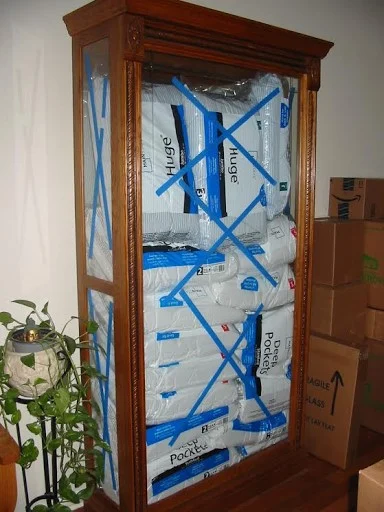
The shipper, in an attempt to pack their freight, stuffed it with pillows. Also, not only did the shipper use pillows, but they reinforced this with painter’s tape to protect the glass cabinet. There are so many things wrong with this image when it comes to the right way to package freight. First, household pillows do not provide reliable structural support. Also, painter’s tape cannot protect glass from impacts that can result when freight is in transit. In addition to the pillows and painter’s tape not protecting freight that includes glass, the exterior remains exposed and is more prone to getting damaged. Also, loose or internal padding may cause the freight to move within the truck.
To prevent damage to glass freight, appropriate cushioning and rigid exterior materials should be used. In the case of the image above, removing shelves or other movable parts should be done when possible. Also, it’s important to use corner and edge protection; this will reinforce the freight and increase the likelihood that it will be protected from damage. In addition, if you are attempting to transport fragile items like the one in this picture, you should consider a white-glove or specialized service.
How to Package Freight Correctly
In order to better understand how to package freight correctly, this section of this article will provide you with a step-by-step guide on how to properly package freight.
Step 1: Identify the Freight’s Packaging Needs
The first thing to consider is the package’s weight. You want to make sure it’s the right weight. Also, when preparing to ship a package, knowing the dimensions is important because they indicate the type of packaging you need. Fragility is important when it comes to thinking about what materials you will need to use to make your package less susceptible to damage. Often, freight is stacked or placed next to one another; proper packaging of your frieght will ensure it fits comfortably.
Step 2: Choose the Right Pallet, Box, Skid, or Crate
When it comes to shipping freight correctly, it’s important to consider what type of packaging you will need. Below is a list of freight packaging types and when each’s appropriate to use.
- Pallet: Stackable boxes and stable packaged goods
- Custom skid: Long, heavy, or irregular equipment
- Corrugated box: Smaller protected product
- Crate: Fragile, valuable, exposed, or irregular freight
Step 3: Cushion and Protect the Item
Shipping your freight involves making sure it is protected and safe to transport. Different options for protecting your freight include using foam, bubble wrap, moving blankets, corner protectors, edge protectors, and blocking and bracing. Doing so will ensure that your package is properly secured and ready for transport.
Step 4: Secure the Freight
As mentioned above, securing freight is extremely important when shipping your product. You have quite a few options for securing your freight. These options include stretch wrap, shrink wrap, ratchet straps, bolts, blocking, or bracing, just to name a few. Having a wide variety of options for securing your freight benefits you as a shipper, and utilizing all appropriate options to ship your freight is the goal. Also, it should be noted that wrapping holds freight together but does not replace structural protection.
Step 5: Label and Measure the Shipment
Labeling is very important when shipping your freight. Below are detailed steps to help you label your product and prepare it for shipping.
- Place labels on visible, flat surfaces
- Remove old labels when reusing packaging.
- Record final packaged dimensions.
- Weigh the fully packaged shipment.
- Add handling labels when appropriate.
Can a Carrier Refuse Improperly Packaged Freight?
Yes. A driver or carrier may refuse a shipment when its packaging appears unsafe, unstable, inaccessible, or likely to damage other freight. Packaging requirements can vary, so shippers should confirm requirements before the scheduled pickup.
There are several common reasons for refusal, most of which we have covered in this article. However, let’s do a deeper dive: first, loose or leaning freight can lead a driver or carrier to refuse a shipment because it’s unsafe and could damage the item itself and other freight. As shown in the kayak photo, significant pallet overhang is another reason that freight can be refused. Broken pallets can lead to a refusal because there is no way to transport the freight. Exposed sharp components directly result in freight being refused because they cannot be moved safely. Last but certainly not least, insufficient structural packaging can lead to freight being refused.
How FreightCenter Helps Shippers Avoid Packaging Problems
Here at FreightCenter, we provide the following services to our shippers:
- Helping customers identify an appropriate shipping method
- Reviewing shipment details before booking
- Discussing liftgate, inside delivery, limited-access, or specialized equipment needs
- Helping coordinate LTL, truckload, white-glove, expedited, and specialized freight
- Referring customers to third-party packaging or crating providers when needed
- Helping customers compare carrier and service options
Not sure whether your freight is ready for pickup?
Call FreightCenter at (800) 716-7608 to discuss your shipment or request a free online freight quote.
Frequently Asked Questions About Freight Packaging
What is the most common freight packaging mistake?
Allowing Freight to move and overhang the pallet. or remain insufficiently secured.
Can freight hang over the edge of a pallet?
No overhang is recommended because it exposes the freight to impacts and reduces support.
Is stretch wrap enough to protect freight?
Usually not by itself. It secures the load but does not replace cushioning, boxes, panels, or crates.
Should freight be stacked and wrapped?
Heavy or irregular freight may need to be both stacked and wrapped.
Can I place a long item across two pallets?
A continuous skid, custom pallet, or crate is generally safer than separate pallets.
When does freight need a crate?
Fragile, valuable, irregular, exposed, or non-stackable products often benefit from being crated.
Can I reuse a pallet?
Only when it is structurally sound and appropriate for the shipment’s weight and dimensions.
How do I protect machinery during freight shipping?
Secure it to a strong base, protect exposed components, prevent movement, and crate it when necessary.
How should glass furniture be shipped?
Use rigid protection, cushioning, corner protection, and typically a crate or specialized service.
Can poor packaging affect a frieght claim?
Improper packaging can complicate a damage claim, so the shipment should be properly prepared and documented.
Do shipping labels replace protective packaging?
No. Labels provide handling information but do not prevent physical damage.
Should I photograph freight before pickup?
Yes. Photos can document the condition of the goods and packaging at the time of pickup.
Does FreightCenter provide freight packaging?
FreightCenter can help customers understand general preparation needs and may recommend third-party packaging or crafting assistance when appropriate.