

Temperature-Controlled Freight Shipping for Businesses
Match your required temperature, shipment size, route, and timing with available refrigerated or climate-controlled options.
FreightCenter helps you request rates, compare available services, book a shipment, and get expert help when your freight needs temperature control.
Explore Temperature-Controlled Shipping Options
Refrigerated Freight Shipping Truckload Freight Services Expedited Freight Services Guide to Temperature-Controlled Shipping


Temperature-controlled freight shipping starts with matching your product’s temperature requirements to the service, equipment, route, and timing of the shipment. FreightCenter helps you compare available options for your current load and gives you one place to return when another temperature-sensitive shipment is ready to move.





Thousands of businesses trust FreightCenter to move their freight faster, smarter, and cheaper! From unbeatable rates to top-notch service, our customers are raving about their shipping success.
See why they keep coming back!
Award-Winning Service, Trusted by Shippers Everywhere!
- 2021, 2017 & 2016 Food Logistics’ Top Green Providers
- 2021 & 2018 Supply & Demand Chain Executives’ Pros to Know: Matthew Brosious
- 2020 & 2019 Top Food Logistics’ 3PL & Cold Storage Provider Award
- 2020 & 2019 Business Observer’s Top 500 Companies on the Gulf Coast
- 2020 & 2017 SmartWay® Transport Partner
- 2020 & 2017 Food Logistics’ Champions: Rock Stars of the Supply Chain
- 2020 Best of Palm Harbor Awards for Local Businesses
- 2017 Green Supply Chain Award from Supply & Demand Chain Executive
- 2017 Tampa Bay Business Journal Heroes at Work
- 2016, 2015, & 2012 Food Logistics Top 100 Software and Technology Providers
- 2013 Tampa Bay Business 100 by Tampa Bay Business Journal
- 2013 Top 100 Great Supply Chain Partners by SupplyChainBrain
- 2012 TIA Samaritan Award Honorable Mention
- 2012, 2011 & 2010 TBBJ Fast 50 Recipient
- 2013, 2011, & 2010 Diversity Business Top Businesses

Why Businesses Use FreightCenter for Temperature-Controlled Freight
Temperature-sensitive shipments can involve more decisions than a standard dry shipment. FreightCenter helps you work through those decisions before you book, from choosing the service type to providing the shipment details needed to request rates.
- Compare available shipping options: Review temperature-controlled services based on your route, shipment size, timing, and operating temperature before choosing an option.
- Match the service to the shipment: Compare climate-controlled LTL, refrigerated truckload, and other available services based on how much freight you’re moving and how it needs to travel.
- Get expert help with harder shipments: Work with a FreightCenter shipping expert when equipment, timing, temperature requirements, or handling details need a closer look.
- Make recurring shipping easier to plan: Keep the important details of repeat lanes and temperature-sensitive shipments organized so future quote requests start with better information.
Start With the Temperature Requirement
Know the operating temperature or acceptable temperature range before you request service.
Descriptions such as “keep cold” or “refrigerated” don’t give a carrier enough detail to evaluate a sensitive shipment. Providing the actual requirement helps narrow the equipment and service options that may fit.
For food that requires temperature control for safety, the FDA Sanitary Transportation of Human and Animal Food rule addresses temperature-control responsibilities during transportation, including specifying appropriate operating conditions.
Have this information ready when possible:
- Required operating temperature or acceptable range
- Product description
- Any heat- or cold-sensitivity concerns
- Special handling requirements
- Required pickup and delivery timing
Choose the Service Around the Shipment
Temperature-controlled freight can move in different ways depending on shipment size, route, timing, and equipment requirements.
Climate-Controlled LTL:
A smaller qualifying shipment may be able to move through a temperature-controlled LTL option without requiring an entire trailer. Availability depends on the shipment and lane.
Refrigerated Full Truckload:
A dedicated reefer trailer can be considered when you have a larger shipment, need dedicated equipment, or don’t want to share trailer capacity with other freight.
Expedited Temperature-Controlled Freight:
When the delivery requirement doesn’t fit a standard schedule, expedited transportation may be available based on the shipment, route, and equipment needed.
Have Accurate Shipment Details Ready
A temperature requirement is only one part of the quote.
Be prepared to provide:
- Origin and destination
- Pickup date
- Required delivery timing
- Product description
- Total weight
- Shipment dimensions
- Number of pallets or handling units
- Required temperature
- LTL or truckload needs
- Pickup and delivery requirements
- Special equipment or handling needs
Accurate information gives FreightCenter a clearer starting point for reviewing available options.
Plan Packaging Before Pickup
The trailer handles the transportation environment, but your freight still needs to be prepared for normal transportation conditions.
When additional temperature-control packaging is part of the shipment, FreightCenter can connect shippers with packaging partners offering options such as insulated containers, gel packs, dry ice, and active cooling systems.
For detailed preparation guidance, use the Guide to Temperature-Controlled Shipping before the shipment is booked.
Compare the Complete Shipping Option
Rate matters, but it shouldn’t be the only detail you review.
For temperature-sensitive freight, also consider:
- Equipment type
- Required temperature
- Pickup timing
- Delivery requirements
- Service type
- Route
- Special handling
- Expedited needs
The best practical choice is the option that fits the requirements of the shipment you’re actually moving.
The service you need can change with shipment size, timing, and temperature requirements. Explore these related FreightCenter resources before you book.
Compare refrigerated freight options for shipments that need reefer equipment and temperature management.
Explore dedicated truckload equipment when your shipment needs the trailer to itself.
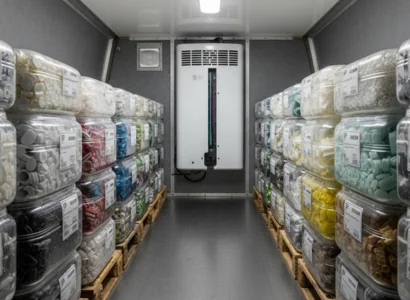
Cold Boxes offer a unique transportation style, tucking the sensitive freight into it's own climate controlled crate. This gives it the freedom to travel in almost any form of transportation.
Compare transportation options when a temperature-sensitive shipment also has a tight delivery requirement.

 Guaranteed competitive pricing every time you ship.
What Affects Temperature-Controlled Freight Rates?
Key rate factors include:
- Origin and destination: Longer routes and different shipping lanes can affect the available carrier and equipment options.
- Shipment weight and dimensions: The amount of trailer space and capacity your freight requires helps determine which service types are practical.
- LTL or full truckload service: A smaller qualifying shipment may use shared capacity, while a dedicated reefer requires the trailer for one shipper.
- Temperature requirement: The operating conditions your product needs can narrow the equipment and service options available.
- Equipment type: Refrigerated and other temperature-managed equipment has different operating requirements than a standard dry trailer.
- Pickup and delivery timing: Appointment requirements, narrow receiving windows, and urgent delivery needs can affect the service options considered.
- Carrier and equipment availability: Available reefer capacity can vary by lane, timing, and market conditions.
- Special handling requirements: Additional handling, packaging, facility, or equipment needs can change how the shipment must be planned.
- Expedited service: A tighter delivery requirement may call for a different transportation option than a standard schedule.
Temperature Controlled Freight FAQs

Q. What is temperature-controlled freight shipping with FreightCenter?
Temperature-controlled freight shipping with FreightCenter helps businesses compare transportation options for products that need specific temperature conditions during transit. FreightCenter can help review the shipment, request rates, compare available services, and book an option based on the load’s requirements.
Q. How do I get a temperature-controlled freight quote?
Start by providing the shipment details FreightCenter needs to evaluate available options. Enter the origin, destination, shipment size, timing, product description, and temperature requirements through the quote process or speak with a shipping expert when the shipment needs additional review.
Q. What information do I need for a temperature-controlled freight quote?
You should have the product, required temperature, weight, dimensions, origin, destination, and timing ready before requesting a quote. Also provide any special pickup, delivery, equipment, packaging, or handling requirements that could affect service selection.
Q. Can FreightCenter help with both LTL and full truckload temperature-controlled shipping?
Yes, FreightCenter offers temperature-controlled LTL and full truckload options based on shipment requirements and availability. A smaller qualifying shipment may fit an LTL option, while larger loads or shipments needing dedicated equipment may be better suited to refrigerated truckload service.
Q. How do I choose between temperature-controlled LTL and full truckload?
Choose based on shipment size, equipment needs, timing, temperature requirements, and available service. FreightCenter can help you compare the available choices when the best option isn’t obvious from shipment size alone.
Q. Can FreightCenter help with refrigerated and frozen shipments?
Yes, FreightCenter can help identify refrigerated transportation options for temperature-sensitive shipments, including products that need chilled or frozen conditions. Provide the exact operating temperature or acceptable range before service is selected.
Q. Can temperature-controlled freight be expedited?
Yes, expedited options may be available when a temperature-sensitive shipment has a tighter delivery requirement. Availability depends on the route, equipment, shipment size, and required schedule.
Q. Can FreightCenter help with temperature-controlled packaging?
FreightCenter can connect shippers with temperature-controlled packaging partners. Available packaging support can include insulated containers, gel packs, dry ice, and active cooling systems depending on the shipment’s requirements.
Q. What affects the price of temperature-controlled freight shipping?
Temperature-controlled freight pricing can be affected by route, shipment size, equipment, temperature requirements, timing, service type, and available capacity. Special pickup, delivery, handling, or expedited requirements can also affect the options available.
Q. Can I compare temperature-controlled freight options before booking?
Yes, comparing available options is part of FreightCenter’s quoting process. Review the rate together with the equipment, service type, schedule, and shipment requirements before selecting an option.
Q. Do I need a FreightCenter account to start a quote?
You can start by entering your shipment details through FreightCenter’s quote process. The quoting flow may ask you to sign in as you move through the process and review available results.
Q. Can I use FreightCenter for recurring temperature-controlled shipments?
Yes, FreightCenter can be used when temperature-controlled shipping is an ongoing part of your business. Keep recurring shipment details such as dimensions, weight, temperature requirements, facility information, and common lanes current so future quote requests begin with accurate information.
3 Super Insightful Tips for Temperature Controlled Freight Shipping

Be Precise About Temperature Ranges (Not Just “Refrigerated” or “Frozen”)
When filling out your freight quote or booking request, don’t generalize your temperature needs. Terms like “cold,” “chilled,” or even “refrigerated” can mean very different things across carriers—one might consider 45°F acceptable, while your product requires ≤38°F. Be specific: list the exact temperature range required (e.g., 34°F–38°F). This ensures your 3PL matches you with a properly equipped carrier and avoids costly spoilage or rejected freight later.

Ask if Consolidation or Multi-Stop Routes Are Involved
To save on costs, some temperature-controlled LTL shipments may be co-loaded with other freight or routed through cross-docks. If you're shipping highly sensitive products or goods with strict temperature tolerances, this could increase risk. Ask your 3PL whether your shipment will travel direct-to-destination or as part of a shared route. If it’s the latter, request documentation that your temperature range will still be maintained throughout, or explore dedicated options for greater control.

Schedule Deliveries Early in the Week to Avoid Weekend Delays
Freight that ships out late in the week risks sitting in a warehouse or reefer trailer over the weekend, especially if the receiver is closed on Saturdays or Sundays. This can lead to temperature drift, higher detention fees, or spoiled goods. When working with your 3PL, plan pickups Monday–Wednesday whenever possible and confirm that the receiver’s hours align with the delivery ETA. This simple timing adjustment can help protect your freight and avoid avoidable charges.