

The cost‑per‑unit playbook is closing. For nearly three decades, global supply chains were built around the cheapest option and the leanest inventories. That model created single‑country sourcing, long ocean‑dependent replenishment cycles, and a belief that stability would last forever. However, it didn’t.
What once passed as operational excellence has become operational fragility. Lowest unit cost, maximum consolidation, and minimal redundancy now expose companies to shocks they were never designed to withstand. The same ideas that once shaped the old era no longer exist. Geopolitics, freight markets, and regulatory pressure have all shifted, and the cost‑optimized global network has cracked under the weight of modern volatility.
The new reality is simple. Flexibility wins. Proximity, redundancy, and compliance are now the pillars of modern network design, and the companies that rebuild them will be the ones that stay standing when the next disruption hits.
The Closing of the Cost-Per-Unit Playbook
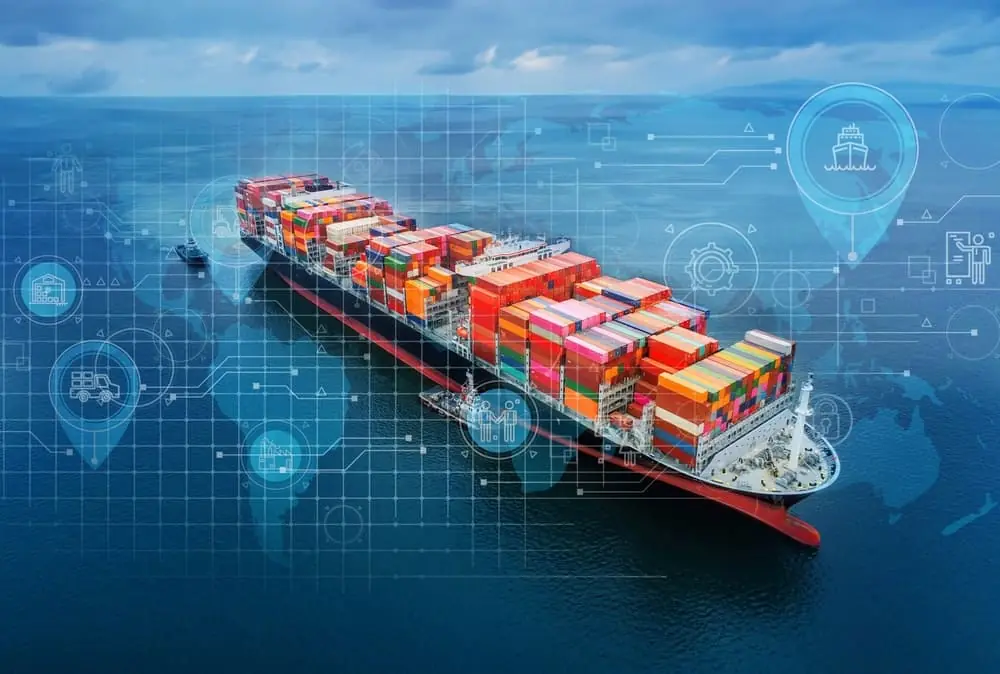
No matter the business, industry, or purchase, you’re most likely looking for the most affordable option. That has been the global supply chain playbook, originally written in the mid-1990s and used through the 2010s. It was built around one idea: the cheapest option and lean inventories. This has led to single-country sourcing and long, ocean-dependent restocking cycles, which in 2026 have begun to collapse under today’s volatile environment.
What has now become an operational liability was once considered excellence: lowest unit cost combined with maximum consolidation and minimal redundancy. These low-cost strategies have left companies exposed to shocks they aren’t prepared for. The old model assumed that everything would remain stable over the years, including geopolitical climates, freight markets, and light-touch regulations. These conditions no longer exist.
Three pillars of the old playbook were once dominant strategies but can no longer serve as the foundation for network planning.
– Extreme Offshoring (Labor Arbitrage): The goal was to relocate factories to developing countries with the lowest labor costs. Issue: Production is moving thousands of miles away from actual customers.
– Massive Scale Economies: The goal was that, by centralizing production, the cost per unit would be lower. Issue: Single sourcing limits production and can cause catastrophic delays when a single factory worldwide produces a critical component.
– Just-in-time Inventory: To eliminate warehousing costs, production was planned to be completed and delivered exactly when needed. Issue: There was no buffer for errors, delays, or emergencies.
In recent years, trade wars, pandemic shutdowns, port congestion, and geopolitical stress have shown that global chains that are optimized purely for cost are fragile. This has forced world trade leaders to face the fact that the ‘cost-per-unit’ model has created points of failure across the supply chain, from suppliers to lanes, proving that supply chains need to base decisions on flexibility, not cost alone.
Regionalization
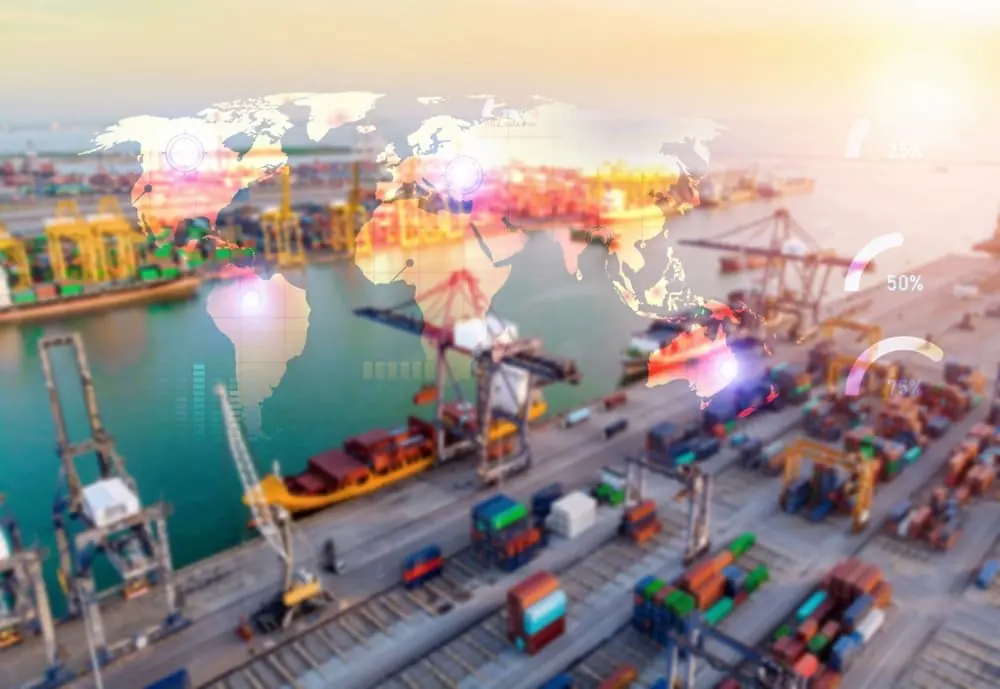
As businesses shift from cost-per-unit to a modern playbook that prioritizes flexibility over cost, they’re leaning toward multi-regional clusters rather than single global hubs. This structural redesign focuses on local sourcing and economies driven by near‑shoring, friend‑shoring, and reshoring.
The goal isn’t to produce where labor is cheapest, but to build where demand lives. By focusing on what can be scaled and brought closer, we can transform long, ocean-dependent networks into short, responsive systems that can handle sudden shocks.
Key drivers include compressing lead times from nearly 45 days to 5-7 days by bringing production closer to consumption. This allows for rapid demand sensing and faster SKU replenishment cycles. Compared to long-route ocean travel, regionalization reduces checkpoints and port congestion and can support modes that require regional responsiveness, such as omnichannel models.
Replacing fragile lanes with ones that can adapt at a moment’s notice lowers volatility tied to global disruptions (Panama Canal drought, Red Sea conflict, EU port strikes) and creates predictable transit profiles that stabilize cost-to-serve. This allows you to rebalance your freight corridors, another key driver of regionalization.
By leaving the long path single-source weeks away, switching to hubs closer to home is a major operational play. You can also do this by not relying solely on the long haul and by planning for disruptions that may affect your primary source. Dual-hub production can let you keep your primary volume supplied from another country while maintaining a secondary “responsive” volume in a closer location, such as North America or Eastern Europe.

Resilience
Resilience means engineering a network that keeps moving when global corridors halt. However, resilience shifts the focus from optimizing efficiency to avoiding disruptions when everything else halts.
When operations transition from legacy networks engineered for a stable, consistent environment to modern networks that prioritize resilience and shock absorption, they achieve an offensive position and gain a competitive advantage. Key drivers in a resilient network are multi-sourcing and split allocation. We’ve all heard the phrase ‘don’t put your eggs in one basket ’; this puts it into action.
Operations that transition from 100% single-vendor reliance to a split volume (ex., 70/30 or 60/40) across geographies. This reduces exposure to today’s volatile political and logistical climate and protects against other disruptions such as climate events or regulatory shifts.
By creating these multi-source pathways, you can automatically access the secondary volume if a disruption occurs in one. Meaning, while everyone else is trying to get over the disruption, you have already bypassed it. In 2026, modern sourcing portfolios no longer look like a single page of suppliers but a playbook of backups and defensive strategies.
Operational plays you can implement include running simulations of how your network will survive disruptions before they happen and planning how to get through them with minimal operational disruption. By doing so, you can calculate Time‑to‑Survive (TTS) and Time‑to‑Recover (TTR) metrics for critical corridors. This lets you see how long the node can operate during the disruption and how quickly your operations can bounce back if the disruption occurs. Leaders who use this strategy can apply the insights to prioritize areas likely to be failure points.
Another resilience strategy is to build facilities that can pivot across SKUs, product families, or customer segments. This enables rapid response during demand spikes or supply interruptions by supporting ‘swing capacity’ to absorb overflow from disrupted networks. These flexible, multipurpose facilities serve as regional shock absorbers that help stabilize your network when geopolitical, regulatory, and climate events affect it; disruptions don’t halt you.
Resilience is more than just planning to survive hardships. It is about reducing the impact on your operations of financial margins that were previously wiped out by defensive strategies. By stabilizing this pivotal profit lever, you cannot only protect your network but also the customer experience by preventing stockouts and service failures.

Regulations
Modern supply chains are no longer simple point-to-point transit routes. In 2026, it requires a network built around trade policy, tariff exposures, ESG mandates, and origin verifications from the moment production begins. Companies that address these regulations up front, rather than as an afterthought, can gain a competitive advantage through margin stability, predictable landed cost, and reduced disruption risk.
Compliance is no longer just paperwork; it is the backbone of network architecture. Key drivers for regulatory compliance are trade policy, tariff volatility, traceability, and ESG mandates. Unlike in the past, tariffs now change quarterly rather than annually, driven by political cycles that create cost whiplash. This is impacting concentrated networks, creating a new industry rule for those ahead of the regulations: If your network can’t flex with policy, it can’t protect margin.
Regulations don’t stop at the item itself; they extend to where it comes from, who has access to it, what is used to create and ship it, and how. Governments now require that you prove its origin, not just declare it. This lets customs ensure the materials did not originate from banned regions or forced-labor sources.
Regulations also track down materials. Companies must track materials down to Tier-2 and Tier-3 suppliers to avoid detentions, fines, and shipment holds. Not doing so, or not keeping track, can lead to shipping detentions, business loss, and heavy fines. These not only heavily impact operations but also margins.
Ecological regulations are also front and center in operations. Carbon-intensive lanes also face regulations and fines if they cannot comply. This is a pivotal step in modern climate protection. This means operations face rising carbon pricing and regulatory penalties on transport, making high-emission shipping and freight lanes structurally expensive and forcing companies to redesign supply chains, shift to regional hub models, and prioritize proximity over long-distance transit.
Operational plays are integrating real-time tariff and regulatory data directly into your network modeling tools. This allows you to automate your systems, replacing manual spreadsheets with dynamic, data-driven forecasting. Planners can make guided operational decisions using simulations that enable networks to see the impacts of questions such as “What if USMCA changes?” or “What if EU CBAM expands?”
Once you know how your operations will react, you can do a deep dive into supplier mapping, building full visibility across your supply chain by showing supplier origin, labor practices, and environmental impact, while maintaining compliance and reducing your risk of detention, customs delays, and emerging global regulations.

Modern Issues Require Modern Solutions
Legacy systems may have laid the foundation of the supply chain, but they can no longer support the pillars needed to create a stable network. Unit cost hides the system’s true fragility. A $2 offshore unit cost becomes a $12 loss when the real cost surfaces, but unit cost is only part of the story. Total cost to serve is the full truth. Especially when disruptions occur, such as:
– Expedited air freight triggered by stockouts
– Inventory carrying costs from long lead times
– Tariff whiplash during political cycles
– Emergency working capital to rebuild safety stock
– Stockout penalties and lost revenue
– Service-level erosion that damages customer lifetime value
This lets businesses build networks that can limit, if not avoid, disruptions by leveraging the three pillars of regionalization, resilience, and regulation. What looks like extra cost is actually a buffer against catastrophic failures. There is no ‘extra cost’ in margin premium spent on regionalization, dual‑sourcing, or compliance.
With a 5-8% increase in baseline costs, operations can prevent a 30-40% margin collapse during major disruptions. While many operations leaders understand baselines and margins, many do not consider fragility until it hits the profit-and-loss statement. Performance metrics also shift from “Is nearshoring more expensive?” to “Is fragility still acceptable?”
Conclusion
While legacy systems may have shaped the groundwork of global supply chains, they can no longer support todays needs for a stable network. While the cost-per-unit model rewarded cheap labor, massive consolidation, and just-in-time inventory, the same strategies create points of failure that break networks when shocks hit supply chains.
Modern operations require networks built on the three Rs of network design: regionalization, resilience, and regulation. What may look like an extra cost is actually protection. Companies that redesign now will be the ones that stand when the next disruption hits.
Flexibility wins, stability follows.