

Truckers have a tough job: long hours on the road, days away from home, and little free time to enjoy what they like to do because everything we use and rely on on a daily basis must be transported, and unfortunately, we aren’t quite advanced enough to leave it to just machines.
CDL drivers face many limitations, and one of them is the maximum number of hours they are allowed to drive in a day. Truck drivers are limited by the Federal Motor Carrier Safety Administration (FMCSA). They can drive up to 11 hours within a 14-hour on-duty window, after which they must take 10 consecutive hours off duty. Additionally, they must take a 30-minute break after 8 cumulative hours of driving.
The American Parking Deficit
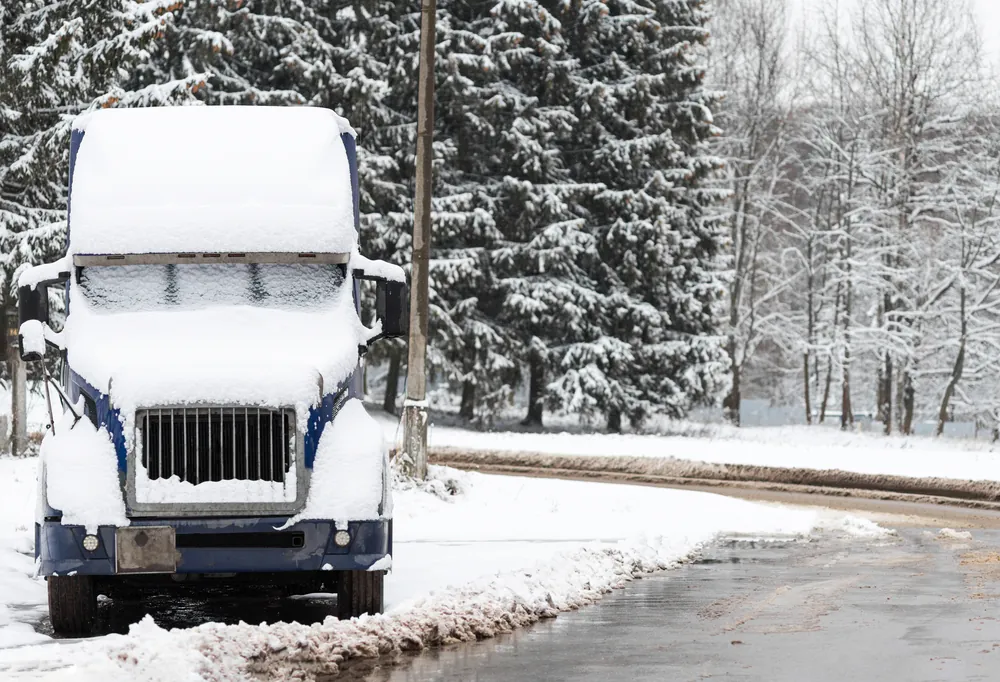
In a country that is always on the move and crisscrossed by long highways, you would think we would ensure our roadways are optimized for those who live on them. The issue is, we don’t. In the United States, there is 1 legal trucking spot for every 11 trucks. This national parking spot deficit slows freight, increases risk, and drains billions of dollars from the economy each year.
While the spot shortage isn’t limited to Florida, Texas, or California, these states contain major highways that move large volumes of freight. Corridors such as I-95, I-5, I-80, I-81, and I‑10 routinely hit demand peaks that exceed available parking capacity by triple digits. Drivers have been reporting the same frustrating conditions across the country:
- – Full lots by 5 p.m. – 6 p.m.
- – Shoulder parking on ramps and mainlines
- – Abandoned lots used as overflow
- – Early shutdowns to secure a spot
- – Lost miles, lost revenue, lost time
This is the reality of limited parking for truck drivers. There is even a hidden cost: drivers must find a safe, legal place to park. They often plan where to park in advance, but there is no way to reserve a spot, so if it’s full, they must find a new location.
On average, drivers spend 56-60 minutes searching for a parking spot. This amounts to over 300 hours a year, costing carriers and drivers nearly 15 days of lost productivity for drivers and companies due to parking.
This quickly costs time and money, leading to fewer billable hours, lower asset utilization, and higher operational costs, and reducing shippers’ capacity. Carriers face these hardships, and it still costs more than their image. When carriers are unable to make shipments, shippers face missed appointment windows, delayed freight, and higher detention costs. This affects not only shippers’ margins but also the relationship between carriers and shippers.
The drivers are the ones who face the most risk. When a legal spot is unavailable, but they must park, they will be forced to rely on alternative spaces, interstate shoulders, on-ramps, and construction zones. Each of these poses risks of a crash, theft, or harm to the driver.
Dangerous parking can also lead to insurance issues should an accident occur. A single shoulder-parked truck can trigger collisions, insurance claims, and litigation exposure for everyone involved.
Between the danger to drivers and the siphoning of margins, parking scarcity is now being recognized as a national safety crisis, not a driver inconvenience. As many drivers are required by law to, and if they ignore it, they will face consequences ranging from fines to loss of license.
While more businesses pop up every day, distribution centers and carriers quickly follow, but street infrastructure takes months to years to update. This results in more trucks concentrated in fewer areas as these business-driven towns are erected in cities such as Dallas, Chicago, Atlanta, the Inland Empire, and Central Florida. Higher congestion leads to missed windows, more illegal parking, and earlier shutdowns.
When jobs get riskier, it’s no longer just human dissatisfaction that makes a job hard to want. Now it becomes a matter of life and death. Facing such a tough decision over something as simple as parking causes unnecessary stress for drivers and has quickly become the top reason they leave the industry.
This needs to be considered when discussing driver retention, as turnover, on average, costs a company $8-12,000 per driver, including job advertising and training. When parking isn’t an issue, drivers experience less fatigue, greater stability, and improved long-term retention, as they don’t have to worry about fines or where to rest. All they have to do is park.

The Cost of Circling the Lot
In 2026, we are facing an extremely volatile fuel market. This is only exacerbated by idling or creeping through lots in search of a parking spot. Doing so on average burns an additional 0.8-1 gallon/hour. Now remember that the average driver spends, on the low end, 56 minutes daily searching for parking, which amounts to 300+ gallons a year.
This sounds like a lot when you’re talking about gallons, but keep in mind that diesel prices vary by state as of July 2026. The national average is $4.81 per gallon. That adds up quickly as you cross state lines and burn through empty miles.
The cost does not even account for early shutdowns and lost productivity. When lots fill up by 5 p.m.- 6 p.m., drivers will shut down early to secure a spot. For shippers, this creates ripple delays across multi‑stop routes and tight appointment windows.
We can’t blame the drivers for the early shutdowns. Drivers face a difficult decision: they must stay under a certain number of hours when they get near the end and are unable to find parking. Truckers are often forced to park illegally or drive fatigued.
Eroding hours of service (HOS) can lead to major consequences, such as CSA score penalties, increased insurance premiums, and compliance rejections, which can be costly for operations. Not only will that cause numerous issues for the vehicle operator, but parking in improvised or illegal spots also increases the risk of an accident.
One accident, even if not at fault, can trigger insurance hikes, claims/litigation, equipment downtime, and missed freight commitments. When your freight is directly impacted, it’s not a good look. Relationships will be directly affected, as poor parking can lead businesses and shipping companies to question your integrity and ability to protect their assets, disrupting their operations.
What Needs to Change
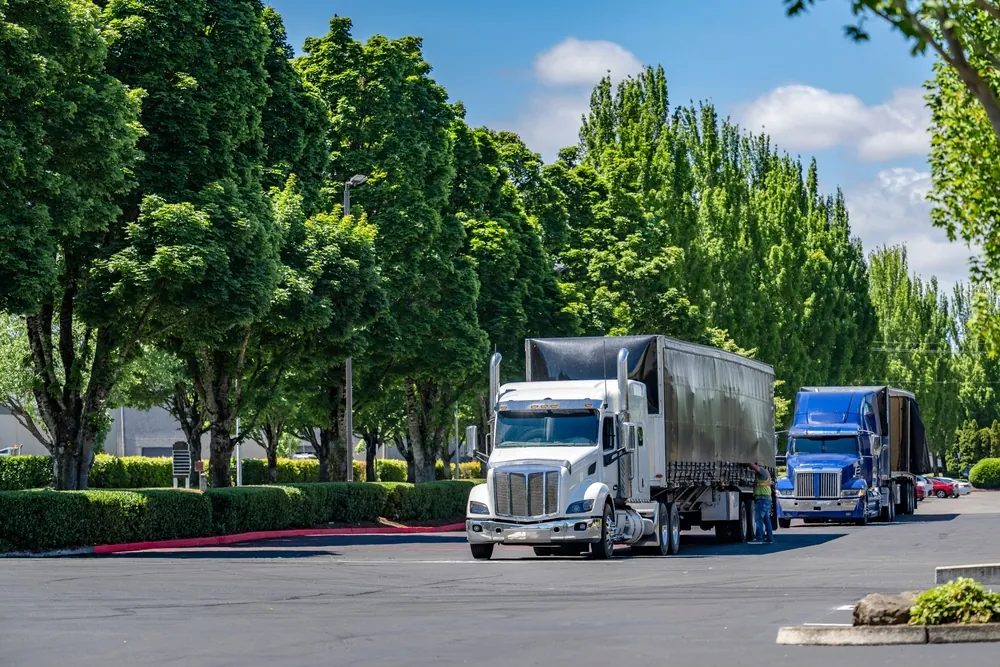
While America’s parking deficit won’t be fixed overnight, it’s important that we at least begin working to correct it. It is becoming increasingly difficult to ensure drivers stay safe and freight arrives on time, but a critical first step is ensuring that when a truck is mandated to stop, the driver and the cargo are out of harm’s way
Solving this crisis requires a collaborative effort by federal and state governments to match actual freight realities. This would mean evaluating the safety of major roadways and corridors, as well as prioritizing parking. These upgrades will require a sustained investment. If it is continually ignored, the deficit between legal spots and roadworthy trucks will continue to widen.
While the infrastructure is updated, we need to ensure that the technology we rely on keeps pace. This may look like apps and private parking networks that businesses can rely on and schedule a hold on the spot. While these can help, they must be paired with a growing number of physical parking spots, clear parking signage, and integrated route planning. We can only evolve our technology to work with us as long as the infrastructure matches.
Shippers can help by reducing pressure on carriers and drivers, for example by offering flexible appointment windows. If possible, try to offer after-hours access to the yard or facilities for routes that experience higher congestion. Simple time adjustments reduce early shutdowns, missed windows, and illegal parking, thereby improving reliability across the network.
However, shippers can only be as helpful as carriers ask them to be. They will need to advocate for themselves for safe and legal rest options. Carriers need to transition from afterthought to priority, as it is a strategic operational planning issue, not a driver problem, since the safety of both the freight and the driver is a direct reflection of the company they represent.
Keep in mind that parking issues are quickly becoming one of the primary reasons drivers are leaving the field. Parking is more than a financial burden; it has become a driver retention strategy. While turnover costs 8-12k per driver, having parking available improves driver wellness by limiting fatigue, enhancing safety, and ensuring long-term retention. Drivers being able to park is well beyond just a means for them to rest; it is essential for stabilizing capacity.
When narrowed down, it comes to this: America cannot continue to rely on drivers to absorb the cost of a broken system that isn’t being upgraded while our driving requirements are. Parking isn’t a luxury but a required break that is the foundation of safe, legal, and efficient freight movement.
Until, as a nation, we treat truck parking as essential infrastructure, drivers will continue to pay the price, and the supply chain will continue to absorb the cost.
Conclusion
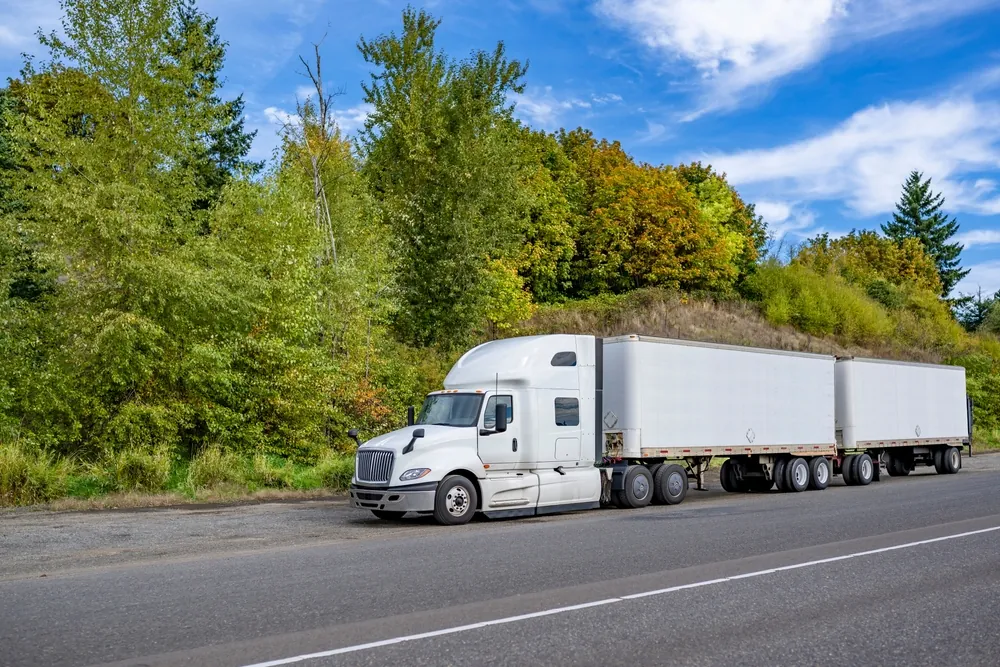
Truck drivers carry the weight of the American economy every single day. They spend long hours on the road, miss time with their families, and work within strict federal limits that control when they can drive, when they must rest, and how they manage fatigue. They do all of this so the rest of the country can function. A driver has moved every product we touch, yet the nation has not built the basic infrastructure they need to do their jobs safely.
The parking deficit has become one of the most damaging failures in modern freight. Drivers lose hours each week searching for a legal place to stop. Carriers experience reduced productivity and higher fuel costs. Shippers lose appointment windows and deal with ripple delays that disrupt entire networks. The risk is even greater when drivers are forced into unsafe locations, increasing the likelihood of accidents, theft, and insurance exposure.
This is no longer a minor inconvenience. It is a national supply chain problem that affects safety, margins, and long-term capacity. America cannot continue expecting drivers to absorb the cost of a system that has not kept pace with freight demand. Treating truck parking as essential infrastructure is the only path forward for driver wellness, shipper reliability, and the future of freight.