

Media shifts and changes throughout history. From books and radio to television and computers, the way people enjoy stories and games is constantly in motion. People have been creating all kinds of art since the dawn of time, and the resources people have and the culture they live in shape the art they create. One of these is video games.
Unlike physical tabletop games that require different materials to play a game, video games require a computer or gaming console to run a game, a controller, and the actual game itself, whether it’s physical or digital. No more big boxes, cards, tokens, or trinkets needed to play a game; just plug it into the screen and start playing to your heart’s content! However, it takes a lot of logistics to make a game.
It takes a lot of time to make a video game as vibrant and rich as possible, both visually and story-wise, and they don’t come from nothing. Resources are needed to create games, and they get pricier depending on what you’re making. Some games can be smaller, with simpler designs, and require less energy from the computer. However, AAA games tend to be highly detailed, bigger, and tend to lean towards more realistic styles, requiring a lot more energy to run.
The work done during a video game’s production can be intense and requires a lot of time and focus. Before a studio creates a game, they have to ensure that they can make it in the first place.

Video Game Logistics Before Pre-Production
You have the money, you have the people, now you just need the tools to create a game. Otherwise, there’s no way to even start production or even pre-production. In the past, video games required heavy and expensive equipment, but these days, anyone can make a video game as long as they have a computer. However, the bigger the project, the more the infrastructure needs to be scaled.
Big-budget games from large studios require a lot of resources. Typically, this means areas where artists and programmers can get together to create. Thus, studios need to set up workspaces. A lot goes into making a workspace, from the desks and chairs that each employee is assigned to the computers and monitors needed to create the game.
With continuous support and updates needed for bigger studios, it also means having to buy replacements every now and then and budgeting for what to buy and when to buy it. Many of us know the skyrocketing prices for computers and parts, especially for RAM, so it can be difficult to purchase a lot of these items all at once. But once you’ve bought the materials, it’s just a matter of transporting them from point A to point B, right?
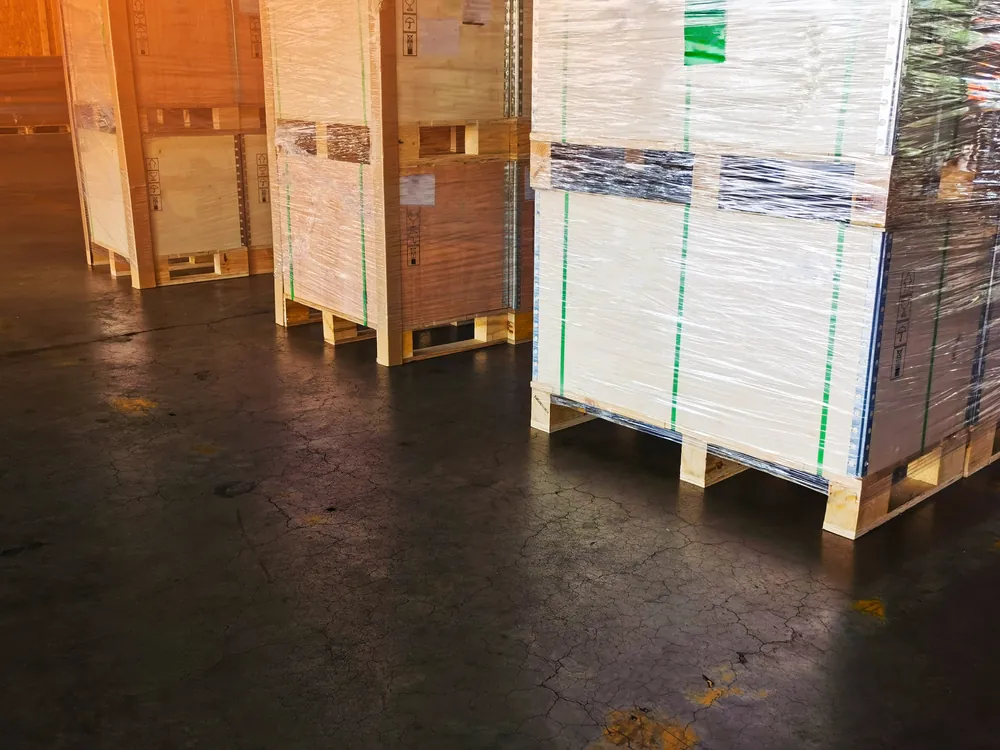
Considering that some of these items are furniture like tables, chairs, cubicle walls, and dividers, etc., they should be easier to load in a dry trailer and shouldn’t be too worrisome. However, technology is much more delicate to ship, especially for items like computers and servers. Unlike smartphones or cars, much of the technology needed is not designed to move around. Thus, it’s important that everything is stabilized so that there’s as little movement as possible. It may be as simple as palletizing the shipment or double-boxing it, all the way to crating it and making specialized inserts to stabilize it.
Another factor is static and moisture. While regular items like furniture or stationery are fine with most packaging, electronics have to be packaged with anti-static packaging. Static can accumulate from many kinds of materials like styrofoam or plastic wrap. If one uses the wrong packing materials, the static can damage the electronics and cause them to malfunction or stop working altogether. It’s why manufacturers will utilize anti-static packaging to protect electronics. It’s also important that the packaging is protected from moisture so that electrical parts don’t get broken or corrode.
However, once you order your item, it will ship to your destination of choice. It’s important to remember that different places may require different services depending on the address of the shipment’s destination. Most studios don’t have a docking station, so liftgate services will be needed to deliver the items. It’s also good to consider other services like expedited shipping and white glove so that the orders can be properly delivered in a timely manner. Once the tools and resources arrive, are unpacked, and properly set up, the studio can start making their game!

Distributing Video Games
The crew has gone through weeks, months, and years’ worth of effort to work on a video game. From pre-production design work and story building to production modeling and coding to post-production playtesting and marketing. This work and so many other roles come together to put years of effort into a single game for a player to enjoy, but how does a game get to players?
While there were different ways to get video games throughout history, the most common way was to buy a physical game from the store. Games came in all kinds of formats, from cartridges to disks; some were even built inside the game console! However, shipping the product tended to be a more straightforward process. Once a game finished production, distribution companies working with game studios would contact different gaming console companies to have their video games manufactured.
Once the companies paid to produce the physical media, factories would go to work producing the game to be made for consoles like PlayStation, XBOX, Nintendo, PCs, and others. These games would then be put into product boxes like DVD or cartridge cases that would protect the game while being transported. Manufacturers would then ship these games out in standard freight trucks and ship the games out to where they needed to go, going through multiple warehouses, trucks, and supply chains to eventually wind up in a store.
Of course, with a lot of retail moving online, games nowadays can even be shipped directly to the consumer’s house without them ever having to step outside. And with the advent of digital shops in the mid-2000s, many can even download video games over the internet. Downloading games has even become so popular that some companies, like Sony, are transitioning away from physical media and going fully digital, despite consumer pushback.
While physical video games aren’t expected to go away anytime soon, the gaming landscape is always in flux. Innovations in technology and evolving methods of game distribution are constantly reshaping the gaming scene and culture. From giant arcade cabinets housing only one single game to video game consoles that can play multiple games to even smart devices like phones and tablets that let you download games whenever you want! It’s always moving, never stopping, and always exciting!