

What started as simple blocks of wood in 1932 by a simple Danish carpenter, Ole Kirk Kristiansen, has snowballed into a toy empire. That’s right, Legos! The primary-colored blocks have been causing foot injuries at three am for many years and provided hours of fun for the whole family. This worldwide joy over plastic shapes has not only made them more common in stores but also led to the creation of limited-edition kits.
This growth has made Legos a major part of freight crime. Often targeted to be resold outside of commercial channels, but what has led to this surge in theft?

From Toy Box to Black‑Market Gold
It’s hard to imagine that the small blocks you use to spend your free time have taken other people’s free time, but not in the same way you or I might play with them. Theft is a growing issue across all industries, but in logistics, they hit hard and gets away quickly!
With the shift in crime scope from electronics to blocks, Legos have become easy to steal due to their easy flipping and near-untraceability! Unlike other high-value merchandise, Legos do not have individual serial numbers or tracking, meaning that once out of sight, they are gone. Even if they have a trail to follow, there are no individual numbers to prove to law enforcement that the found kits were stolen.
The flipping is a huge part of the theft; some kits may average in the low 10s of dollars, while others are worth hundreds or even thousands. When sets become unavailable in traditional commercial markets, collectors will search other shops and circuits to find them.
On top of limited availability, many kits have an ‘artificial shelf life,’ meaning they are only available for a limited period, typically 1.5-3 years. When out of season, these sets often become scarcer and more expensive to find.
With scarcity in mind, on full sets, theft doesn’t stop at the box; in some cases, such as a 2025 incident, there was a reported sharp rise in underground markets for individual items such as minifigures. This shows that the risk is down the block, not the box.
Black market sales are often where criminals make the most money, with sets selling for 2x to 10x the manufacturer’s suggested retail price. This secondary market is what law enforcement and Legos loss prevention are fighting against.
Other scams include some odd plans as thieves get creative. Police often have to handle schemes such as a nationwide scam in which criminals replace the blocks with dried pasta, mimicking the feel and sound of a legitimate kit. They would then either return this to the store for money or sell it to an unsuspecting collector.

LEGO Theft as Organized Crime
Millions of dollars are stolen a year in Lego, with a sudden rise in 2026 alone. In April, there was a heist in California in which roughly $1 million was stolen, along with an estimated $34 to $50k in pasta swap scams as of May 2026. That does not include the recent theft of $ 10,000 worth of merchandise, with a heavy focus on LEGO sets. As you can see, that adds up quickly, given that those are just the criminals that law enforcement was able to catch and prove stole the Lego sets.
Lego looters don’t care about the value of what they steal, just the value that it can be sold for. This leads to many criminals getting creative (as we have seen with pasta); this isn’t just petty shoplifting, it’s organized crime.
How Thieves Source Their Stock
There are a few ways criminals procure their ‘goods’; at the top of the list is Organized Retail Crime (ORC). Organized crime rings organize teams to go to warehouses, track delivery routes, or box store retailers to clear shelves at store value and flip them. These groups will often focus on high-value sets with higher payouts on the secondary market.
From there, if that’s not their speed, some will use copied or altered receipts to return stolen items for a higher price. Others may simply swap barcodes, making more expensive sets cost less than retail. Swapping, on average, saves the scammer between 10s and 100s of dollars per individual theft, with national swapping scams averaging between $1,000 and $ 34,000 in criminal profit. This allows the scammer to buy low and sell high on secondary markets.
Speaking of swapping, that doesn’t end at barcodes. Some thieves are aware that certain blocks and characters in sets may bring more profit than the set itself, so what these ‘block swappers’ do is they purchase sets and then remove the blocks and items they need, and, like the pasta scam (which is related), they will place other items in the box to mimic sound and weight.
Turning Stolen Bricks Into Profit
Once the blocks are in their possession, they now process them or ‘wash them.’ How they do this is by first relocating the blocks to stash houses, places where law enforcement won’t locate them often, such as residential homes or storage lockers.
From there, the criminals will need to break down the sets to extract high-value pieces and create an inventory. If there are extra or loose pieces, those are combined by brick (occasionally mixed) and sold to online marketplaces or sold in bulk to second-hand retailers.
When it’s said that they are “washing,” it means they are cleaning any and all evidence that the kits were stolen. This can be from removing fingerprints, store labels, or changing the packaging as a whole to make it harder to identify. However, should you prefer to clean your Legos legally, Lego offers a guide on its site to keep everything clean!
After washing, the criminals start making the big moves. If money laundering is the goal, some rings will work with complicit second-hand or collector stores, whether knowingly or unknowingly. Others may create and operate a ‘front’ business or a wholesale business to sell the kits as legitimate non-stolen merchandise.
Others distribute directly to customers through online marketplaces, where criminals can quickly offload their inventory. Most of these consumers are unaware that they are purchasing stolen goods.
Why Everyone Pays for Stolen LEGO
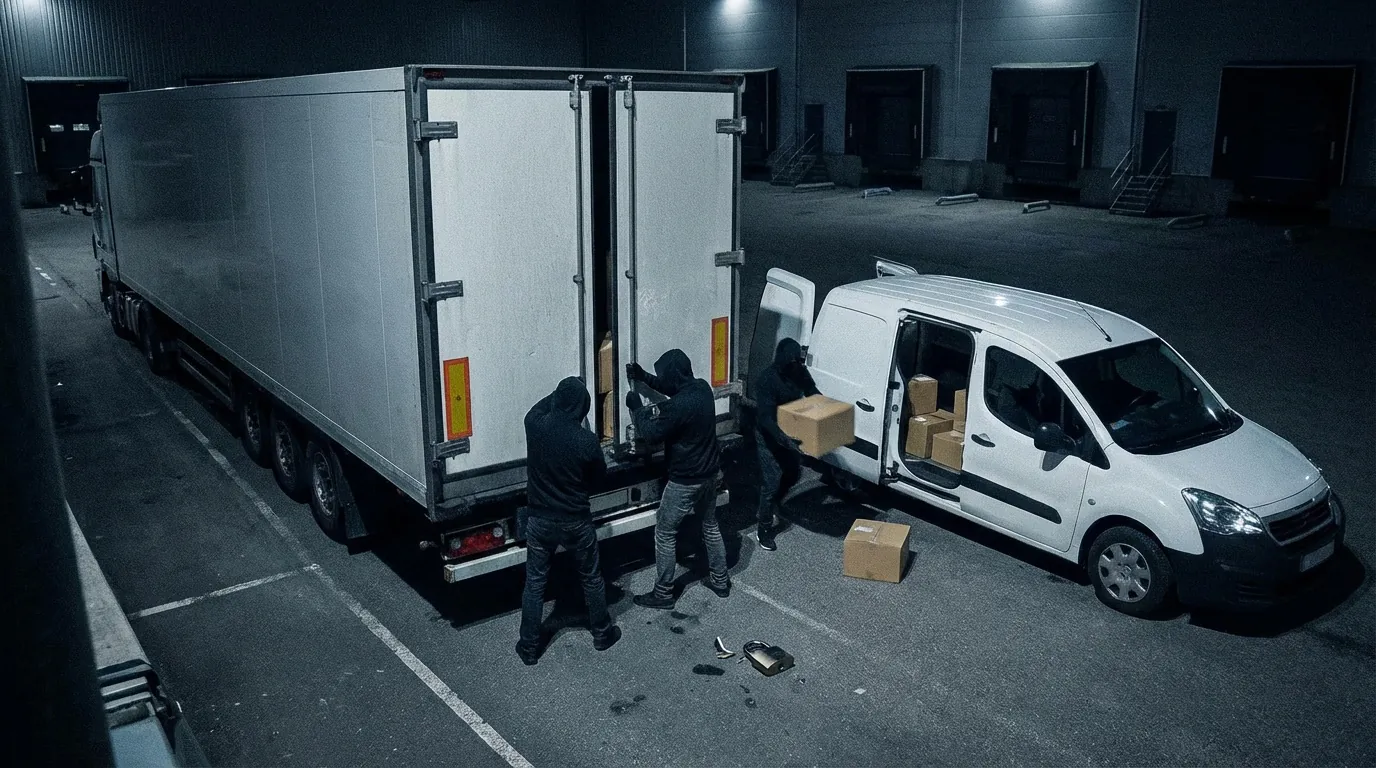
It’s not often that crime remains victimless, and while in Lego theft, it’s not necessarily a direct impact right off the truck. However, when thieves get away with loot, this is a loss for Lego (or the company that purchased the batch). In return for this, if there is insurance, a claim will be started, and the police get involved in hopes of finding the load. If that is not possible, the company bears the loss alone.
Once items are targeted for theft, companies will look for other ways to protect their freight. Some companies may go so far as to place trackers in loads. While some will invest in private trucks, clearer tracking, or utilize additional packaging/locking. Having to do this simply to receive an order is an additional cost that is then passed on to the carriers, shippers, and eventual owners of the kit.
In-store, to prevent theft or swapping, Legos are now kept on locker shelves, where, if you would like access, you must speak with a store staff member. This isn’t just it; while technology advances, so do protection methods. Aisles that carry high-value items have individual cameras with a full view of the product. Some big-box stores use ‘chirp alarms’, stickers that, when tampered with or taken past the exit without permission, trigger an instant alarm.
For carriers, it’s a bit harder to protect once on the road. If they do not use trackers or smart sensors, there is minimal coverage for the freight. Carriers face crime just like other businesses, but this isn’t just a stolen truck or trailer; often, it’s cybercrime, which requires technical expertise and perfect timing to avoid getting caught. Facing these challenges, carriers implement stronger, more secure protection measures and insurance as a ‘just in case,’ but someone has to pay for it, and as usual, that cost is pushed onto shippers.
For smaller carriers or businesses, this ongoing toy theft may affect shipping decisions in certain areas, leading to avoidance during seasons with elevated risk, such as before major holidays.

Keeping Your Collection Crime‑Free
Now that you’re aware of the growing concern about everyone’s favorite blocks, you may be concerned that your blocks are related to a crime. While there is no way to verify that your current collection is completely clean, there are a few steps you can take to ensure your future additions are clean.
When purchasing your kits, do so on credible sites with verified listings. Marketplace sites run the risk not only of purchasing stolen goods but also that the listing itself is fraudulent.
If you do decide or can only find your piece on a third-party site, you must verify the seller’s account and history. Meaning: when you find your product, check whether your seller is a new page or business and whether they have had any documented purchases in the past. Many fraudulent businesses operate with pop-up shops, quick to open, and once the stock is gone, they dissolve and create a new shop once the product is in (or the scam gets caught).
Verify pricing, as stated above, many thieves will steal and then undercut legitimate sites and stores to get rid of stock and get funds quickly. When reviewing items, if the set you’re looking at is new and still in-store with a discount of 30% or more, it’s likely stolen.
Remember that using sites or working with sellers could lead to financial troubles. Avoid using sellers who request non-cash alternatives such as gift cards or cryptocurrency. When discussing payment options, use sites that offer buyer protection and avoid direct payment apps, which offer no protection if you are scammed. The first line of defense against being a victim in the growing crime of Lego theft is you!

Conclusion
LEGO theft isn’t a quirky headline. It’s a fast‑growing criminal economy built on scarcity, collector demand, and the ease of moving untraceable goods. What began as a childhood pastime has evolved into a high‑value target that organized rings pursue with precision, creativity, and increasingly bold tactics.
Every stolen pallet, swapped barcode, or pasta‑filled box sends ripple effects through retailers, carriers, and consumers who ultimately absorb the cost. As long as LEGO sets continue to appreciate in value and remain simple to resell, thieves will keep exploiting the gaps in our supply chain.
Protecting freight, tightening verification, and making smarter buying choices are now essential steps to disrupt this black‑market pipeline and keep the world’s favorite bricks where they belong.