

Freight Shipping Cost
Want to save on freight shipping costs? FreightCenter offers high-volume discounts for your business!
Related Resources for Freight Shipping Costs
Freight Services Freight Rates LTL Freight Shipping Small Business Shipping Residential Freight Shipping


What is the Freight Shipping Cost?
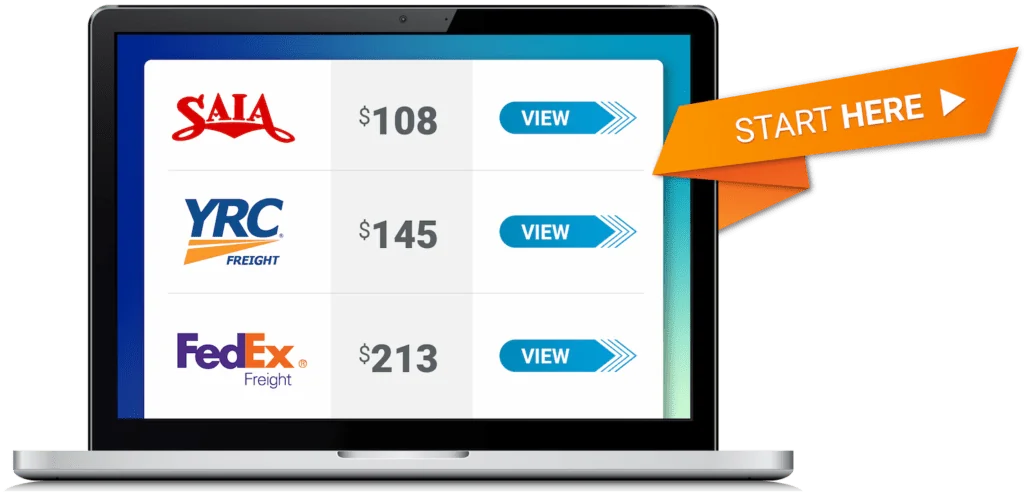
Freight shipping cost is the total expense you pay to move goods from origin to destination via freight (truck, rail, ocean, air). It includes not just the base transportation rate, but all the services and surcharges needed to handle the shipment safely and compliantly. Think of it as the full price tag of shipping: weight, distance, mode, handling — all influence it. If you’re budgeting for shipping, you need to understand what’s included and what’s optional.
Getting the lowest freight shipping cost from all the top freight carriers is just a few steps away! Fill in a few short details about your shipment and instantly find the costs from leading freight carriers in one easy place. Trust the experts at FreightCenter to give you the lowest freight shipping costs for all your freight needs.





Thousands of businesses trust FreightCenter to move their freight faster, smarter, and cheaper! From unbeatable rates to top-notch service, our customers are raving about their shipping success.
See why they keep coming back!
Award-Winning Service, Trusted by Shippers Everywhere!
- 2021, 2017 & 2016 Food Logistics’ Top Green Providers
- 2021 & 2018 Supply & Demand Chain Executives’ Pros to Know: Matthew Brosious
- 2020 & 2019 Top Food Logistics’ 3PL & Cold Storage Provider Award
- 2020 & 2019 Business Observer’s Top 500 Companies on the Gulf Coast
- 2020 & 2017 SmartWay® Transport Partner
- 2020 & 2017 Food Logistics’ Champions: Rock Stars of the Supply Chain
- 2020 Best of Palm Harbor Awards for Local Businesses
- 2017 Green Supply Chain Award from Supply & Demand Chain Executive
- 2017 Tampa Bay Business Journal Heroes at Work
- 2016, 2015, & 2012 Food Logistics Top 100 Software and Technology Providers
- 2013 Tampa Bay Business 100 by Tampa Bay Business Journal
- 2013 Top 100 Great Supply Chain Partners by SupplyChainBrain
- 2012 TIA Samaritan Award Honorable Mention
- 2012, 2011 & 2010 TBBJ Fast 50 Recipient
- 2013, 2011, & 2010 Diversity Business Top Businesses

Why Millions Of People Choose FreightCenter
- Complete one simple form, and shipping costs display instantly online. Hassle-free, no phone calls required!
- Compare freight rates from 50+ carriers
- Freight shipping costs from and to anywhere in the U.S. & Canada
- See why the freight shipping costs are unbeatable on your LTL freight, full truckload, rail, and air
- Manage all freight & shipments in one place
- Automated tracking, paperwork & invoices
- 25+ years of transportation experience working for you!
Main Factors That Affect Freight Shipping Cost
A lot goes into the number you pay. Some of those variables include:
- Mode of Transportation: The choice between truck (FTL, LTL), rail, ocean, or air makes a big difference. Air is the fastest but also the most expensive. Ocean or rail may be slower but cheaper for large volumes.
- Weight, Dimensions & Density: Carriers consider how heavy your freight is and how much space it occupies. Low-density shipments (light but bulky) often cost more per pound because they consume more trailer or container space.
- Distance and Route Complexity: Longer hauls generally cost more. But it’s not just miles — remote areas, difficult terrain or congestion add to cost too.
- Freight Class (for LTL) & Commodity Type: For LTL shipments in the U.S., freight class matters. It’s based on density, stowability, handling risk, and liability. Higher class usually means higher cost.
- Fuel, Market Conditions & Supply / Demand: Fuel surcharges, trailer availability, driver shortages, and seasonal demand all impact cost. When demand peaks, rates rise.
- Delivery Speed & Service Level: If you need expedited service or guaranteed delivery times, you’ll pay more. Faster isn’t free.
- Accessorials and Additional Services: Anything outside basic door-to-door, like liftgate, residential delivery, inside pickup, storage, detention — those add cost.
How Freight Shipping Cost is Calculated
Here’s a simple breakdown of how carriers build the cost.
-
You provide: origin, destination, weight, dimensions, commodity, pickup date, service type.
-
The carrier or broker evaluates: mode (truck, rail, ocean), whether you’re shipping full trailer (FTL) or less-than-truckload (LTL).
-
They apply base rate + surcharges (fuel, accessorials) + adjustments (dimensional weight, high class, remote area).
-
The result: your freight shipping cost.
For example: a 1,000 lb pallet from Dallas to New York via LTL might cost a certain base. If it’s large in size, the rate may shift because the carrier views it as low density — more trailer space consumed.
Understanding this breakdown helps you ask better questions and spot irregularities in quotes.
To create value for our customers by delivering customized shipping solutions that meet their unique needs and to fulfill shipping demands from simple to complex with expertise, guidance and ingenuity.
If you need a shipment done but don't need to fill a whole truck, then LTL is the best option for you! We can help you compare rates, choose from trusted LTL carriers, and book your shipment—all in one place.
Need to ship internationally? Ocean freight shipping is the way to go! It is often the best option to ship over seas while keeping lower costs, so that you can focus those costs towards your business.
Need your shipping done fast? Air freight shipping has you covered! It's the fastest way to get your shipping done and we can help find you the best rates so that you don't break the bank.
A cost effective and flexible choice, intermodal gives you options to ship by road, rail, and sea! This option gives you the the long-haul efficiency of rail with the precision and flexibility of truck transport.

 Guaranteed competitive pricing every time you ship.

FreightCenter is Expertised in Getting Your Freight Shipping Cost
Freight shipping cost isn’t a mystery—it’s a sum of measurable factors. When you know what drives cost, you gain control. You stop reacting to surprises and start planning for margin instead of losing it. Whether you ship once in a while or dozens of times a week, understanding cost lets you negotiate smarter, package better, choose modes wisely, and work with partners who bring value.
If you need help comparing freight quotes, optimizing routes, or benchmarking cost per shipment, FreightCenter has you covered! With over 25 years of experience, we work to ensure that your shipment is done safely, securely, and efficiently! Working with an experienced freight broker like FreightCenter can make a difference. With the right insight and partners, your freight shipping cost becomes less of a risk and more of a strength.
Let’s make sure your shipping gets the treatment it deserves. Get your shipping quote today or call us at (800) 716-7608.
FAQ: Freight Shipping Cost

Q. Why did my quote go up after I shipped?
Often, the carrier found your freight consumed more space than quoted (dimensional weight), or accessorials were added (e.g., liftgate). Always verify actual dimensions and service conditions ahead of time.
Q. What’s the difference between freight rate and freight cost?
The rate is the base price. The freight shipping cost is the full outcome — that’s the rate plus surcharges plus additional services. Understanding cost helps you budget accurately.
Q. Can a heavier shipment cost less than a lighter one?
Yes, if the heavier shipment is dense and compact, it may cost less per pound than a lighter, bulky, low-density load, because carriers value efficient space usage.
Q. How do dimensional weight and freight class affect cost?
They both influence how carriers price your shipment. Dimensional weight charges you for space consumed, and freight class (in LTL) considers density, handling difficulty, and risk — a higher class means a higher cost.
Q. Does international shipping cost more than domestic?
Generally, yes, because of extended distance, mode changes, customs, duties, and additional handling. But if you ship a large volume by ocean, the cost per unit may climb less than expected.
Q. How can I forecast shipping cost ahead of time?
Track your historical shipments, know your modal splits, understand rate trends, and build in a buffer for surcharges. Use freight cost calculators or work with your broker to model costs ahead.
Q. Why do rates fluctuate during certain seasons?
Because capacity and demand shift. For example, harvest season, holiday peaks, or retail surges all tighten capacity and push rates up. Market conditions matter.
Q. What role does fuel play in freight shipping cost?
Fuel is a major variable. When oil prices rise, fuel surcharges on freight increase, and carriers pass that cost on. Monitoring fuel trends helps you anticipate cost movement.
Q. Should I always choose cheaper carriers?
Not always. Low cost sometimes means slower transit, higher risk of damage, or flimsy service. Make sure the carrier matches your freight profile and service needs; cost is only one part of the decision.
Q. How do I compare quotes properly?
Ensure quotes are apples-to-apples: same service level, same origin and destination, same pickup and delivery terms, identical accessorial definitions. Confirm inclusions and exclusions. That transparency is critical.
Q. How do accessorial fees impact freight shipping costs?
Accessorials are service add-ons beyond standard pickup and delivery — things like liftgate assistance, residential service, or inside delivery. Each one adds a fee to your invoice. The best way to manage them is to disclose all delivery conditions upfront so they’re factored into your initial quote instead of appearing later as surprises.
Q. Why does freight shipping cost vary by region?
Rates reflect not just distance but also regional carrier density, population, and freight flow. For example, shipping into rural or low-volume areas costs more because carriers must travel farther off their main lanes, often returning empty. Major corridors like Los Angeles to Dallas or Chicago to Atlanta tend to have lower per-mile costs due to higher volume.
Q. Are freight quotes guaranteed?
Most freight quotes are valid only for a limited time because carrier rates, fuel costs, and capacity fluctuate. Once booked, a quote can still change if shipment details differ from what was provided (like weight, size, or accessorial needs). Accuracy at the quoting stage ensures stability later.
Q. What are the most common mistakes that increase freight shipping costs?
The biggest cost drivers come from preventable errors: underestimating weight or dimensions, forgetting to list accessorials, improper packaging, and failing to compare carriers. Another common mistake is choosing speed over need — paying for expedited delivery when standard service would meet the deadline just fine.
Q. How can FreightCenter help lower shipping costs?
FreightCenter has established carrier relationships and access to volume discounts from multiple national and regional carriers. We compare rates, service levels, and capacity in real time. That leverage can reduce cost, shorten lead times, and simplify billing by consolidating multiple quotes into one streamlined solution. Call us at (800) 716-7608 or use our quote tool—we’ll guide you through it every step of the way!
3 Tips For Managing Freight Shipping Costs

Measure and Weigh Accurately Every Time
Freight quotes depend on precision. Even a one-inch or 10-pound difference can push a shipment into a higher freight class or trigger dimensional weight charges. Always use certified scales and measure after packaging to include pallets and padding. Accuracy saves you from costly re-weigh or re-class fees that appear after delivery.

Don’t Ship Without Insurance—Ever
Carriers typically cover only $0.10–$0.50 per pound. That won’t even come close to replacing your shipment. With our 3rd-party insurance options, you'll get the full value of your cargo and ensure peace of mind for your shipment.

Build Long-Term Relationships with Reliable Carriers
Consistency pays off. When you ship frequently with trusted carriers or through an established logistics partner, you can often negotiate better rates, gain priority capacity during tight seasons, and streamline billing. Long-term relationships reduce friction, improve predictability, and help you forecast freight shipping costs more accurately.