Keeping It Cool: The History and Impact of Cold Chain Logistics
There are many things that get shipped around the world. Books, TVs, shoes, utensils, anything that isn’t made close to you needs to be shipped. It’s such an important service that it has its own whole industry! The global freight industry is a complexly connected multi-trillion-dollar industry, with the U.S. alone generating $940 billion. With such a gigantic and interconnected industry, there come many challenges. One of the challenges faced in shipping is how to freight ship cold items.
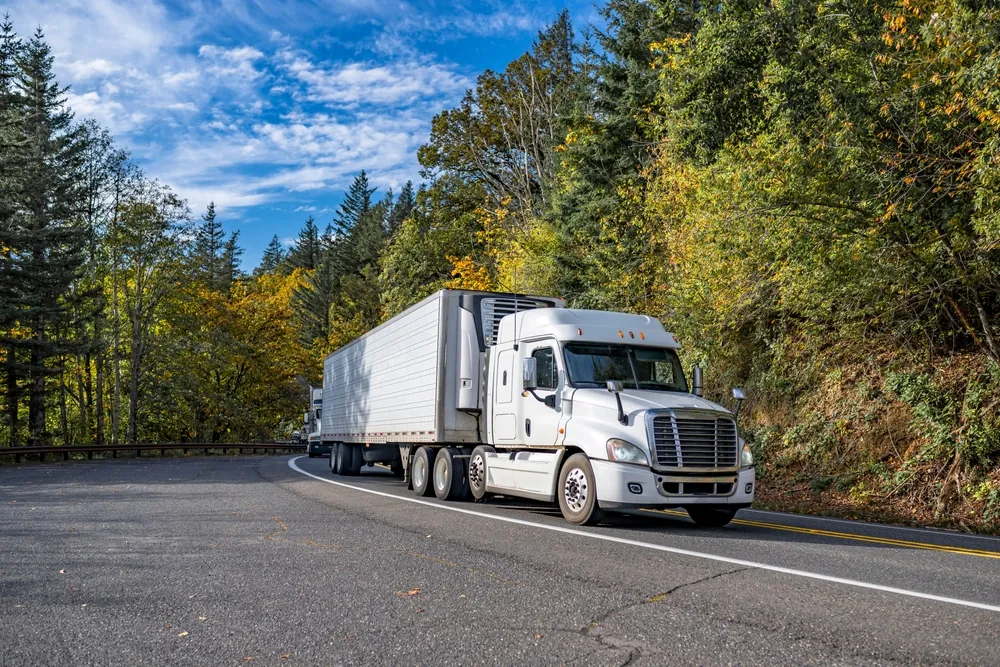
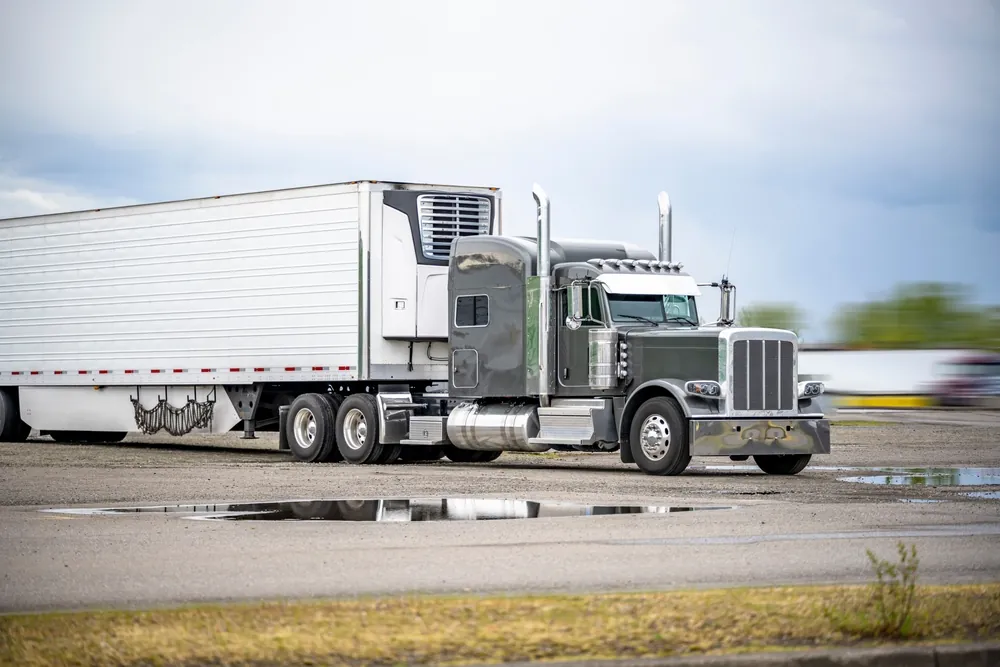
For some parcel deliveries, it may be enough to just toss in some dry ice packs in the package and call it a day. However, some items need precise, continuous temperature control, while some shipments in their entirety need to stay cold, and a regular dry van won’t do the job. That’s where refrigerated trucks (reefers) come in! These trucks are specifically designed to handle cold items and keep them cold for the duration of their travel.
The history and impact of cold chain logistics, as well as reefers, have been fraught with difficulties, but are one of the most important branches of logistics today. We will look at what reefers are, how they came to be, their part in the freight industry, and how you can make your reefer truck shipments easier and better protected!
What Are Reefers?
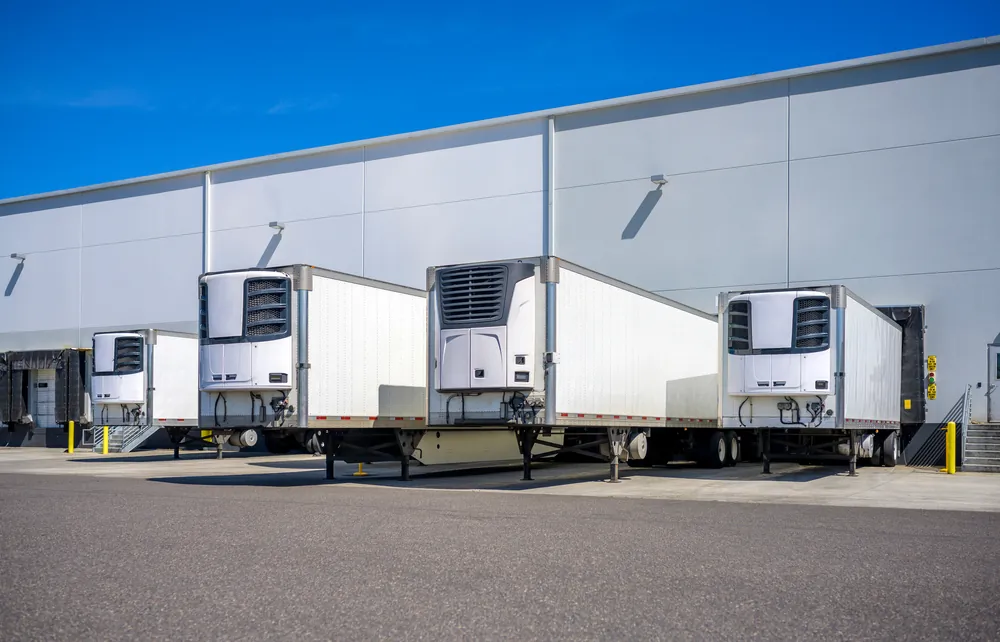
As mentioned earlier, reefers (refrigerated trucks) are semi-trailers that haul cold items from one destination to another. They can range in all sorts of sizes, features, and power sources. The main thing that they all share is their ability to utilize refrigeration technology and keep products at a desired temperature; unlike other trailers, such as dry vans or flatbeds, that are incapable of doing so. The main parts of a reefer are its temperature controls, ventilation, insulation, and floors.
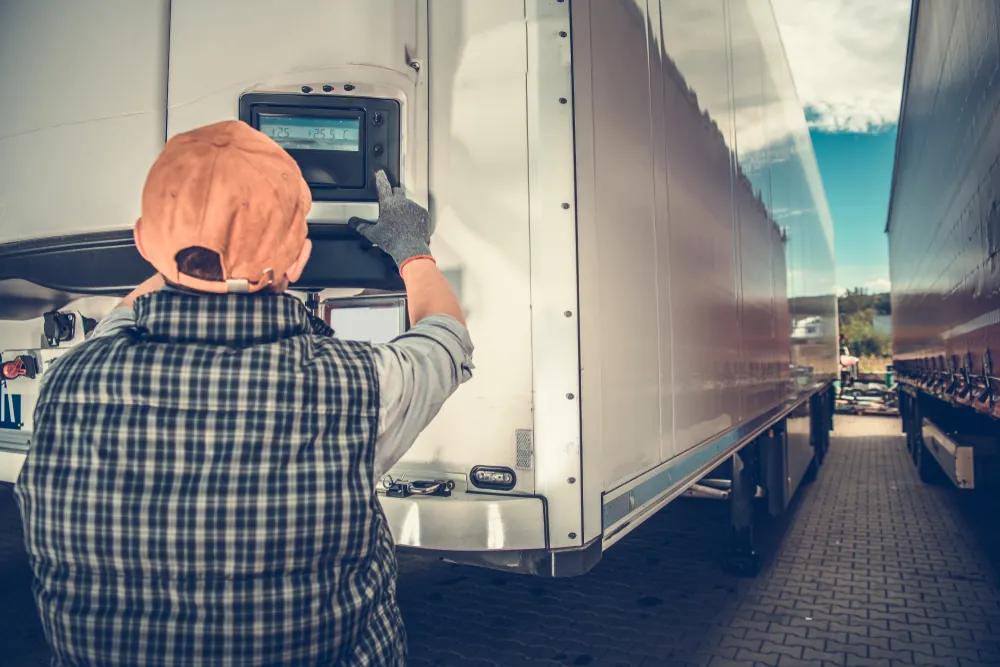
Temperature controls are the main mechanism that allows the shipper and driver to carefully set and monitor the temperature of the cargo. For most reefer trailers, temperature controls can range between -20°F to 70°F. Some units are simple and only have one thermostat to control the entire trailer. Others can have multiple thermostats that control different sections of the van for different cargo, like if a carrier were to transport frozen and refrigerated food at the same time.
The ventilation system of a reefer is important; without it, it would be much more difficult to regulate the temperature, and spoilage would be more common. For ventilation, there are two common types that are typically used: fresh air ventilation and front vent door ventilation. Fresh air ventilation allows air from outside to flow in and exit through the back of the trailer. Front vent door ventilation takes the air inside the trailer and continuously circulates it to create airflow.
The insulation and floors in a reefer ensure that your shipment stays at the temperature it needs to be. Insulated walls tend to be thick, about 2 to 4 inches, for a reefer. There are two kinds of floors a reefer can have, flat and grooved. If you want the trailer to have better ventilation and be lighter, grooved is the best choice. For easier entry and exits, easier cleaning, and a stronger base, go with flat flooring.
Note that both have their advantages and disadvantages. While flat is easier to work with, it means there is less ventilation to the bottom of the package, so always ensure everything is on a pallet for better ventilation. And while grooved provides better ventilation, it makes moving freight more difficult and can be harder to clean. That’s why it’s always important to consider the items that are being transported and weigh the pros and cons for what works best for you.
While these technologies are great, they haven’t always been around. It’s only thanks to more recent innovations that we are able to transport such fragile goods at such large distances. Before that, it was almost unheard of!

The History and Importance of Reefer Trucks
For millennia, people have been finding ways to store food and items in the cold, like the Inuit, Chinese, and Greeks. However, the issue that persisted for so long was transporting those goods over long distances, as without proper storage, they would quickly perish. It was only in the late 1800s that people even began to think about long-distance transportation of cold cargo.
With the rise of rail transportation, goods started to go far and wide; thus people were trying to figure out how to ship more and more goods to make more profits. Many attempted to create a refrigerated railcar to keep these goods cold, until a man by the name of J.B. Sutherland established the first patent for a refrigerated railcar in 1867, followed by Andrew Chase’s 1878 improved adaptation. These railcars would rely on ice, ventilation, and other materials to keep the products cooler and go farther, though they still had the downside of the ice eventually melting.
More iterations for rail cars and trucks came and went until 1938, when Frederick McKinley Jones stepped into the game. Before then, Jones grew up in a difficult life. With his mother out of the picture in his infancy, his father had to raise him alone while working as a railroad worker until Jones turned seven, when he was left in the care of a Catholic rectory. He was in school for 4 years but decided to leave and explore new places. He went to the Army during WWI, took many jobs throughout his life, worked as a mechanic, tried to make ends meet, and invented all sorts of technology for the people around him, like portable X-ray machines, wireless broadcasting transmitters, snow machines, and more!
Jones even worked with movie theater equipment, which got the attention of Joe Numero, a movie theater entrepreneur who wanted to improve film sound quality. Jones worked with Numero for many years, and in 1938, a friend of Numero’s explained a shipping problem he had: his cold shipment had perished. Numero and his team were asked to create a refrigerated truck, and that is exactly what Jones did.
With this new invention, Numero left the film supply business to enter the refrigeration business and created Thermo King with Jones. These newly invented trucks were crucial for the U.S. military during WWII, as they helped transport blood needed for the injured. Jones continued to work on refrigeration technology, amassing over 60+ patents, and changing the world of freight as we know it.

The Impact of Cold Chain Logistics
With the invention of the reefer truck, many changes to food, modern medicine, and technology came into the world. Before, so many things were limited to only being accessible if it was close by to you. Now with mobile refrigeration, access reaches further without having to worry about the high costs of replacing ice or stress about it melting too quickly and ruining your items.
Food is considered one of the most commonly thought of examples of benefiting from refrigerated freight. It certainly makes sense as it’s the biggest market freight shipped by reefers. With foods like meats, dairy, produce, and processed food needing to travel, it’s no wonder that it takes up a large chunk of cold-chain logistics.
Foods that used to be prone to the elements are now protected, causing less waste to occur and allowing for more food to be shared around the world. No more having to travel to another country to get your favorite ingredients or snacks, you can just go to your local supermarket and find many kinds of food from all over the world, such as Japan, Italy, Mexico, South Africa, and more.
While cold-chain logistics have made shipping food easier and supplying the world with more food, it has also made saving lives and making breakthrough medical treatments easier! Many chemicals and medications are temperature-sensitive, just like food. But they wouldn’t just go bad like food.

Pharmaceuticals could also deactivate, making them useless and unable to help people in need, or worse, react in a way that can harm people’s health or become chemically volatile, damaging itself or other shipments. That’s why refrigerated trucks are so vital to the medical system. Without it, people wouldn’t get medications that treat their conditions, receive vaccines that protect people from dangerous diseases, or receive blood that could ultimately save their lives.
Another type of item you might not immediately think of that gets shipped by reefers is technology and computer parts. It makes sense, as a lot of technology does get transported by regular dry vans and not reefers. However, there are times when using a reefer is beneficial for the product, like in heat waves or if the item is sensitive and fragile.
Some of these parts include batteries, storage drives, capacitors, chips, and many more that can degrade and make the items more faulty. If left in an improper environment, these components can have shorter lifespans, a higher likelihood of data loss and failure, swelling, or, in some cases, even catch on fire, as with lithium-ion batteries.
That’s why, in many cases, tech needs to have temperature-controlled trucks so that people can access these critical devices that help conduct research, assist in engineering, keep people connected to others far away, and continue to innovate in our technological and medical capabilities!
It’s no wonder that the U.S. refrigerated trucking market alone is estimated at $30.77 billion and is expected to reach $42.27 billion by 2030. With so many vital necessities that it helps provide, it’s far more market-proof than many other industries and brings great innovations to people everywhere. This is why the history and impact of cold chain logistics have been so powerful; it is the industry’s most lucrative and essential branch!
So, whether it’s the medicine that you take, the ice cream you enjoy, or the computers you have in your pockets, you can thank reefer truck drivers and Frederick McKinley Jones for all of that being readily available to you!