
Many emergencies and inequities occur worldwide. From famine to war to natural disasters, many people need help now. One way people try to solve this is by donating! In the U.S. alone, about 77% of people donated money to charity, and 71% donated food, clothing, and other household goods.
But with so many donations coming in, one wonders: how does it get handled? We look into how nonprofits manage donations, what distribution and logistics look like, and some challenges nonprofits face when shipping their freight. That way, you can understand the logistics yourself and how to better contribute to your charitable giving!

Collection and Inventory
The donation process starts from the outside. With money, it’s more straightforward. A charity receives a check or digital payment, and then it uses the funds for whatever the organization needs. The monetary donations may go towards buying commonly used resources, hiring people to manage systems, providing services that are needed to better serve their target demographic, or many other plausible places. Some monetary donations will specify that their giving only goes towards direct help to the charity, so donors know their donations go directly to helping people.
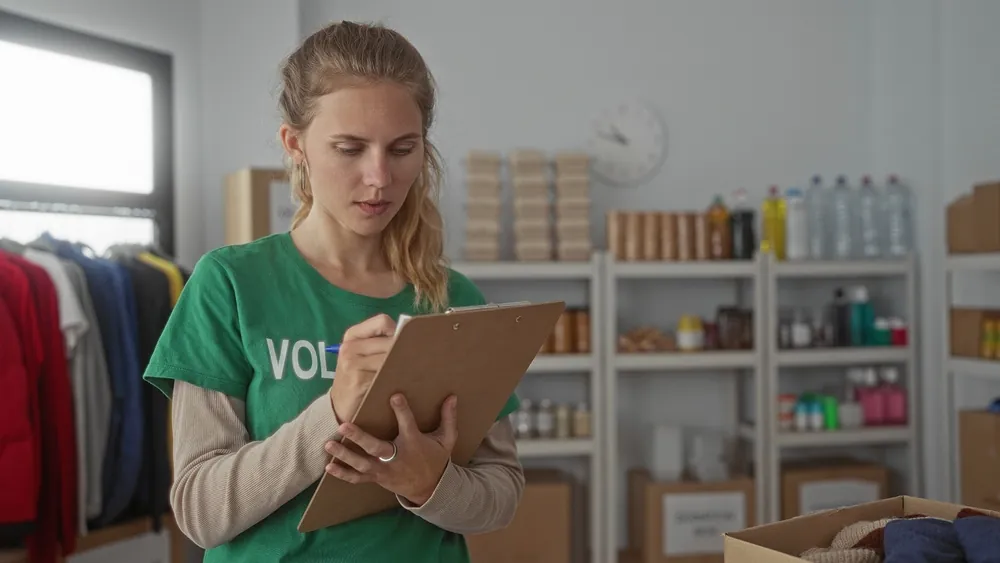
With physical donations, though, it can be a lot trickier. As mentioned before, many people in the U.S. donate the stuff they have. That’s a lot of items to sort through. Organizations must check the donated items’ condition and process them properly. That’s why nonprofits usually have volunteers do this work, so they don’t incur additional labor costs.
Groups of volunteers will go through donations to see what a person has sent. They check to see that the item is not too damaged and that it hasn’t expired yet. If they find these issues, then sadly, these items get tossed in the trash. If the items are all good and fit their needs, they will start packing them away.
Every item, like with any package, will be properly cataloged so that the organization knows where everything is. Some of these items might get stored in a room or warehouse so that they can be used later, while others can be given to those in need immediately. Thus, once an item is marked for shipping, it will start its journey through freight shipping.

How Freight Moves Donations
There are many different routes a charity can take to ship donations. If there isn’t a lot to ship, then parcel may be the option to choose. If an organization is shipping a lot of goods all at once, then freight shipping will be the better choice. Along with choosing freight, a 3PL can also help with giving organizations different rates, service options, and logistical support. That way, an organization can strategically choose what will benefit their charity the best, as well as monitor and manage their shipments when they want and need to.
Once the goods have been carefully inspected and cataloged, it’s time for them to go. The nonprofits will have the goods loaded onto the truck and sent on their way to their destination. There are many means that shipments are sent, whether by LTL, FTL, intermodal, air, sea, or many other ways, all of which carry the shipment safely and swiftly so that people can get their urgent needs met.
However, this process of getting things shipped doesn’t happen easily or by just one person. Rather, it is an ever-changing and growing network of drivers, managers, warehouse workers, volunteers, and many more who establish and maintain these systems. Without them, these donations would take longer to get to their destinations, or in some cases, would not even be able to make it to the millions in need.

Challenges For Nonprofits
The statistics show that most people donating is a great thing! Many organizations appreciate the kindness and generosity that arrive at their doors. However, sometimes donations can come with some complications and challenges.
One big challenge that comes with physical donations is whether they can even be used in the first place. Many places do need donations, but some things are needed more than others. Unfortunately, people may just blindly give whatever they can part with, hoping it helps. However, oftentimes, doing so just does the opposite, so much so that some estimates suggest that 85% of clothing donations are tossed, and 60% of overall donations are thrown away.
This is due in large part to the poor condition of the donations, whether they are expired, broken, or contaminated with molds or mildew. During quality checks, volunteers need to check if the item is allowed or in good enough condition to be used. If it’s not, then it just goes straight to the landfill. This not only creates more unnecessary waste for landfills, but also creates more wasted time for volunteers who have to organize waste from usable goods and figure out the logistics of discarding it properly.

Most nonprofits and charities say that the best way to donate is to give money directly to them, as they know best what’s needed now. However, that’s not to say that you should never give any physical goods. Rather, it’s important to remember how to give so that it leads to the best results.
On top of that, there’s also the business side to charities. While they work as nonprofits, they still have to operate as businesses do and take risk management strategies as well. This can even be especially challenging for nonprofits; unlike a for-profit company that sells a service or product people want or need, nonprofits operate on the hope that people will give to help others, even when it doesn’t help themselves.
If you want to help out with charities you care about, then here are some things you could consider doing:
• First, find out what the charity you’re donating to actually needs. This may be posted on their socials, website, or even an active wishlist, so you can pick and know precisely what will be donated. You can also contact the organization and ask them directly what they need, and see if what you have matches their needs.
• Ensure your items are in good condition, meaning they’re not broken or past their expiration date. Otherwise, they will immediately be tossed. Also, make sure your donations are clean before you give them. Even if one item in a bundle or bag is found to have mildew on it, then the whole donation is required to be thrown out, no matter the condition of the rest of the items.
• Managing inventory and logistics is another major challenge they face, especially when they are younger or smaller. With fewer resources and money flowing, it becomes a challenge to keep people on board and operations running smoothly, if at all! This means that more work falls onto the people who are there, leading to higher rates of burnout and failure. Consider volunteering for these charities even if it’s once a month or every other month. Any volunteering is always appreciated!
• They may also utilize cheaper and older technologies and systems to cut costs, leading to inefficiencies and slowdowns that other organizations don’t have to deal with. Some ways that freight companies help out are by sponsoring and donating to these charities so that they can continue on the important work they do. They can also help by providing logistics and rates that can work for their organization and keep open communication to be as helpful as possible.

Remember, these organizations only have so much time to parse through hundreds or even thousands of donations they receive with just a few volunteers, so they can’t be precious with everything they get.
However, while many challenges lie ahead for charities, the work they provide is crucial. From feeding those who have trouble getting food to providing medical services in underserved areas, they help fill the gaps in society so that people can lead better lives. So, whether it’s Random Acts of Kindness Day, National Nonprofit Day, Giving Tuesday, or even just a regular day, it’s always a good time to consider how we can give back and how logistics can make a difference!