

Market Conditions Tested After Winter Storm Fern
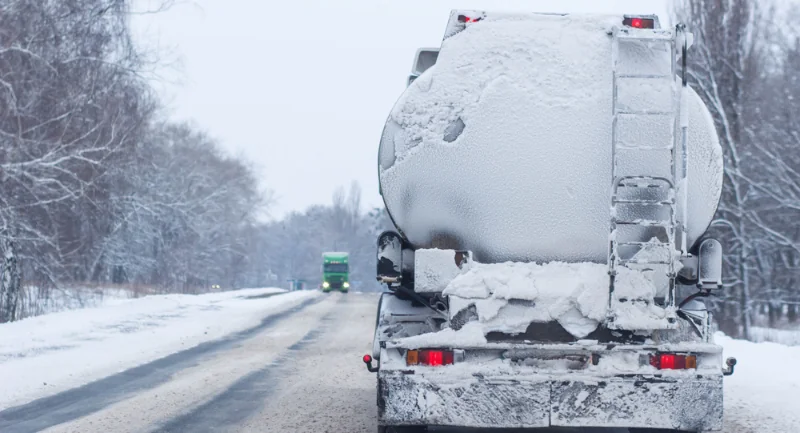
Market pressures have continued to tighten, especially with these winter storms. Tighter capacities, higher rates, and closed hubs are more common this time of year. It’s even resulted in higher-than-typical rejection rates, reaching over 13%. Ultimately, these higher rates and rejections have been difficult and truly tested the market. With the weather quieting down and roads reopening, more shipments are moving, making capacity tight and making it harder to get shipments done.
Typically, rates would fall a bit after the holiday season, but these snowstorms are contributing to more shipping scarcity, keeping rates high and increasing demand for safety and equipment. Weather projections indicate more winter weather ahead, leading to more closures and delays. It’s important to stay flexible and prepared by keeping open communication and being mindful of how soon a delivery can be made during these times. With La Niña expected to continue, staying vigilant will be necessary to combat these challenging times.
Read more about the market here and here.
The EU and US Reignite Trade Talks After Trump Reverses Planned Levies

Tensions between the European Union and the United States have cooled a bit, and so both parties have resumed previous trade talks. The ties between the two have been strained due to tariffs levied on EU nations by the US in 2025. Negotiations have been made more difficult because of the recent tensions over Greenland’s territory and resources.
The US previously said that it would potentially impose levies on eight EU countries, causing the EU to freeze talks, which it maintained even after the president walked back the remarks. The International Trade Committee on Wednesday decided to reopen the proposal, allowing members to vote as early as February 24th. With negotiations returning to the table, many want to ensure that these deals can be made while upholding these nations’ sovereignty.
The International Trade Committee is currently focused on two proposals on US industrial products: US seafood and agriculture. The EU also plans to roll back retaliatory measures it made in 2025 in response to the US’s first round of tariffs. Bernd Lange, chair of the European Parliament’s International Trade Committee, stated Wednesday, “Trade Committee members remain committed to advancing work on the two legislative proposals expeditiously, provided the US respects the territorial integrity and sovereignty of the Union and its member states, and honours the terms of the Turnberry Deal.”
You can read more about the trade talks here.
Slip Robotics Revolutionizing Dock Loading With SlipLift

New innovations are coming out all the time, whether it’s trucks becoming more efficient and cleaner through renewable energy, or systems becoming more efficient and reliable as AI expands in management and tracking roles. Slip Robotics has worked to innovate how freight is loaded and unloaded from trucks safely and securely, using a new tool they call SlipLift.
SlipLift is a tool that moves freight of up to 20,000 lbs. to and from a truck at the docking station. No forklifts or dollies are required to load or unload the truck. The freight is placed on the SlipLift platform, where the SlipLift slides under it and hauls it to and from the truck. These tools can help small- to mid-range carriers achieve quick turnarounds and move more cargo with fewer robots. Each door doesn’t need a robot stationed at it, instead it can be placed where needed and run efficiently.
Lauren Marneni, the head of product at Slip Robotics, states, “Our goal was to make autonomy feel natural for operators. The operator stays in control, but the robot does the hard, dangerous work inside the trailer.” Slip Robotics plans to showcase the SlipLift at future events, including Manifest 2026 and Modex 2026.
Learn more about this new technology here.
Tesla Announces Two Range Options For Semi Truck
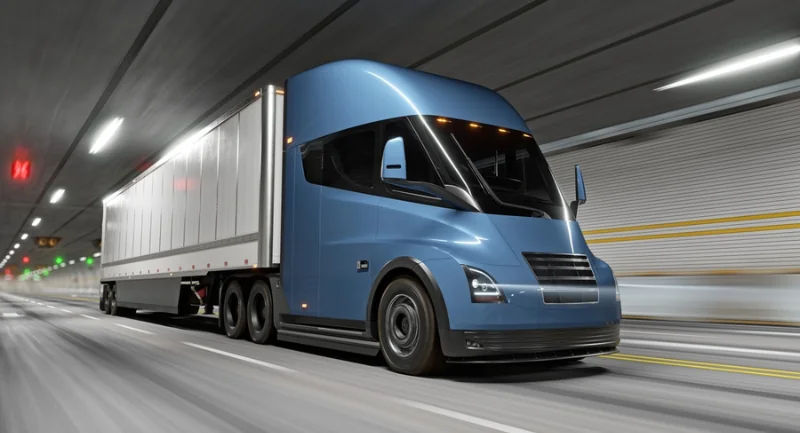
After nearly a decade of anticipation, Tesla’s Class 8 electric Semi truck is moving from concept to reality — and the details are finally out.
Tesla officially confirmed specifications for the Semi on February 8, 2026, revealing two distinct variants to serve different fleet needs. The standard model offers approximately 325 miles of range, while the long-range version delivers around 500 miles on a single charge — fulfilling the promise Elon Musk made when he first unveiled the truck back in 2017. The long-range model weighs in at 23,000 pounds due to its larger battery pack, while the standard version comes in under 20,000 pounds.
Both versions share an impressive powertrain: three independent motors mounted on rear axles, up to 800 kilowatts of drive power, and an energy consumption rate of just 1.7 kilowatt-hours per mile. Notably, both models can charge up to 60% of their range in just 30 minutes — a critical factor for fleets evaluating real-world operational efficiency.
Production Ramp-Up Underway
Tesla’s dedicated Semi factory in Reno, Nevada, completed construction in October 2025 and is currently installing production lines. The facility is capable of producing up to 50,000 vehicles per year, with high-volume production expected to begin in the first half of 2026. The long road to production — originally planned for 2019 — appears to finally be coming to an end.
Charging Infrastructure Taking Shape
One of the biggest concerns for fleet operators considering electric Class 8 trucks has always been charging infrastructure. Tesla is addressing this head-on with a partnership with Pilot Travel Centers to build charging stations at approximately 20 truck stops along Interstates 5 and 10, as well as several other major freight corridors. Construction begins in the first half of 2026, with the first stations opening this summer in California, Georgia, Nevada, New Mexico, and Texas.
A Turnkey Solution for Carriers
Tesla also partnered with Uber Freight to offer an all-inclusive program bundling the Semi with charging infrastructure and guaranteed freight, lowering the barrier to entry for carriers hesitant to take the electric plunge without a clear path to ROI.
Real-World Testing Already Underway
The Semi isn’t just theoretical — major fleets have already been putting it through its paces. PepsiCo, Tesla’s first test partner, along with DHL Supply Chain and ArcBest, have all been testing the Semi in live operations, providing valuable real-world data ahead of the broader commercial launch.
The Tesla Semi represents a pivotal moment for the trucking industry. With production scaling, infrastructure being built, and major fleets already on board, 2026 could be the year electric Class 8 trucks move from novelty to mainstream.
Read the full article on Transport Topics
Memphis International Airport Expecting Big Sorting Center Expansion From FedEx
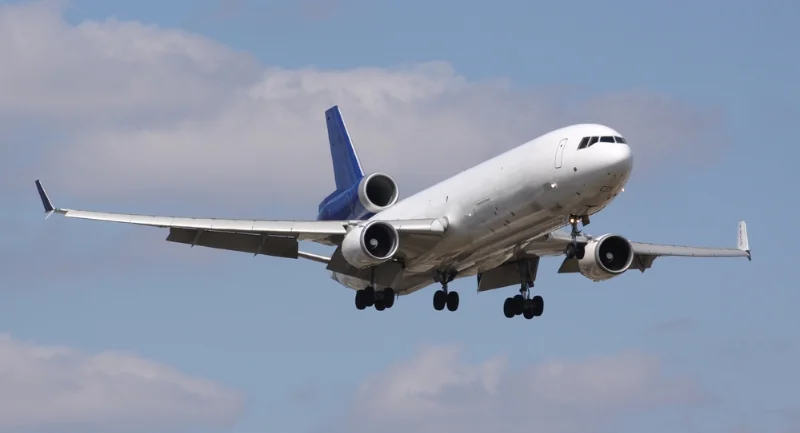
Secondary 25 is already a large sorting facility that can process 56,000 packages an hour, spans 1.3 million square feet along four levels, and has eleven miles worth of conveyor belts. Secondary 25 is part of FedEx’s World Hub, which covers 940 acres of land, has 171 aircraft gates, and features 84 miles of conveyor belts to process 484,000 packages per hour. While no further details have been provided for the project, it will certainly be exciting to see how it turns out!
To learn more about this exciting project, click here and here
Congress Approves $200 Million for Truck Parking
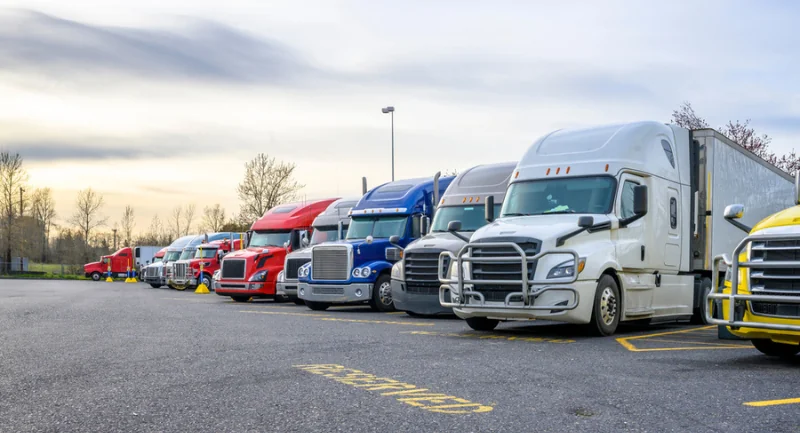
On February 3, 2026, President Donald Trump signed fiscal 2026 funding legislation that officially allocates $200 million specifically for truck parking projects nationwide — the first time in history that Congress has dedicated funds exclusively for this purpose. The bill simultaneously ended a partial government shutdown that had begun February 1.
Why This Matters
Truck parking has consistently ranked among the top concerns for commercial drivers, according to research by the American Transportation Research Institute. Federal regulations require drivers to take mandatory rest breaks after a set number of driving hours — but finding a safe, legal place to park during those breaks has become increasingly difficult due to years of underinvestment in parking infrastructure.
“When truck drivers finish their shift or take their federally mandated rest break, the last thing they should have to worry about is finding a safe place to park,” said American Trucking Associations President Chris Spear. “Unfortunately, chronic underinvestment in this essential infrastructure has resulted in severe shortages, making it extremely difficult for truck drivers to do their jobs and creating significant hazards for all motorists.”
How the Funding Will Work
The Federal Highway Administration will oversee the $200 million in new funding, directing resources toward projects designed to improve safety and boost efficiency along major freight and commuter corridors. The DOT is expected to meet with industry stakeholders as early as this month to continue exploring additional ways to improve truck parking access.
ATA credited Rep. Steve Womack (R-Ark.), chairman of the House transportation appropriations subcommittee, as a key champion of the funding. Arkansas Trucking Association President Shannon Newton echoed that sentiment, noting that trucking accounts for 1 in 10 jobs in the state and that major interstates like I-30, I-40, and I-55 make accessible truck parking especially critical for rural communities.
Part of a Broader Transportation Package
The fiscal 2026 legislation extends beyond truck parking. The bill also includes provisions to enhance the DOT’s response to cargo theft — a growing concern across the freight industry — as well as a review of commercial towing practices and a push for an updated national regulatory framework for autonomous vehicles.
The $200 million truck parking allocation represents a long-overdue recognition from Washington that the men and women who keep America’s supply chain moving deserve safe, accessible places to rest. For the trucking industry, it’s a meaningful step forward — even if much work remains to be done.