
The War With Iran Affects Oil Logistics
On February 28, the United States and Israel launched an attack on Iran, resulting in the deaths of several top officials, including Iranian Supreme Leader Ali Khamenei. In response, Iran has been conducting retaliatory drone attacks on various significant locations throughout the Middle East.
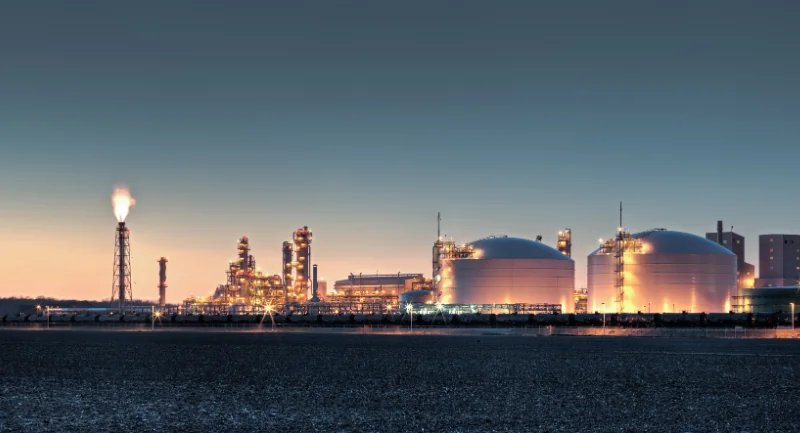
This includes strikes on Saudi Arabia’s Ras Tanura refinery, one of the largest oil production facilities in the world, as well as other sites around the Strait of Hormuz, which is a critical route that carries 20% of the world’s oil supply.
As a result of the attacks, traffic along the Strait of Hormuz has come to a screeching halt. Gas prices have spiked dramatically worldwide. If the conflict in Iran continues, then the reduced supply of refined oil will cause major disruptions to the global economy.
Even worse, the US cannot replace the Middle East’s refinery production. While we do have a large oil production capacity, refineries in the country have closed over the past decade due to environmental regulations, aging facilities, and economic troubles. The US cannot convert crude oil into refined diesel fast enough, and so we rely on Middle Eastern refineries to create it.
The conflict in Iran has exposed how deeply flawed energy infrastructures are worldwide. Because we rely heavily on diesel for construction, manufacturing, and transportation, diesel price surges and shortages can drive inflation upwards, even when oil is abundant.
This is just one example of how the attacks in Iran are affecting the global economy. Currently, the world is watching to see how the conflict in Iran will unfold. In the meantime, rising gas prices and inflation present new challenges for both companies reliant on diesel and oil and for consumers.
What Does This Mean for FreightCenter Customers?
Global tensions relating to Iran are spotlighting diesel fuel markets. Despite the U.S. producing considerable crude oil, limited refining capacity and aging infrastructure can make diesel supplies vulnerable to disruptions. Since diesel powers transportation across North America, fluctuations in fuel prices can significantly impact costs.
For shippers, this often results in fuel surcharges and varying freight rates. Partnering with a logistics provider like FreightCenter can help businesses stay flexible during fuel volatility. FreightCenter offers access to a nationwide network of carriers and real-time rate comparisons, allowing companies to find competitive pricing and reliable capacity while effectively managing transportation costs.
Get a free quote today from our instant quoting tool or call one of our agents at (800) 716-7608 to learn more about how we can help you navigate this crisis.
And now, the rest of today’s headlines:
US States Band Together to Sue Trump to Halt 10% Global Tariff
24 states filed a lawsuit with the Court of International Trade on March 5th to challenge President Trump’s 10% global tariff, which he imposed last month after the Supreme Court invalidated previous levies. The states are seeking to prevent the tariff from taking effect and are requesting refunds for the amounts already paid.
The states, including California, New York, Oregon, and others, argue that President Trump used the International Emergency Economic Powers Act (IEEPA) to impose and modify tariffs without legal authorization. The lawsuit claims that the IEEPA has “never been used to attempt anything of the sort.”
After the Supreme Court ruled that he couldn’t impose tariffs under the International Emergency Economic Powers Act (IEEPA), he turned to Section 122 of the Trade Act of 1974, which allowed a 10% global tariff on most U.S. imports for 150 days, which could be hiked up to 15% in the future. This statute, however, is outdated and has never been used for global tariffs, reflecting the shift to a floating-rate currency exchange system established in 1976.
The lawsuit requests that the Court of International Trade invalidate the Section 122 tariffs imposed by Trump on the grounds that he did not meet the necessary legal requirements to impose them. The states are also seeking refunds for the amounts paid by the plaintiff states for shipments that incurred these tariffs.
To learn more about the lawsuit, read the full Supply Chain Dive article here.
Laredo Receives $58M Grant to Expedite Freight Rail Project
The city of Laredo has received the largest share of a $160.4 million state rail fund awarded by the Texas Transportation Commission (TTC). This funding is part of a broader $250 million Senate initiative aimed at addressing rail crossings that are often obstructed by lengthy freight trains but are not located on the state highway system.
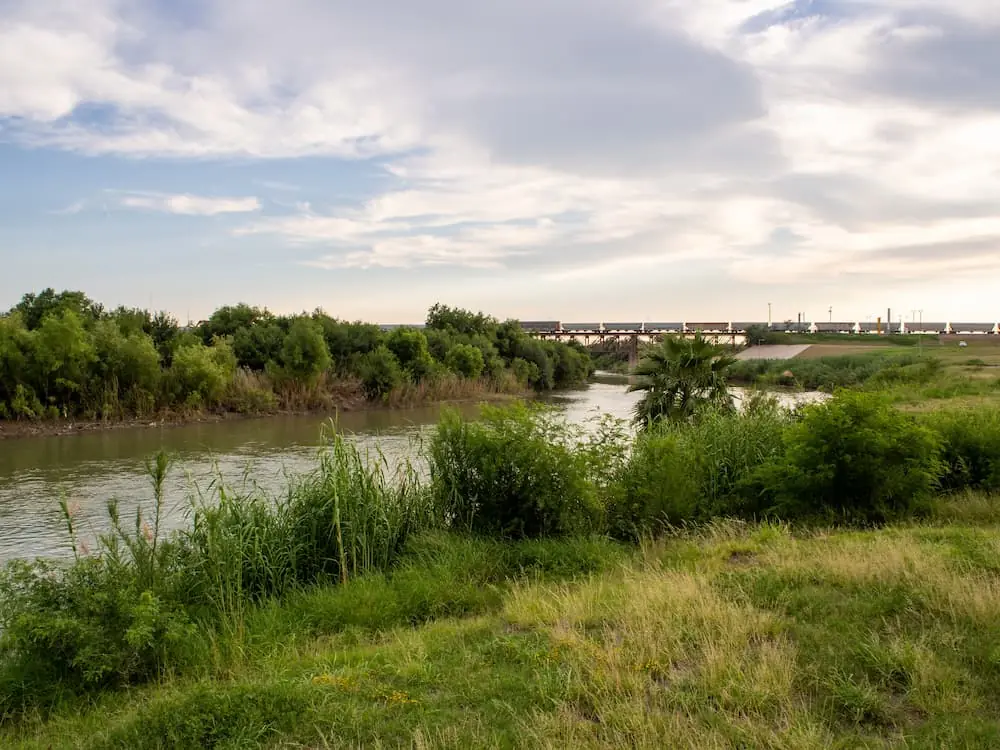
Laredo’s $58 million allocation will support the Canadian Pacific Kansas City (CPKC) rail grade-separation and safety-enhancement project at Santa Maria Boulevard, one of the city’s busiest corridors. The project aims to eliminate at-grade crossings and separate CPKC freight trains from road traffic. This initiative aims to reduce congestion, enhance safety, and speed up freight movement.
Laredo is one of the busiest rail border crossings for US-Mexico trade, with 213,008 rail cars crossing from Port Laredo to Mexico in 2025, according to the Laredo Economic Development Corp. Alleviating congestion in one of the city’s most crowded areas will make freight shipping across the border more efficient.
Altogether, five grade-separation and rail-crossing projects across Texas received awards from the TTC’s rail fund. Other cities benefiting include Houston, Amarillo, and San Antonio.

Chicago Interchange Now Considered Worst Bottleneck for US Trucks
For nearly 25 years, the American Transportation Research Institute has conducted an annual study of the most congested areas in the United States. This research utilizes truck GPS data from the U.S. Department of Transportation’s Freight Mobility Initiative to analyze over 325 locations across the country, assessing speed and freight movement volumes.
This year, the most congested truck bottleneck in the U.S. is I-294 at the I-290/I-88 interchange, west of Chicago, according to ATRI’s 2026 annual report. This interchange handles over 300,000 vehicles per day and is currently at the end of a six-year reconstruction project designed to reduce congestion and improve road safety.
Last year’s top truck traffic bottleneck, the I-95 at NJ Route 4 in Fort Lee, NJ, fell to second place this year, swapping positions with Chicago. Improvements made to the George Washington Bridge project, which connects New Jersey to New York, have enhanced traffic flow in Fort Lee. Other notable cities include Atlanta, Georgia, with four highway interchanges in the top 10, and Houston, Texas, with two in the ranking.
ATRI’s research indicates that traffic conditions across the country are worsening. Average rush-hour truck speeds have decreased by 2.8% compared to last year, now averaging 33.2 mph. This congestion negatively affects the quality of life for motorists and increases consumer costs by $109 billion. By analyzing this data annually, policymakers can identify areas that require improvement in road infrastructure and traffic flow.
Cops Can Pull Over Non-English-Speaking Truck Drivers in Wyoming
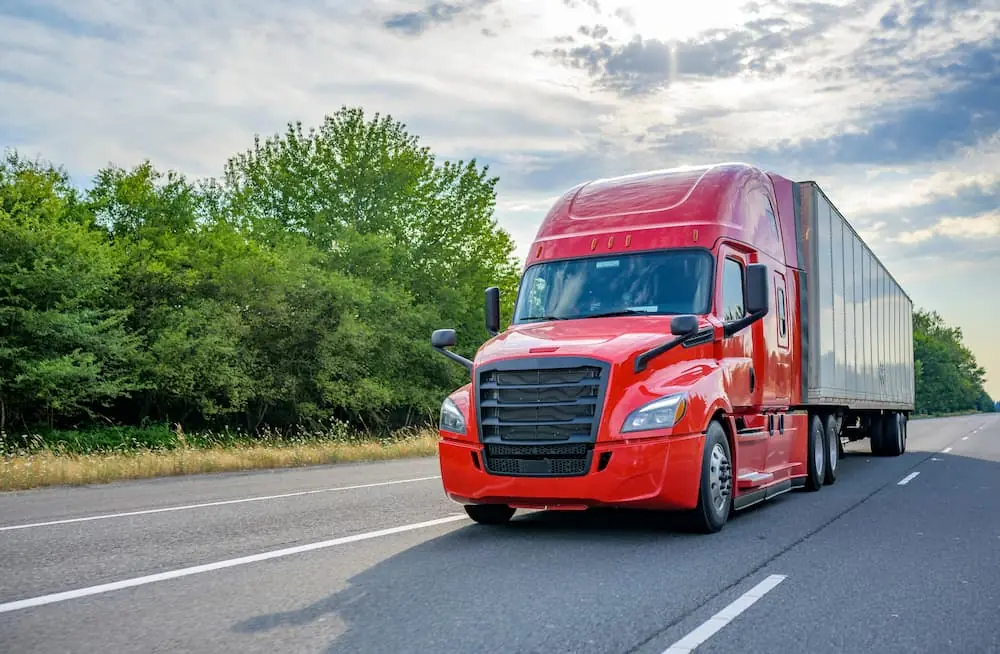
Wyoming Gov. Mark Gordon recently signed off on House Bill 32 on Thursday, February 26th, allowing local cops to remove truck drivers off the state’s highways and roads who are unable to prove English proficiency. Previously, only Wyoming Highway Patrol (WHP) officers could do so, but House Bill 32 extends that power to local authorities.
According to WHP Col. Timothy Cameron, removing non-English-proficient drivers off state roads “is something we already do. But now what (the bill) does is it leverages all the law enforcement assets in the state to most importantly identify people that jeopardize public safety.”
Transportation Secretary Sean Duffy has been cracking down on illegal migrant truck drivers, ordering states to tighten truck driving qualifications and force truckers to take English proficiency tests. So far, over 10,700 truck drivers have failed English tests.
Two thousand additional truck drivers have been removed from the road for failing to meet DOT safety standards. The DOT has also threatened to cut funding to California, Washington, and New Mexico for failing to enforce the rules.
Panama Canal Sees Unexpected Increase in Traffic Amid Trade War
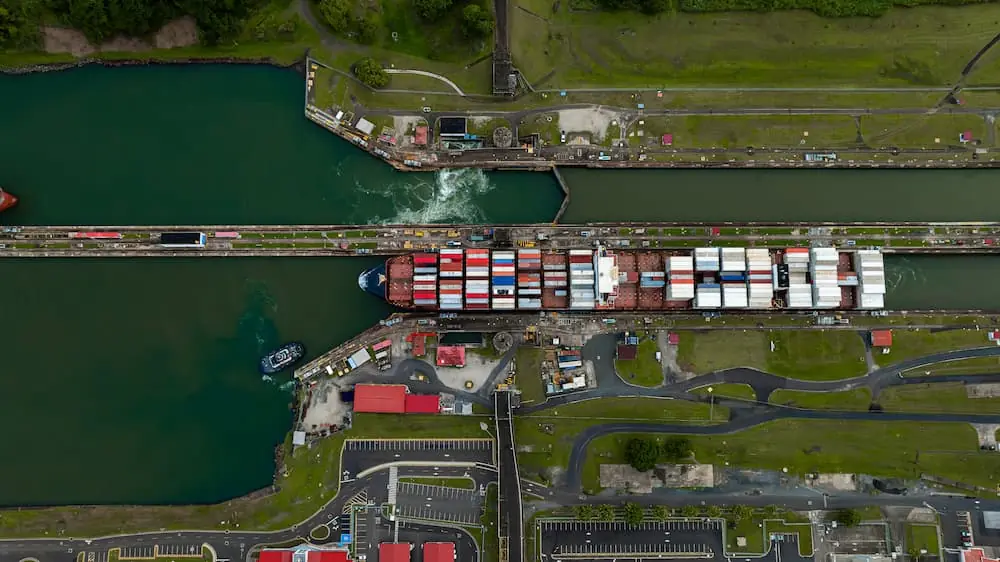
The Panama Canal was initially projected to see a significant decrease in revenue due to the trade war initiated by President Trump. However, it has demonstrated surprising resilience in demand. Recently, the canal reported an unexpected revenue increase of 8-10% for the fiscal year 2026, which began in October 2025.
According to Victor Vial, the Chief Financial Officer of the Panama Canal, there has been an increase in both ship transits and cargo tonnage during this period. In the 2025 fiscal year, the canal recorded a revenue of $5.7 billion, setting a new record. Vial stated that if current trends continue, “we could surpass last year’s revenue performance.”
Vial discovered that the strong demand for Asian goods in the United States is benefiting the canal, especially through car shipments from Asia to South America and the U.S. However, the most significant factor contributing to this benefit is the robust sales of liquefied petroleum gas (LPG) to Japan and South Korea.
The canal authority is set to open bidding next month for a pipeline designed to transport liquefied petroleum gas (LPG) along the canal. This new pipeline is expected to increase the canal’s capacity by up to 12% as LPG tankers dock at the planned port terminals. Construction of the ports and the pipeline is projected to be completed by 2031.