The Crackdown on CDLs and Why It Matters
Truck driving is one of the most scrutinized and complicated forms of driving. You’re not just operating a vehicle down a path; you are maneuvering a giant machine while pulling a rectangular box down busy highways with limited visibility. Only the most skilled, disciplined drivers can handle semi-trailer trucks.
To guarantee that only the most qualified individuals are behind the wheel, the U.S. Department of Transportation (DOT)and the Federal Motor Carrier Safety Administration (FMCSA) require all truck drivers to obtain a commercial driver’s license (CDL). This regulation ensures that drivers possess the necessary knowledge and skills to operate their vehicles safely and competently.
However, recently, there have been increased crackdowns by federal and state authorities on non-domiciled CDLs, targeting both fraudulent and foreign-born drivers. As states impose stricter regulations on obtaining CDLs, it is more important than ever for aspiring drivers and hiring carriers to understand the implications of these crackdowns and how they could affect CDL licensing in the future.

What’s This About a CDL Crackdown?
Non-domiciled CDLs are licenses held by drivers whose permanent address is in one state but who obtained them in another. For example, if a driver moves to New Jersey but still keeps the CDL they got in New York, that qualifies as non-domiciled. However, most drivers with non-domiciled CDLs are foreign nationals legally in the U.S. to work, but are not citizens. With a non-domiciled CDL, a legal resident can drive commercial vehicles provided they prove their lawful status and meet all federal and state requirements.
While the requirements for obtaining a CDL have always been strict, state regulators previously allowed some non-residents with questionable qualifications to secure their non-domiciled CDLs. With the trucking industry facing shortages, carriers are taking various measures to fill their capacity and get more drivers on the road.
Starting in late 2025, the DOT intensified its efforts to combat fraudulent and noncompliant CDLs. The primary focus has been on “CDL mills,” which are truck driver training providers that fail to meet entry-level driver training requirements. In early December 2025, the DOT removed nearly 3,000 training providers from the federal registry and issued warnings to about 4,000 more for crimes like:
– Falsifying and manipulating training data
– Not complying with required curriculum standards
– Having inadequate facility conditions
– Instructors not meeting proper qualifications
– Having inaccurate, incomplete documentation
– Refusing to provide records during federal audits or investigations
The DOT is tightening regulations on non-domiciled CDLs and requiring English proficiency and stricter visa checks. The FMCSA is freezing the issuance of non-domiciled CDLs to foreign nationals who don’t meet federal standards, leading to job losses for foreign-born drivers. States and carriers that fail to enforce these changes may face withheld highway funds and audits.
Why the Crackdown?
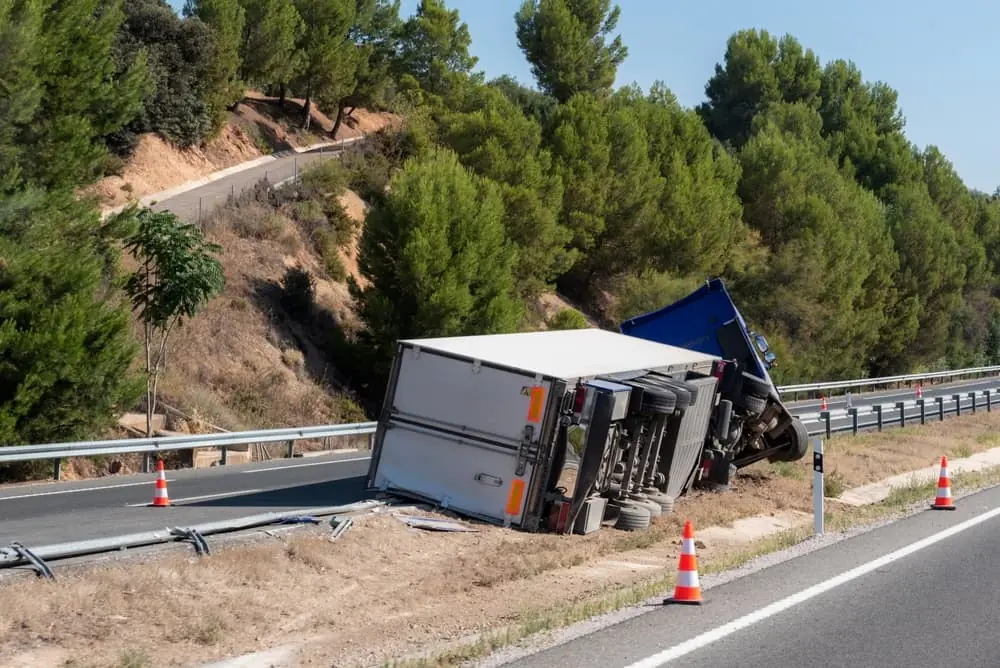
The CDL crackdown comes on the heels of several fatal accidents involving commercial drivers that gained national attention. In June 2025 in Texas, a Hope Trans LLC truck driver fell asleep at the wheel, causing a multi-vehicle crash that resulted in the deaths of five people, including four from the same family. Two months later, a truck operating for White Hawk Carriers in Florida made an illegal U-turn on a turnpike, crashing into a minivan and killing three people.
In both accidents, the drivers were from outside the U.S. and held CDLs issued from other states. They initially faced charges of vehicular homicide and deportation. However, the primary causes of the accidents, fatigue and reckless driving, were merely catalysts. Systemic factors, such as inadequate training, falsified Hours of Service (HOS) logs, neglect of vehicle maintenance, and other issues, also contributed to these incidents.
However, one of the biggest causes of these accidents is that these drivers were able to obtain a CDL in the first place. This isn’t saying foreign nationals shouldn’t have been issued a CDL based on their non-residential status; it’s more that they received poor training and weren’t properly tested when they first applied for the license.
Loose CDL issuance has been a problem for the past several years. As of August 2025, there are approximately 3.55 million truck drivers in the US. Many of these CDL holders obtained their licenses not because of their skills or knowledge, but because training facilities were too lax and issued licenses without proper education or practice.
On the other hand, there is an ongoing driver shortage, primarily because many drivers are older. The industry lacks younger drivers, which could lead to significant issues in the future. Can you blame younger would-be drivers, though? Truck drivers spend long hours on the road, alone, with some being paid low wages and little to no benefits. It’s a difficult job with a high entry ceiling. No wonder the industry is letting people slip through the cracks.
This, of course, has led to the current conundrum of unqualified CDL drivers getting into fatal accidents. Individuals who slip through the cracks often lack the preparation needed for the challenges of truck driving compared to fully trained professionals. However, they may still be allowed to continue working until they pose a risk to themselves or others. What steps can be taken to break this dangerous cycle?
The government’s response to this issue is to get stricter. This includes revoking CDLs, closing training schools, and penalizing states and carriers that do not comply with regulations. These measures aim to ensure that carriers hire qualified citizens and hold state training providers accountable. However, this approach could mean carriers lose part of their fleet and experience slower hiring, ultimately affecting future driver capacity.
So, What Now?
There is significant uncertainty regarding the future of non-domiciled CDL holders. Some states, like California, tried to reissue CDLs despite pressure from the FMCSA to comply with federal regulations. Other states, on the other hand, are following the rules, leaving many foreign workers at risk of losing their jobs.
The path forward will likely require more than enforcement alone. While tighter oversight can remove bad actors from the system, it does not address the root causes of the problem. The trucking industry still faces a shrinking workforce, rising operational pressures, and an urgent need to rebuild trust in the CDL pipeline. Without meaningful investment in high-quality training, better working conditions, and sustainable career pathways, stricter rules may simply shift the problem rather than fix it.
For carriers, this moment is a call to be more diligent than ever. Vetting drivers thoroughly, partnering only with reputable training providers, and maintaining strong compliance practices will be essential—not just to avoid penalties, but to protect lives on the road. For regulators, consistency and collaboration with states and industry stakeholders will be key to ensuring safety standards are upheld without destabilizing capacity nationwide.
At its core, the CDL crackdown is about restoring confidence in the people behind the wheel. Truck drivers play a critical role in keeping the U.S. economy moving, and they deserve training, oversight, and support that match the responsibility they carry every day. If the industry can pair accountability with opportunity, this crackdown may ultimately serve as a turning point—one that strengthens safety, professionalism, and trust across the logistics landscape.