
Freight Shipping in the 1970s: The Dawn of Containerization
The 1970s were marked by significant historical and political events, as well as major cultural shifts, including the Watergate scandal, disco dancing, bell-bottom pants, and a shift toward more individualistic mindsets. The 1970s weren’t just a decade of significant change in society and politics, but also in the freight industry.
Many people believe that the rise of containerization began in the 1950s with the invention created by Malcom P. McLean. While the method was introduced in that decade, it wasn’t until the 1970s that it truly began to gain traction in the industry.
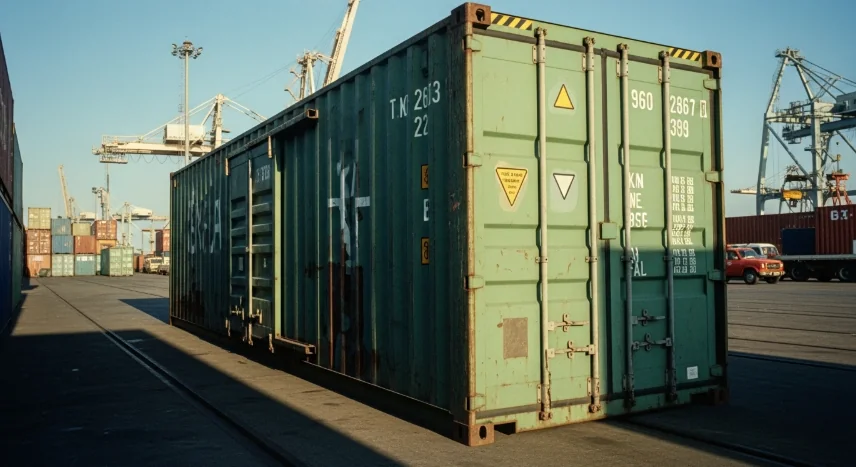
Containerization is the process of using reusable, standardized containers to transport goods, allowing for more efficient and secure shipping across various modes of transportation. These innovative containers took hold during this decade, transforming the industry’s future as we know it.
How Containerization Became the Standard
As many in the industry know, Malcom P. McLean, an American businessman, invented the modern intermodal shipping container in 1956, first debuting the invention on a tanker ship from Port Newark in New Jersey to Port Houston in Texas, the Ideal X.
Although containerization began to be adopted across the industry over the following decade, its use did not expand rapidly until the 1970s. By 1973, US, Asian, and European container ship operators were carrying 4 million TEUs – Twenty-foot Equivalent Unit, a standard set in 1968 for 20-foot and 40-foot containers.
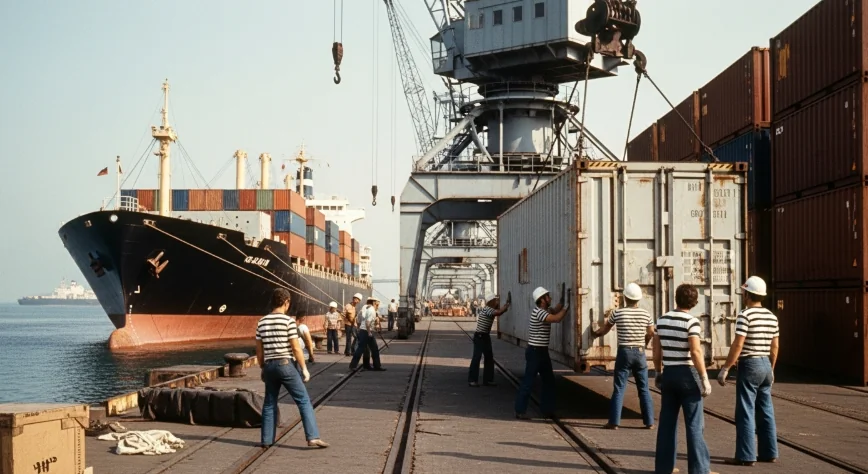
Before then, breakbulk was still the more prevalent method in the industry. Although it involved manual labor and forklifts to load and unload cargo, it guaranteed dock workers jobs at a time marked by economic uncertainty. The transition to containerization was initially met with resistance from port workers, who feared losing their jobs due to the new automated process.
However, it was soon discovered that containerization offered a myriad of benefits to the transportation industry and the global economy. Regions such as Western Europe and the Northern Range were among the first to adopt the process and were crucial in creating the key trade routes still used today. The shift to containerization by major countries drove efficiency and cost-effectiveness along the transatlantic and transpacific routes, further contributing to the expansion of containerization.
Containerization offered cost-effectiveness and efficiency because time and labor were not needed to load and unload cargo from the ships. Instead, the containers were moved by a specialized quay crane.
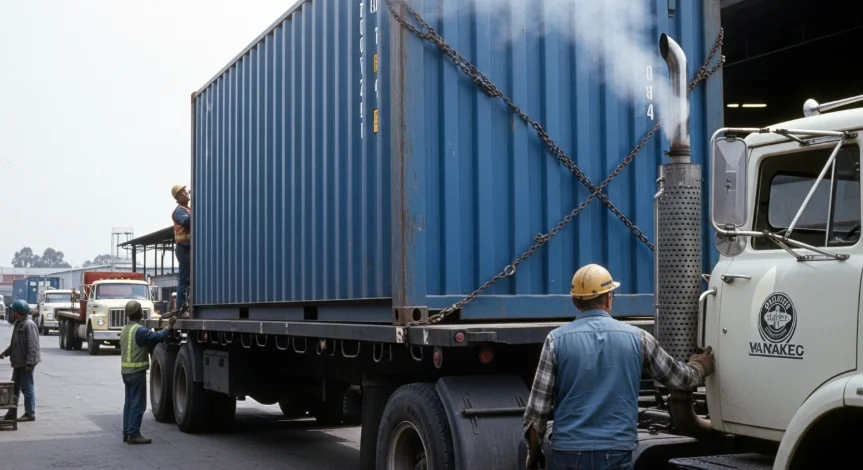
The increased efficiency of moving goods facilitated the growth of intermodal transportation, which utilizes two or more modes of transportation for one shipment, making the process of moving cargo from ship to truck or rail much easier. The use of larger container ships enabled greater capacity and faster turnaround times in shipping, which in turn led to increased trade volumes and global economic growth.
With these advantages and the standard for containers set, ports around the world began to build their infrastructure to accommodate larger ships that transported the containers, making the process more streamlined and eventually solidifying the global network.
The use of larger container ships enabled greater capacity and faster turnaround times in shipping, leading to increased trade volumes and global economic growth.
For the freight industry and global economy, the 1970s marked the rise of dominance of containerization. The rapid adoption of container shipping on a worldwide scale was just another major shift in the disco decade.
By enabling faster, more efficient, and cost-effective transportation of goods, containerization reshaped supply chains, reduced labor demands, and set the groundwork for the modern intermodal system.
As trade volumes increased, port infrastructure grew, containerization evolved from a new shipping method to a standard revolutionizing shipping, the industry, and interconnecting the global economy that we rely on today.