

The State of Green Logistics: How Sustainability Has Shaped Freight in 2025
Within the corporate world, and perhaps the rest of the world as well, green initiatives come in waves. One year, businesses are passionate about saving the environment, while another year, they are disinterested.
But what about in 2025? According to a report from MIT, corporations are still actively seeking ways to implement sustainability practices in their supply chains. While they need to make improvements in their infrastructure and business metrics, businesses are increasingly recognizing the benefits of sustainability, rather than focusing solely on the challenges.
Despite the economic challenges companies faced this year, including tariffs and new U.S. policies, there were significant efforts toward sustainability, especially in supply chains. The state of green logistics in 2025 is being shaped by ongoing initiatives, new regulations, and advancements in technologies and systems aimed at enhancing sustainability in freight.

Why Is Sustainability Still a Priority For Supply Chains?
Many corporations are being urged to enhance their sustainability practices due to federal or international regulations. However, some companies are genuinely investing in green logistics for reasons other than environmental or regulatory concerns.
To understand the state of green logistics in 2025, we should first explore the three key factors that explain why businesses are committing to these initiatives:
- Switching to greener practices can ultimately save companies money. Practices like optimized routing, recycled packaging, and energy-efficient warehousing not only minimizing environmental impacts but also reduce transportation and energy costs.
- Consumers are increasingly seeking out environmentally responsible brands. They trust companies that do their part in decreasing their carbon footprint, and so companies must find ways to meet this demand to earn more revenue.
- Companies can accelerate and optimize their logistics operations through sustainable practices. Optimizing routes reduces transportation time, and new technologies automate parts of the supply chain that previously wasted energy.
While sustainability may not always be a priority for corporations, it is increasingly recognized as a crucial factor in enhancing supply chain efficiency, ensuring affordability, adhering to regulatory compliance, and meeting customer expectations. This is why, despit the time it takes, companies continue to implement sustainability measures.
How Sustainability Has Shaped Freight in 2025
So far in 2025, many companies and corporations are expanding their sustainability practices, aiming to achieve goals set for years to come. Although the year is not yet over, several significant development towards total sustainability in the logistics industry have occurred, warranting attention.
Let’s look at a few stories revolving around the state of green logistics efforts from 2025:

Uber Freight and Tesla’s EV Fleet Accelerator Program
The adoption of electric vehicles (EVs) in the logistics industry is progressing, albeit at a slow pace. Several barriers prevent drivers and carriers from establishing complete EV fleets, primarily due to financial concerns. Many carriers and drivers are hesitant to commit to the signficant costs associated with transitioning to electric vehicles, despite the fact that driving EVs is more environmentally friendly.
However, Uber Freight wants to change this preconception. In September of this year, Uber Freight announced its partnership with Tesla to launch the Dedicated EV Fleet Accelerator Program. This buyer’s program is designed to help make EV trucks more affordable for freight transportation.
Fleets that purchase Tesla Semis through this program will receive a subsidy on the truck’s price. Additionally, Uber Freight will integrate participating fleets into its dedicated freight network, providing benefits such as route planning support, infrastructure insights, and access to reliable charging networks specifically designed for freight operations.
The Dedicated EV Fleet Accelerator Program provides a practical and financially viable approach to electrification, enabling shippers to achieve their sustainability goals while minimizing financial risks. Thanks to Uber Freight and Tesla’s consideration for the carriers’ revenue uncertainty, the program may play a crucial role in the industry’s transition from pilot EV experiments to scalable, zero-emission freight models.

The IMO Approves Net-Zero Framework Draft to Reduce Gas Emissions
The logistics industry has been working towards decarbonization for a long time now. However, it can be challenging to implement net-zero emission ideas when international shipping companies continue to use fossil-fueled standard ships for their oeprations.
In April, the International Maritime Organization (IMO) introduced the IMO Net-Zero framework, a legally binding set of regulations aimed at reducing greenhouse gas emissions from all global ships with a gross tonage of over 5,000 by 2050, which is set to take effect by 2027. This framework will establish a global fuel standard that requires reductions in fuel intensity using a well-to-wake approach.
Additionally, a compliance mechanism will be implemented, requiring ships that exceed specified emissions thresholds to acquire remedial units. Conversely, low-emission vessels may have the opportunity to earn “surplus units.” All revenue generated from emissions pricing will be directed to an IMO Net-Zero Fund. This fund will support ship innovation, infrastructure development, alleviate cost burdens, and promote equitable transition initiatives in small island nations and developing regions.
The IMO Net-Zero Framework, though not yet fully realized, has the potential to transform perceptions of clean shipping. It could pressure shipowners and carriers to make green investments mandatory, offering the global supply chain a competitive edge through sustainable, zero-emission practices.
Most importantly, this will set a standard for ports and inland transport. If emissions are curtailed in a structured and enforceable manner, it may accelerate decarbonization across the rest of the logistics industry. The draft still needs to undergo rounds of approval and guidance before enforcement in 2027, so the final regulations may differ from the draft. However, this is still a significant step forward for the global shipping industry and green logistics.
IKEA’s Sydney Warehouse Powers 70% of Operations Through Solar
Warehousing and distribution centers consume a significant amount of energy and resources. The logistics industry has employed various tactics to combat energy overconsumption, such as reducing the number of facilities in a businesses’s network.
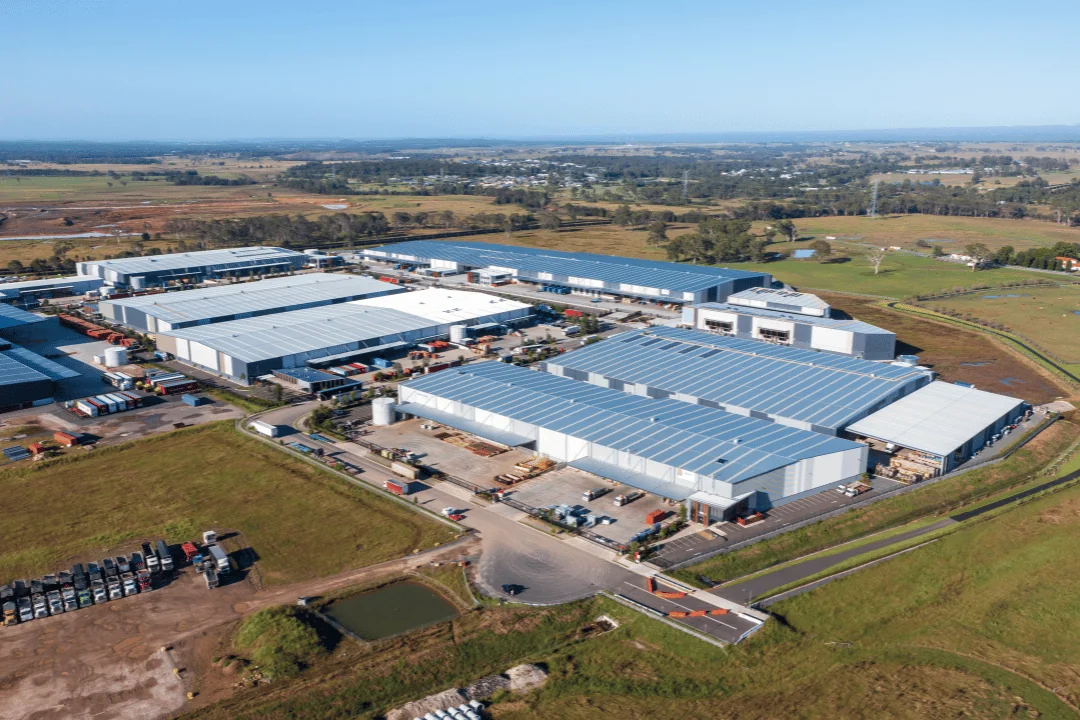
One company making such changes is the Swedish furniture giant IKEA. IKEA’s Australia branch announced back in March that it was nearing completion on a $2.9 million solar PV and battery project at one of its distribution warehouses in Sydney. The Marsden Park facility is set to generate up to 70% of its round-the-clock warehouse operations from solar energy, while also powering IKEA’s EVs used for home deliveries.
The project coincided with the release of IKEA Australia’s FY24 annual summary and sustainability report, which highlighted the branch’s significant progress in reducing emissions while continuing to grow its revenue. Since 2016, the branch’s operational climate footprint has decreased by 89%, while revenue has increased by 68%. Additionally, 100% of IKEA Australia’s retail operations now use renewable electricity. The company is also investing $4.5 million in dedicated electric vehicle (EV) chargers for its delivery partner fleets at all stores nationwide.
IKEA benefits significantly from generating its own solar-powered energy, eliminating the need to rely on an off-site grid. The solar warehouse serves as evidence that clean energy is not only an ethical choice but also a practical and cost-effective option. Moreover, IKEA Australia sets a precedent for other companies; if they can transition from conventional electricity to solar energy, then major corporations can do the same.
Looking Ahead: The Steady Pulse of Green Logistics
Sustainability in logistics has often moved in cycles; one year marked by momentum, the next by hesitation. Yet 2025 has revealed that the state of green logistics has a different rythm: a steady pulse beneath those shifting tides. Despite economic headwinds, companies are demonstrating that green logistics is not a fleeting initiative, but a lasting transformation that corporations are gradually incorporating into their operations.
From Uber Freight’s EV accelerator program to the IMO’s Net-Zero framework and IKEA’s solar-powered facilities, the logistics industry is showing that sustainability is no longer just about compliance or reputation: it’s about opportunity. Each innovation, no matter how incremental, moves the industry closer to a more resilient and efficient future.
What stands out most in 2025 is that progress doesn’t always arrive with fanfare. It builds quietly through new technologies, smarter networks, and leaders willing to rethink what “business as usual” looks like. If sustainability once came in waves, this year suggests the tide has begun to turn for the better, carrying the logistics industry toward a cleaner, brighter, and more enduring future.