
From Farm to Feast: The Supply Chain Behind Thanksgiving Staples
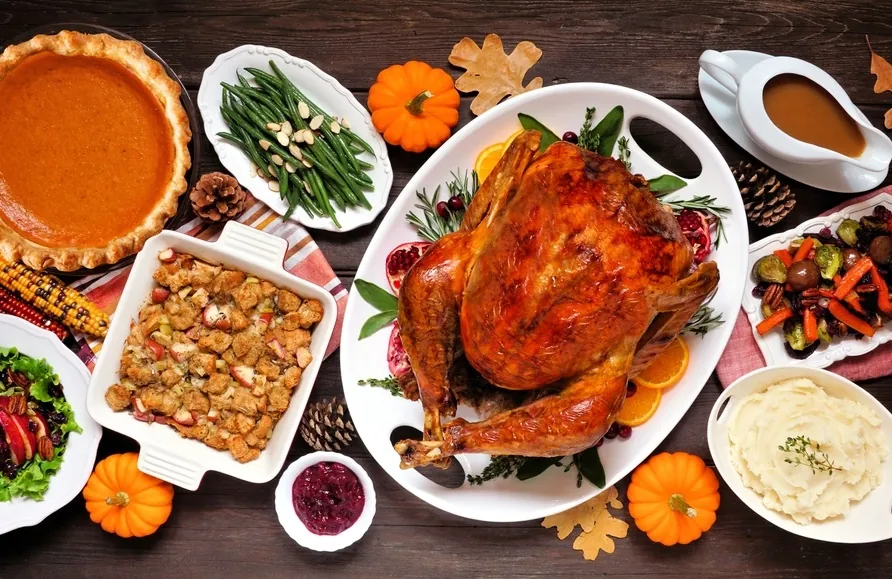
With any Thanksgiving, there are many events going on. Parades with floats, football games, visiting family members, but one of the most defining events is the traditional Thanksgiving feast! A day where friends and families gather around, gab about their lives, and eat way too much food.
There are all sorts of foods that families make for the day, like pies, meats, casseroles, gravies, stuffings, and so on and so forth. We’ll be looking at three of the most famous foods that Americans eat on Thanksgiving: turkey, cranberry sauce, and pies. Let’s explore the journey they take from the farm all the way to your table!

Travels of a Turkey
The centerpiece of any Thanksgiving is the Turkey, it’s the dish everyone waits for and hopes to not be dry, and the numbers show it! For the 2024 Butterball report, it was estimated that 87% of hosts planned to serve turkey, with 76% being a whole turkey. Financebuzz also states that in America, 1.4 million whole turkeys will be eaten; with the average hen weight being 17 pounds, that’s 23.8 million pounds of turkey! Certainly a lot of full stomachs.
But that turkey doesn’t just pop in on Thanksgiving day, it has to come from somewhere, which is where we start our journey at one of the thousands of turkey farms. Here, farms have bred turkeys to lay between 80 to 100 eggs in a laying cycle. Once the egg hatches, the farm feeds the turkey and gives them medicine until around 14 weeks when they are typically ready for the next step.
Once they are large enough, the turkeys will be corralled into containers and shipped to a processing plant, where the turkeys will be butchered, plucked, and cleaned thoroughly. After the turkey is graded, it is chilled and vacuum-sealed to preserve their freshness. From this point, the turkey can either be frozen or brought close to freezing to keep it considered fresh. Fresh turkeys can be stored for about a month, while frozen ones can be kept for many months.
Turkey distribution can take one to two years of planning so that companies have time to change anything for their delivery. Once it’s time to go, these turkeys will be put onto refrigerated trucks, also called reefer trucks, to maintain their temperature for transportation. There, they get transported from storage to retailers where buyers can pick out the turkey that fits best for their feast!
Cranberry Catches
Cranberries are a classic for any Thanksgiving meal. Indigenous to North America, they were an important food source for many Native American tribes. These days, they are cultivated by many farmers in the north, 60% alone coming from Wisconsin. While they can be hit or miss for a party, that hasn’t slowed down this crop. Currently, their market value sits at a whopping 2.93 billion USD. That’s right, billion with a b!
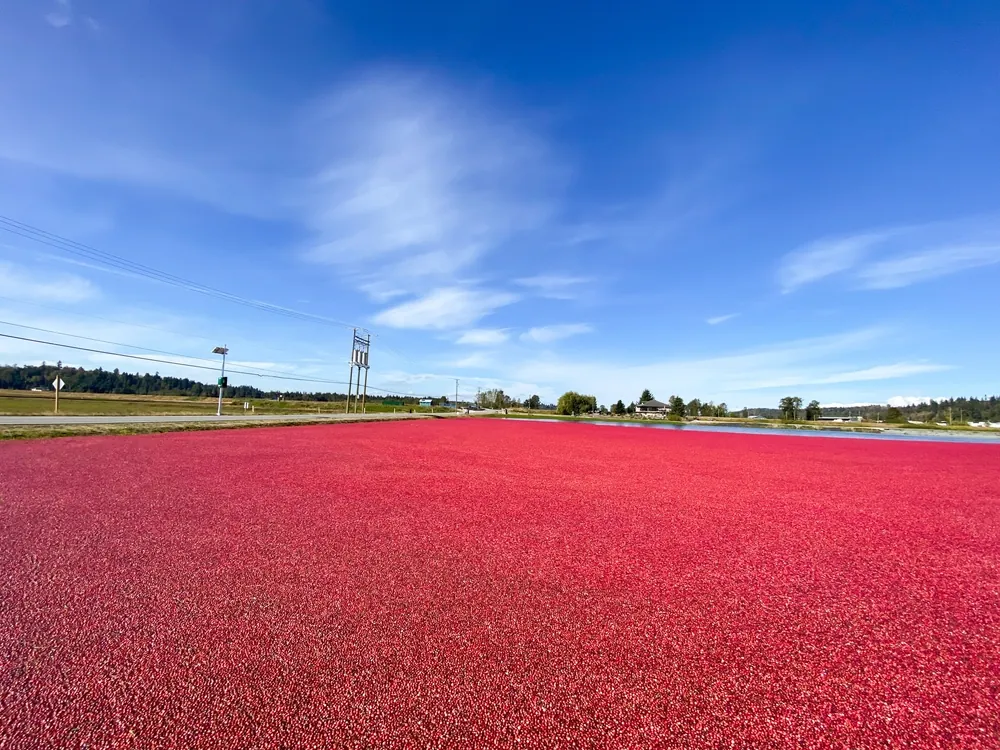
When thinking about the start of a cranberry’s journey, you may think of a pond with cranberries filled in it, but that’s simply a, well, simplification. Cranberries actually grow on vines and are very low to the ground. In the past, one would have to meticulously pick each individual berry from the vine that grew close to the ground. However, in the 1960’s, industries started doing wet harvesting, which would have the planted area filled with water so that the cranberries would rise up and be easier to collect. Dry harvesting is still used for cranberries that are sold directly to the market, but wet harvesting is more profitable for other productions.
Many cranberries are used to turn into products like juices, powders, or even as flavor additives for other foods. For Thanksgiving however, cranberry sauce is what people use for their dinners. Once the cranberries are collected, they are transported to a processing plant where they are washed. They are then crated and frozen until they are ready for processing.
Once they are ready for processing, the cranberries are broken up and inspected with lasers to ensure the berries meet production standards. After inspection, the berries will go through machines that will remove their skins and seeds, causing them to become a smooth puree. Pectin and sweeteners are then added to make it sweeter and gelatinous.
After the final mixing and filtering are done, the cranberry sauce is heated for canning. Once canned, the cranberry sauce can is kept upside down so that the sauce can be removed easily when used. Once canned, it’s packaged, palletized, wrapped for shipping, and put onto dry vans, where it gets distributed to retailers all across the nation for families everywhere to enjoy!
Pies for the Party!
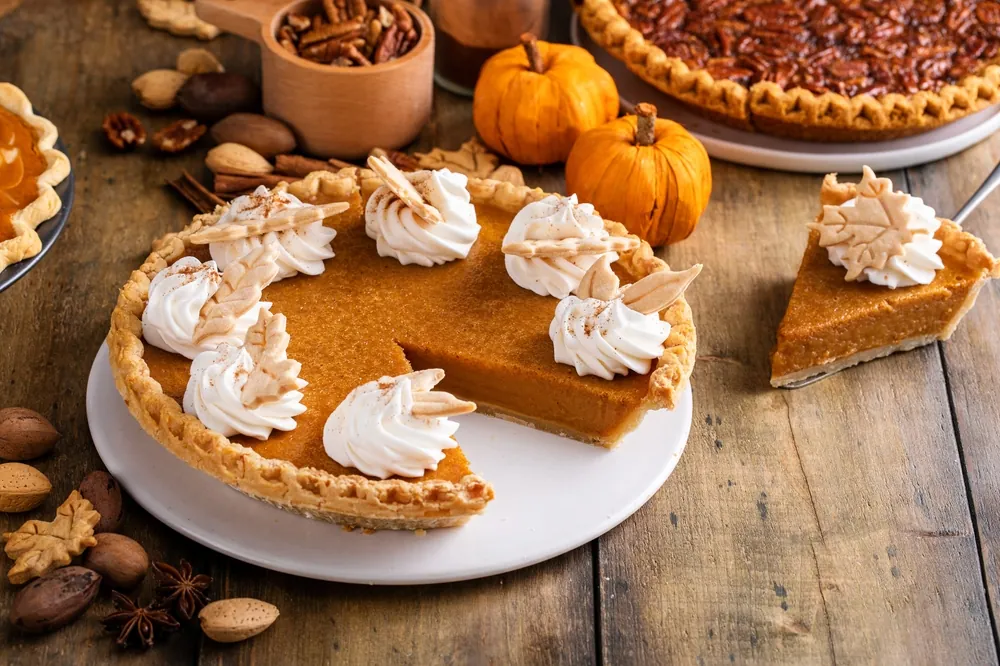
Even with all of the exorbitant amounts of food one eats for Thanksgiving dinner, there’s always room for dessert! Pies are the most famous dessert for Thanksgiving and it shows. For the week before and the week of Thanksgiving, Americans are expected to purchase around 18.9 million pies for their dinners. And of course, there are all kinds of pies; Pecan, apple, sweet potato, peach, chocolate, and the most popular, pumpkin!
Some families choose to bake their own pies at home, but most will be buying one, so how a pie gets brought over is key. Of course, since there are many different types of pies, there are many different ways they get made, with all sorts of special recipes. Even two pies that are both pumpkin can be made quite drastically! Still, there are some basics.
For many retailers, their pies are shipped from distribution centers that make the pies, taking the ingredients and putting them together, baking them at the center, and freezing them to preserve freshness. The famous TV show How It’s Made took an intricate look into the pie-making process by showing how one company makes apple pies!
Once frozen and ready to ship, they will be put into reefer trucks so that they are kept temperature-controlled for the entire ride. Once at the store, some pies, like chocolate or custard pies, stay frozen the entire time until they are baked. Others, like fruit pies, can stay at room temperature if they are intended to be sold in a short window of time. Either way, it’s all delicious!
Your Meal: Brought to You By The Supply Chain Behind Thanksgiving Staples
But whether it’s the turkey, the cranberry sauce, or the pies that are your favorite, it’s still not the main reason we celebrate. I mean sure, it’s certainly a major part, there’s no denying that. But the real reason we all get together is to celebrate each other and to be grateful for what we have in life! Whether that’s friends, families, our communities, or many other things, it’s great to share that love, togetherness, and generosity, especially with those you care about.