
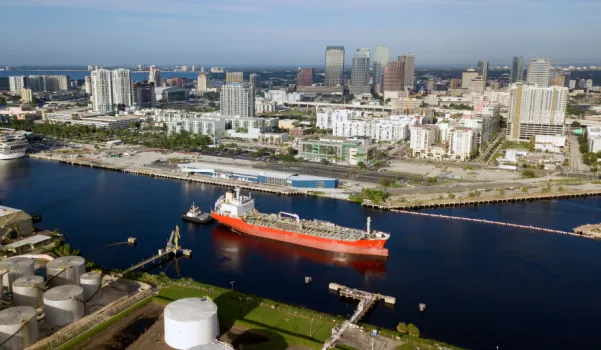
What are Different Types of Container Ports?
There are many different types of ports out there, and each with it's own purpose. This page will delve into the specifics of each port, and their purposes.
Related Articles:
Intermodal Containers Smart Containers What is a Cargo Container Container Shipping


Different Types of Container Ports





Thousands of businesses trust FreightCenter to move their freight faster, smarter, and cheaper! From unbeatable rates to top-notch service, our customers are raving about their shipping success.
See why they keep coming back!
Award-Winning Service, Trusted by Shippers Everywhere!
- 2021, 2017 & 2016 Food Logistics’ Top Green Providers
- 2021 & 2018 Supply & Demand Chain Executives’ Pros to Know: Matthew Brosious
- 2020 & 2019 Top Food Logistics’ 3PL & Cold Storage Provider Award
- 2020 & 2019 Business Observer’s Top 500 Companies on the Gulf Coast
- 2020 & 2017 SmartWay® Transport Partner
- 2020 & 2017 Food Logistics’ Champions: Rock Stars of the Supply Chain
- 2020 Best of Palm Harbor Awards for Local Businesses
- 2017 Green Supply Chain Award from Supply & Demand Chain Executive
- 2017 Tampa Bay Business Journal Heroes at Work
- 2016, 2015, & 2012 Food Logistics Top 100 Software and Technology Providers
- 2013 Tampa Bay Business 100 by Tampa Bay Business Journal
- 2013 Top 100 Great Supply Chain Partners by SupplyChainBrain
- 2012 TIA Samaritan Award Honorable Mention
- 2012, 2011 & 2010 TBBJ Fast 50 Recipient
- 2013, 2011, & 2010 Diversity Business Top Businesses

Why Choose FreightCenter for Shipping?
Expertise in Freight Shipping: With over 25 years in the logistics industry, FreightCenter is dedicated to guiding you through the entire logistics process, from beginning to end. Our goal is to make freight shipping easy to understand and book. Don’t waste time researching and receiving quotes from individual carriers- FreightCenter’s got your back!
Competitive Rates with Tailored Solutions: We prioritize high-quality customer service without breaking your wallet. We utilize our relationships with regional and national carriers to offer you competitive, affordable rates for shipping while providing personalized solutions to your needs. Need a reefer trailer? We got you! Want to expedite your order? Leave it to us! We’re ready to provide tailored solutions that don’t compromise your shipment.
Personalized Customer Support: FreightCenter is committed to satisfying our customers. Our customer support team is here to help you every step of the way, from initial inquiries to post-shipment concerns. We handle all aspects of logistics, including tracking, paperwork, and communication with carriers, so you can focus on what matters while we manage your shipment. Choose us for our reliable service and affordable quotes!
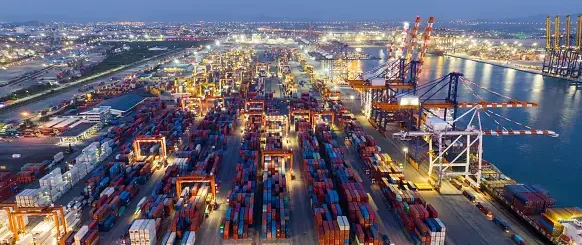
Different Types of Container Ports
Transshipment Ports
These container ports serve as hubs where cargo is transferred from one vessel to another. Transshipment is often used when direct shipping routes are not available between origin and destination ports. Goods are unloaded at a transshipment port and then loaded onto another vessel that will take them to their final destination. A prime example is the Port of Singapore, which handles a significant portion of transshipment traffic globally.
Feedports
These are smaller container ports that serve as connections between transshipment ports and smaller regional locations. They handle smaller volumes of cargo, which are typically transferred to larger gateway or transshipment ports for further shipment. These ports are crucial for reaching remote or less-connected regions.
Dry Ports
Not near the coast, dry ports are inland facilities that serve as extensions of seaports. They are typically connected by rail or road and allow goods to be processed and cleared for customs away from busy coastal ports. Inland container depots (ICDs) are a form of dry port, providing logistics services such as container storage, sorting, and customs clearance.
Bulk Ports
While these container ports handle bulk cargo (liquids, grains, etc.), many have specialized facilities for containerized cargo as well. These are often used in conjunction with container ports to handle goods that are not well-suited to containerization, such as oil or coal. Many large container ports also have bulk handling capabilities to ensure comprehensive service.
Each type of container port serves a specific role in the coal logistics and shipping network, helping to streamline operations and connect different regions effectively. For more details on the functions and types of ports, you can explore logistics and maritime resources further. For more info on the containers themselves, click here.
To create value for our customers by delivering customized shipping solutions that meet their unique needs and to fulfill shipping demands from simple to complex with expertise, guidance and ingenuity.
The most reliable Specialized Freight Services rates from all the top carriers are just a few steps away. From white glove service to international shipping, we've got you covered.
Conquer borders with our international freight shipping service! From distant shores to global markets, we deliver your cargo with efficiency and reliability. Explore our seamless shipping solutions and expand your horizons with confidence!
Keep things cool with our refrigerated freight service! From farm to fork, we ensure your perishable goods stay fresh and delicious. Explore our chilly-chic shipping solutions and keep your cargo crisp, no matter the distance!
Set sail on a global adventure with our container shipping service! Seamlessly transporting your goods across oceans and continents, we offer reliable, efficient, and secure solutions for all your shipping needs. Discover the thrill of worldwide trade with our expert container shipping services today!
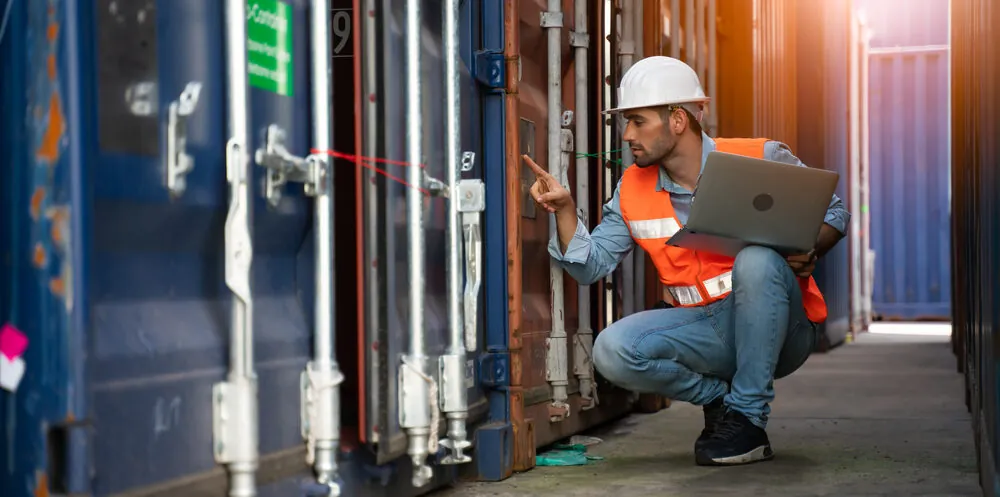
When to Use each Type of Port
Transshipment Ports
These container ports are ideal when direct shipping routes are not available between the origin and destination. Transshipment ports are essential for rerouting goods, typically in regions where smaller or less connected ports need to link with larger hub ports. If you’re shipping goods from a smaller regional port to a major international hub, transshipment ports provide the necessary linkage. Major examples include the Port of Singapore, which is a key transshipment hub in Southeast Asia.
Gateway Ports
Use gateway ports when your cargo is entering or exiting a country or region. These ports handle high volumes of direct international trade and are typically located near major industrial or commercial areas. They are suited for shipments involving large quantities of goods, such as consumer products, electronics, or machinery, and are directly connected to global trade networks. Container ports like the Port of Los Angeles or Rotterdam serve as prime examples for gateway ports.
Feeder Ports
Feeder ports are best for regions that are smaller or less accessible via direct ocean shipping routes. If your goods are not large enough to justify direct shipping to a major hub but need to eventually reach a gateway port, feeder ports are used to transport goods by smaller vessels. These ports help optimize global shipping routes and ensure that even remote locations are served efficiently, often connecting to larger transshipment or gateway ports for the next leg of the journey.
Dry Ports
Dry ports are optimal for shipments that need to be cleared or distributed inland. If your goods need to be processed away from congested seaport areas or require customs clearance in a less busy location, a dry port is the best option. These inland ports are usually connected to seaports by rail or road, and they can handle container storage, sorting, and even direct delivery. They offer flexibility, particularly for landlocked or inland destinations that need to access the global supply chain.
Bulk Ports
While bulk ports are primarily used for handling bulk goods like grains, oil, and coal, many also have container handling capabilities. If you’re shipping bulk materials alongside containerized goods, these ports provide the infrastructure to manage both types of cargo. However, if you’re exclusively shipping containers, a dedicated container port may be more efficient.
 Guaranteed competitive pricing every time you ship.

FreightCenter Can Help You With Your Container Port Needs!
However you need your shipment done, we’re here to help! Whether it’s a dry port or a transshipment port, we can help you decide on what’s best for your cargo. With over 25 years of experience in shipping logistics, you can rest assured that you have the best team ready to help you every step of the way! From specialized shipping to international shipping, we help walk through the process with you every step of the way. That way you can focus on your business while we handle the logistics!
Let’s make sure your shipment gets the treatment it deserves. Get your shipping quote today or call us at (800) 716-7608.
Frequently Asked Questions about Container Ports

Q. What’s the difference between a port and a terminal?
A port is the larger facility where ships dock, cargo is handled, and various terminals operate. A container terminal is one section of the port dedicated to loading and unloading standardized shipping containers.
Q. Can small businesses use container ports?
Yes, you don’t need to fill an entire container. Freight forwarders and brokers consolidate smaller shipments into shared containers, giving small businesses access to global ports.
Q. What is a TEU?
TEU stands for “twenty-foot equivalent unit.” It’s the standard measurement used to calculate container volume. A 40-foot container equals 2 TEUs.
Q. Which are the busiest container ports in the United States?
The busiest U.S. ports include Los Angeles, Long Beach, New York/New Jersey, Savannah, and Houston. Together, they handle the majority of America’s containerized imports and exports.
Q. Why do some ports get congested?
Congestion happens when container volumes exceed a port’s capacity. Causes include labor shortages, equipment breakdowns, or supply chain imbalances, like too many imports arriving at once.
Q. Do container ports operate 24/7?
Many of the largest ports, like Los Angeles or Singapore, operate around the clock. Others may have limited hours depending on labor agreements, staffing, and demand.
Q. How do customs work at container ports?
Customs officials inspect and clear shipments before they’re allowed inland. This process includes reviewing paperwork, scanning containers, and occasionally opening them for physical inspection.
Q. Can I track my container while it’s at the port?
Yes. Most carriers and port authorities provide tracking updates, showing when a container arrives, clears customs, and leaves the terminal. Your logistics provider usually gives you access to this information.
Q. What’s the role of inland or “dry” ports?
Dry ports are inland facilities connected to seaports by rail or truck. They help relieve congestion at coastal ports and give shippers a closer access point for container pickup and drop-off.
Q. Why should I use a feeder port instead of a gateway port?
Feeder ports are ideal for regions or smaller cities that are not directly connected to major global shipping lanes. If you’re shipping goods to a less accessible area, feeder ports allow you to connect smaller vessels to gateway or transshipment ports. They help reduce shipping costs and time for goods moving to and from remote regions.
Q. What are the benefits of using dry ports?
Dry ports are inland terminals that offer similar services to seaport terminals, but they are located far from the coast. They allow cargo to be processed and cleared away from congested ports, offering a smoother inland transportation experience. Dry ports are connected to seaports by road or rail, and they play a key role in enhancing logistics efficiency for landlocked countries or regions.
Q. Can a bulk port handle containers?
Yes, many bulk ports also handle containerized cargo. While bulk ports specialize in non-containerized goods such as oil, coal, or grains, some have facilities to manage containerized cargo as well. However, if you are exclusively shipping containers, a dedicated container port might be more efficient
Q. How do transshipment ports impact shipping costs?
Transshipment can increase shipping costs and transit times since cargo needs to be unloaded and reloaded between ships. However, transshipment ports enable shipping companies to optimize routes, particularly in regions with limited direct shipping connections. This process helps make global trade more accessible to smaller or less-connected regions.
Q. What factors determine whether a port is used for transshipment or direct shipping?
The decision to use a transshipment port versus a direct shipping route depends on various factors, including the geographical location of the origin and destination ports, shipping costs, the size of the cargo, and the available infrastructure. Transshipment is typically used when there is no direct shipping route, when a more efficient route can be created through a transshipment hub, or when larger vessels cannot dock at smaller ports. While transshipment can add costs and time, it is essential for connecting smaller ports to major international trade routes.
Q. What if I need help figuring out the best shipping method for my business?
That’s what we’re here for! Tell us what you’re shipping, where it’s going, and how fast you need it there, and we’ll help you find the most efficient mode. Call us at (800) 716-7608 or use our quote tool—we’ll guide you through it every step of the way.
3 Tips For Navigating Container Ports
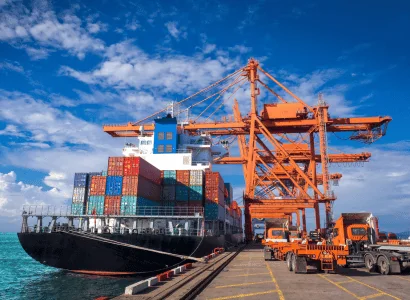
Plan Ahead for Port Congestion
Busy ports like Los Angeles, Long Beach, or New York often face congestion. Scheduling shipments during less-peak times, or choosing alternate ports nearby, can reduce wait times and storage fees.

Understand Port Fees and Surcharges
Ports charge for services like handling, storage, and security. These costs add up quickly if freight sits too long. Ask your logistics provider to break down potential fees so you’re not surprised on the final invoice.
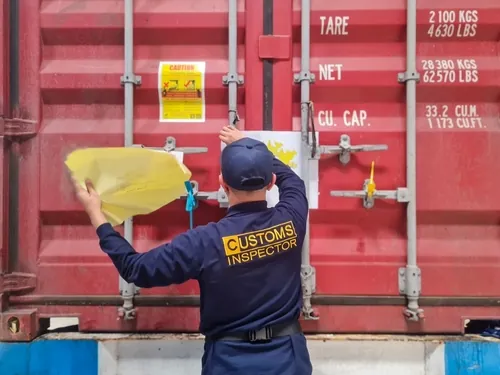
Monitor Customs Clearance Early
Customs is often the bottleneck at container ports. Double-check that paperwork—like commercial invoices and packing lists—is accurate and complete before your cargo arrives. This simple step helps avoid costly delays.