
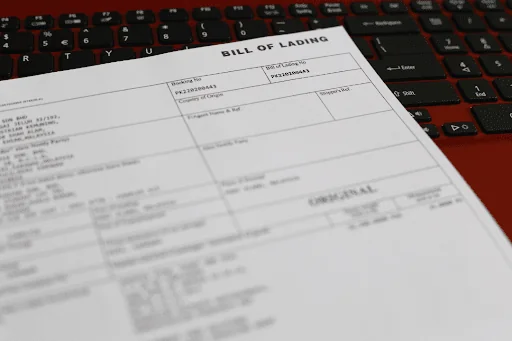
Deep Dive into the Bill of Lading: What’s On It?
If you have ever shipped freight before, you are familiar with what a Bill of Lading (BOL) is. One of the most important documents for your shipment is the one that details everything about your booking, including commodity information and all parties involved.
Shippers, carriers, consignees, and brokers rely on this document for accurate and precise shipping. Without a BOL, a shipment cannot be picked up by the carrier; if it is, there’s no way to identify the shipment when it is delivered to the consignee. The BOL is more than a booking receipt: it is the literal proof that the shipment exists.
The BOL is crucial for everyone involved into logistics and freight shipping. However, many first-time shippers may not fully grasp its purpose and the information it contains. Let’s take a closer look at the key components of a BOL and understand why it is highly regarded by freight professionals everywhere.
Why Do I Need a BOL, Anyway?
BOLs, on the surface, are confirmation documents that verify a shipment’s authenticity and payment. However, they serve even greater purposes than this.
The BOL:
– Serves as evidence of a contract of carriage: It outlines the terms and conditions agreed upon by the shipper and the carrier for transporting the goods, such as origin and destination, payment terms, and who provides and receives the shipment.
– Acts as a receipt of goods: Essentially, this confirms that the carrier has accepted the goods from the shipper and provides details about the shipment’s contents, including type, size, and quantity.
– Holds a legal title of goods: indicating that ownership of the goods has transferred from the shipper to the consignee after the carrier picked up the shipment. This is particularly important for international shipments, where goods may be sold multiple times.
– Serves as shipper and carrier identification: A carrier cannot pick up a shipment without the shipper listed on the BOL being present, along with a copy of the BOL for identification. The BOL verifies both the shipper’s and the carrier’s identities upon arrival.
A BOL is essential for any shipment. Without it, a carrier cannot accept the shipment because they need to know the sender’s identity and the destination. Similarly, shippers must have information about the carrier and possess proof of the shipment, especially in case of loss or theft.
Deep Dive into the BOL
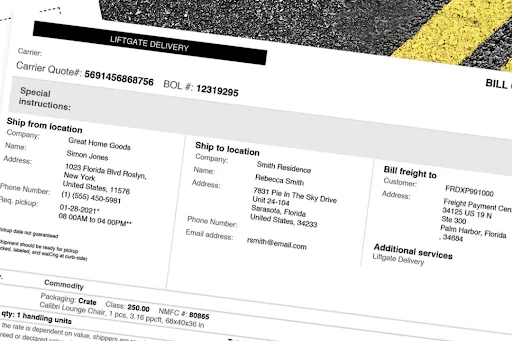
Now, let’s explore the key components of a Bill of Lading (BOL). Although BOLs may differ in style depending on the carrier or broker, they typically contain the same essential elements. These can be categorized into three main areas: party details, cargo description, and payment terms.

Party Details
These are the details of all parties involved in the shipment, including the shipper, carrier, consignee, and brokers, if applicable. Details given for all parties include:
– Names of individuals or businesses involved in the shipment
– Addresses
– Contact Info
You will also need the contact information for any third parties who need to be notified about the shipment’s delivery, if they are different from the consignee. This includes businesses that deliver to a terminal or pick up shipments from another business.
All information provided about each party must be accurate. Incorrect details could lead the carrier to the wrong location or result in communication with the wrong person, causing delays and billing mistakes.
Cargo Description
What kind of goods are being shipped? The cargo description (or the commodity type on some BOLs) is where the shipment’s contents are described. These include details such as:
– Quantity (number of shipping units)
– Weight
– If pallets were used
– Special considerations, such as fragile or hazardous material (hazmat)
All provided information must be accurate to ensure the correct shipment quantity and amount is delivered. If not, shipments that are supposed to be delivered together may be divided or shipped to the wrong address, resulting in additional fees and costs to compensate for the loss.

Payment Terms
The BOL must list how the shipment is being paid for. There are a few options, but the payment types usually boil down to prepaid, collect, or third-party. These indicate who is responsible for paying the shipping fees. The payment options are as follows:
– Freight Prepaid: The shipper resumes responsibility for all aspects of transporting the shipment to the consignee. Even if they work with a third-party logistics provider (3PL), the shipper must pay all costs and fees associated with the shipment.
– Freight Collect: The consignee or other receiving party resumes responsibility for all aspects of transporting the shipment to themselves. The shipper just has to prepare the shipment for pickup and verify the purchase.
– Third-Party: A third-party that is not the shipper or the consignee is responsible for all aspects of transporting the shipment from the shipper to the consignee. An example of this is a wholesaler that transports goods from manufacturers to retailers, taking on the costs of shipping.
The payment terms outline the conditions that both the shipper and the carrier must fulfill for the payment to be processed. If these conditions are not fully met, the party responsible for the payment may face additional costs, or the shipment may not be completed.

Other Important Terms
The party details, cargo description, and payment terms are the three most important areas on the Bill of Lading (BOL). However, there are other sections of the BOL that you should also be aware of. These include the following:
BOL Number: a unique code that is assigned to a BOL to identify it within databases.
Standard Carrier Alpha Code (SCAC): a 2-4 letter code used to identify transportation companies and streamline the documentation and customs process for said companies.
Pro Number: a unique tracking number assigned by a carrier for freight shipments to update shippers and consignees on delivery progress from origin to destination.
NMFC Number and Freight Class: When shipping less than truckload (LTL), your BOL must include your shipment’s freight classification and NMFC number. These can change if dimensions are found to be inaccurate, causing extra fees, so verify your freight class before receiving the BOL.
Signatures: On the bottom of the BOL are two signature boxes; one for the shipper and one for the carrier or an authorized representative. Both must be signed or stamped along with the date of the shipment.
Other Things to Know about the Bill of Lading
Here are just a few reminders about BOLs:
1. Double-check that all the names, contact information, and shipment details presented in the BOL are accurate. If something is incorrect, you must have it corrected as soon as possible by the carrier (or broker, if you booked your shipment via a third party).
2. Make multiple copies of a BOL. The minimum is two: one for you, and one for the carrier when they come to pick up your shipment. You may also want to make additional copies for your records, in case of audits or clerical errors during payment.
3. A BOL copy must be provided to the carrier at pickup by the individual who signed the BOL or a pre-approved representative. No BOL, no pickup.
Why the BOL Deserves Your Attention
At first glance, the Bill of Lading might appear to be just another piece of paperwork in a process filled with forms, labels, and tracking numbers. However, it is actually the foundation of your shipment’s legitimacy, accountability, and traceability.
Whether you are a shipper preparing to send out goods, a carrier responsible for delivering them, or a consignee awaiting their arrival, the BOL connects everyone with a shared understanding of what is being moved, where it is going, and who is responsible.
Errors on a BOL, such as a mistyped address, incorrect freight class, or a missing signature, can result in costly delays, misdeliveries, or billing disputes. Conversely, a clear, complete, and accurate BOL ensures that freight moves smoothly and helps prevent confusion at every step of the journey.
Freight professionals do not simply rely on the BOL; they build processes around it. Whether you are shipping LTL, full truckload, or anything in between, treat your BOL as the essential tool it is. Taking the time to get it right from the beginning will save you headaches and expenses in the future, ensuring that your freight reaches its destination without any issues.