

Hours of Service Updates You Need to Know
The FMCSA revised four of its HOS regulations. What are these changes and how will they affect freight shipping?



Hours of Service Updates You Need to Know
In 2017, a mandate required drivers to track their service hours to better regulate the health and safety of truckers on the road. Part of this mandate included electronic logging devices, or ELDs, which track driver behavior and hours spent on the road. Although this initiative has been successful in its goal, it has resulted in limited driver flexibility and longer transit times for freight shipments.
Recently, the Federal Motor Carrier Safety Administration (FMCSA) updated this mandate regarding service hours. Here are the hours of service updates you need to know that could impact you when you’re shipping freight.





Thousands of businesses trust FreightCenter to move their freight faster, smarter, and cheaper! From unbeatable rates to top-notch service, our customers are raving about their shipping success.
See why they keep coming back!
Award-Winning Service, Trusted by Shippers Everywhere!
- 2021, 2017 & 2016 Food Logistics’ Top Green Providers
- 2021 & 2018 Supply & Demand Chain Executives’ Pros to Know: Matthew Brosious
- 2020 & 2019 Top Food Logistics’ 3PL & Cold Storage Provider Award
- 2020 & 2019 Business Observer’s Top 500 Companies on the Gulf Coast
- 2020 & 2017 SmartWay® Transport Partner
- 2020 & 2017 Food Logistics’ Champions: Rock Stars of the Supply Chain
- 2020 Best of Palm Harbor Awards for Local Businesses
- 2017 Green Supply Chain Award from Supply & Demand Chain Executive
- 2017 Tampa Bay Business Journal Heroes at Work
- 2016, 2015, & 2012 Food Logistics Top 100 Software and Technology Providers
- 2013 Tampa Bay Business 100 by Tampa Bay Business Journal
- 2013 Top 100 Great Supply Chain Partners by SupplyChainBrain
- 2012 TIA Samaritan Award Honorable Mention
- 2012, 2011 & 2010 TBBJ Fast 50 Recipient
- 2013, 2011, & 2010 Diversity Business Top Businesses

Why Choose FreightCenter for Freight Shipping?
Expertise in Freight Shipping: With over 25 years in the logistics industry, FreightCenter is dedicated to guiding you through the entire logistics process, from beginning to end. Our goal is to make freight shipping easy to understand and book. Don’t waste time researching and receiving quotes from individual carriers- FreightCenter’s got your back!
Competitive Rates with Tailored Solutions: We prioritize high-quality customer service without breaking your wallet. We utilize our relationships with regional and national carriers to offer you competitive, affordable rates while providing personalized solutions to your needs. Need a liftgate? We got you! Want to expedite your order? Leave it to us! We’re ready to provide tailored solutions that don’t compromise your freight shipment.
Personalized Customer Support: FreightCenter is committed to satisfying our customers. Our friendly customer support team is here to help you every step of the way, from initial inquiries to post-shipment concerns. We handle all aspects of logistics, including tracking, paperwork, and communication with carriers, so you can focus on your business while we manage your shipment. Choose us for our reliable service and affordable quotes!
What are Hours of Service?
The hours of service (HOS) refers to the maximum amount of time a “property-carrying” driver (aka a semi-truck driver) is allowed to be on duty, as in when they are driving on the job. This includes how much time they drive, how many breaks they must take, and how long their rest periods must last before going on duty again.
The HOS regulations are available on the FMCSA’s website to view. A basic summary of the regulations goes as follows:
- Drivers may drive up to 11 hours maximum on duty after 10 hours off duty.
- Drivers have a 14-hour limit for being on duty (meaning 3 hours of their “on duty” time must be spent not driving) after 10 hours off duty.
- Drivers must take a 30-minute break after 8 consecutive hours of driving with no other 30-minute interruptions. This rule can be satisfied by any other kind of non-driving period taken, such as on-duty, not-driving time, being off-duty, sleeping berth, or any other combination.
- Drivers may not drive after 60 to 70 hours on duty in 7-8 consecutive days. They must take 34 or more hours off duty before going on duty again.
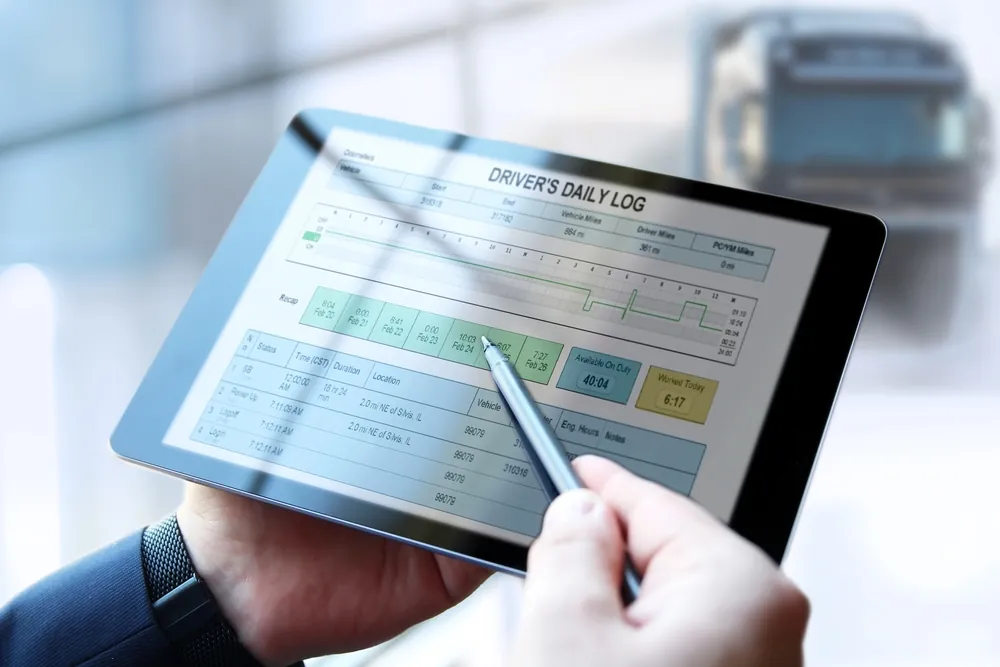
Drivers are required to log their HOS on an ELD at all times. Any modifications or unrecorded hours on duty can lead to serious legal consequences for the drivers. Additionally, this information helps carriers calculate the driver’s payment, and any unaccounted-for hours result in a loss of payment.
These rules were implemented as a measure against driver fatigue. It is incredibly easy for truck drivers to push through their sleepiness to get a driving job done. However, their fatigue can put other drivers at risk, damage their long-term health, and jeopardize their companies in the event of an accident. HOS regulations curb excessive driving, allowing drivers to rest and prepare to drive, awake and alert.
Why Hours of Service Changes Were Necessary
2020 has tested the global supply chain to a great extent. The COVID-19 pandemic led to capacity shortages, shipping limitations, and increased e-commerce and online shopping. Much of the U.S. and global economy has leaned back on truckers and logistics to stay afloat and stock shelves. Essential supplies had to move fast, and this demand far exceeded the need for electronic logging devices (ELDs), limiting what drivers could do.
The Federal Motor Carrier Safety Administration (FMCSA) had been working on editing the ELD mandate from 2017 for a few years, but finally updated the hours of service (HOS) regulations, which went into effect on September 29, 2020.
What Hours of Service Updates Were Made?
Here are the critical updates to the HOS:
Flexible 30-Minute Breaks: Drivers can now take a 30-minute break during their 8-hour driving times through an “on-duty, not-driving” status rather than an “off-duty” status.
Sleeper Berth Provision: Drivers have two options for splitting their 10 off-duty hours: eight hours in the sleeper berth and two hours off-duty, or seven hours in the sleeper berth and three hours off-duty.
Adverse driving conditions exception: Drivers could drive up to two additional hours while facing dangerous road conditions like snow or flooding. This exception has been increased by two hours, maximizing driver safety.
Short-Haul Exception: This extends the short-haul exception to 150 air miles and allows a 14-hour work shift that may occur as part of the exception.
The FMCSA has also developed an online tool called the Educational Tool for Hours of Service (ETHOS). This new online tool will help educate drivers and carriers about the HOS and how to ensure they remain compliant. Drivers and carriers can enter their duty statuses into the web-based log, and ETHOS will help identify where potential violations of the following HOS rules may have occurred:
- If drivers exceed the maximum 11-hour driving limit during the 14-hour driving window
- If drivers exceed the maximum 14-hour driving window
- If a 30-minute break (or multiple breaks) were not taken during driving hours.
- If the Sleeper berth provision was not modified correctly.
To create value for our customers by delivering customized shipping solutions that meet their unique needs and to fulfill shipping demands from simple to complex with expertise, guidance and ingenuity.
Trust the experts at FreightCenter to give you the best prices and the most comprehensive options for all your LTL freight shipping needs.
We deliver optimized solutions for full or partial truckloads and competitive dry van, flatbed, and refrigerated freight pricing. We can cover your full truckload shipping needs.
Nationwide Expedited Trucking services move your freight securely and rapidly. Your freight requires fast delivery; our freight shipping experts can get your shipment fast, whether in one large box or a full truckload.
The most reliable Specialized Freight Services rates from all the top carriers are just a few steps away. From white glove service to international shipping, we've got you covered.
 Guaranteed competitive pricing every time you ship.
Find the Right Solutions for You With FreightCenter!
Increased flexibility for drivers translates into a more straightforward, more efficient shipping process altogether. These HOS updates loosen up a tight freight capacity market, making more drivers available for longer periods of time. This means more shipments can get to where they need to go without shippers worrying about capacity shortages.
Partnering with a 3PL like FreightCenter helps you navigate the ever-changing freight industry. With over 25 years of experience, we keep you updated on the latest in logistics and freight shipping, such as updates to regulations, advancing technologies, and tips to help you ship more efficiently.
Do it all with FreightCenter! Compare rates, find the best lanes, and manage your paperwork all in one place. Our expert agents are standing by, ready to get your freight on the road. Get started with a free online instant quote, or call 800.716.7608 today.
Frequently Asked Questions about Hours Of Service Updates You Need To Know

Q. Why were HOS regulations changed?
The FMCSA revised some of their regulations to be less rigid towards drivers, as meeting these standards during an emergency can be difficult. It also creates an exception for drivers who do not travel beyond a 150-mile radius of their home base. All these revisions were made with both driver flexibility and safety in mind, especially after the 2020 pandemic increased customer demand.
Q. What is ETHOS and why does it matter?
The Educational Tool for Hours of Service (ETHOS) is an online tool designed to monitor carriers and drivers by letting them view any infractions against them for violating HOS regulations. As the name implies, it can be used as a learning tool for drivers to understand what actions they need to improve on in the future while driving and lets carriers know what their drivers may need retraining or reminders about.
Q. What changes were made to HOS regulations?
The following HOS regulations were revised:
- Drivers who only travel 150 miles or less are exempted from logging their HOS hours.
- The driving window can expand up to 2 hours in the event of adverse driving conditions.
- Drivers must take a 30-minute break after 8 consecutive hours of driving. On-duty, non-driving activities qualify for this 30-minute break.
- A driver can split their required 10-hour off-duty period, as long as one half is at least 2 hours long and the other 7 hours is spent in the sleeper berth. The pairings must add up to 10 hours.
Drivers must adhere to these new changes after September 29, 2020.
Q. What is the current driving limit for property-carrying drivers under HOS rules?
After 10 consecutive hours off duty, a driver may drive up to 11 hours. After going on duty following that rest, the driver has a 14-hour on-duty window in which driving or other work may occur.
Q. Can drivers split their sleeper-berth time and how does it affect the driving window?
Yes, under existing sleeper-berth rules, a driver may split the required 10-hour off-duty period into at least two separate periods (one at least 7 hours in the sleeper berth and one at least 2 hours off-duty), and neither segment counts toward the 14-hour driving window.
Q. What new changes to HOS are being piloted or under review?
The FMCSA is testing more flexibility for the 14-hour driving window and additional sleeper-berth split options, among other changes intended to reduce fatigue and adapt to modern freight operations.
Q. How do adverse driving conditions affect HOS?
When drivers encounter adverse driving conditions (such as weather or traffic beyond their control), they may extend their driving window by up to 2 additional hours under current rules.
Q. What’s the short-haul exception and how has it changed?
Under the short-haul exception, drivers operating within a specific air-mile radius from their reporting location may qualify for a longer on-duty window and some exemptions. The radius and hours have been expanded in recent updates.
Q. How are Hours of Service rules enforced?
HOS rules are primarily enforced by state and federal inspectors through roadside checks, weigh stations, and compliance audits. Enforcement officials review the driver’s Electronic Logging Device (ELD) records, supporting documents, and inspection reports. Violations can result in fines, out-of-service orders, and penalties for both the driver and carrier. Staying compliant requires keeping accurate, up-to-date logs and proper documentation for every trip.
Q. How do Electronic Logging Devices (ELDs) impact compliance?
ELDs have made HOS compliance more transparent. They automatically record driving time, engine hours, vehicle movement, and location data, replacing older paper logs. While this automation reduces recordkeeping errors, it also means violations are detected immediately. Drivers and dispatchers must ensure ELDs are working properly and reflect accurate duty status throughout the day.
Q. What happens if a driver exceeds their HOS limits?
Exceeding HOS limits is considered a regulatory violation. Depending on the severity, enforcement agencies may place the driver out of service until the required off-duty period is completed. Carriers may face fines, and repeated violations can impact CSA (Compliance, Safety, Accountability) scores, raising insurance premiums and damaging reputations.
Q. Are there exceptions for emergencies or natural disasters?
Yes, the FMCSA can issue emergency declarations that temporarily suspend HOS regulations in specific areas or for certain types of freight—such as fuel, medical supplies, or food. These exemptions are designed to support emergency relief efforts and ensure essential goods reach affected regions quickly. Once the declaration ends, standard HOS limits resume.
Q. How do HOS rules apply to team drivers?
For team drivers, each driver must independently comply with HOS limits, even though the truck moves continuously. When one driver is on duty, the other must be off duty or in the sleeper berth. Split sleeper-berth provisions make it easier for team drivers to manage rest cycles, but accurate logging is essential to avoid compliance issues.
Q. What’s the difference between on-duty time and driving time?
“On-duty” time includes any period when a driver is working—loading, inspecting, fueling, or performing paperwork—while “driving” time refers only to actual time behind the wheel. Both count toward the 14-hour on-duty limit, but only driving time applies to the 11-hour driving maximum. Misclassifying these can lead to unintentional violations.
Q. How can shippers support HOS compliance for their carriers?
Shippers play a role, too. Scheduling flexible pickup and delivery windows, reducing detention time, and avoiding last-minute load changes help carriers remain compliant. Partnering with brokers like FreightCenter ensures your freight is handled by carriers who follow HOS regulations and maintain reliable safety standards.
Three Advantages of Using FreightCenter for Freight Shipping

25+ Years of Service
We have over 25 years of experience, as evidenced by our large network of professional carriers. Our knowledgeable team of shipping experts is ready to help you optimize your shipping experience.

Customizable Shipping Options
Need a liftgate? No problem! Need to ship your products quickly? We got you covered! Our FreightCenter agents can offer tailored solutions for your specific shipping needs while offering affordable rates you can’t find anywhere else.

Friendly Customer Support
Our customer support team has the answers to many of your shipping questions and concerns. We’re here to help you through every step of the shipping process, from initial inquiries to post-shipment issues.