
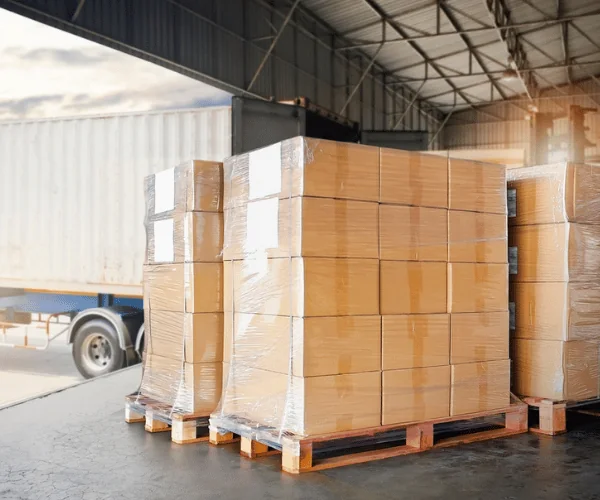
Two pallets leaving the same warehouse for the same destination won’t necessarily receive the same freight rate. One may be heavier, another may take up more trailer space, and a third may require special equipment at delivery.
That’s because LTL freight rates depend on seven main factors: shipment weight, dimensions and density, freight class, shipping distance, accessorial services, fuel costs, and carrier capacity. Some are built into the carrier’s pricing. Others depend on how your freight is packaged and the details you provide when booking.
Understanding what goes into an LTL quote helps you compare rates, budget for transportation, and catch potential problems before they become additional charges.
What Determines the Cost of LTL Shipping?
Less-than-truckload (LTL) shipping allows several customers to share space on the same trailer. It’s a practical way to move freight without requiring an entire truck, but the price isn’t based on trailer space alone.
Consider a pallet of metal parts, a tall pallet of lightweight boxes, and a crated industrial component. Each might occupy similar floor space, yet rates could differ because of weight, freight class, packaging, and handling requirements.
Here’s how the seven main pricing factors fit together.
| Pricing Factor | How It Affects Your Rate | What You Can Do |
|---|---|---|
| Shipment weight | Influences weight-based pricing and may affect density | Report the full packed weight |
| Dimensions and density | Affect trailer space and some freight classifications | Measure accurately and avoid unnecessary packaging space |
| Freight class | Helps determine how the shipment is rated | Verify the appropriate NMFC item and class |
| Distance and shipping lane | Influence carrier pricing and route availability | Provide exact locations and compare carrier options |
| Accessorial services | Add charges for services beyond standard transportation | Identify required services before booking |
| Fuel surcharges | Account for changing transportation fuel costs | Compare quotes that include applicable fuel charges |
| Market demand and capacity | Influence carrier pricing and available space | Plan ahead when possible and compare available rates |
These factors don’t operate independently. A change in packaging, for example, can increase your shipment’s dimensions, lower its density, and potentially affect its freight classification. Looking at how the factors connect gives you a clearer picture of what you’re actually paying for.
1. Shipment Weight: More Pounds Don’t Always Mean a Proportional Price Increase
A 1,200-pound pallet won’t necessarily cost 50% more to ship than an 800-pound pallet traveling the same route.
LTL carriers consider weight alongside freight class, distance, and other shipment details. Depending on the carrier’s pricing structure, different weight ranges may receive different rates per hundred pounds.
That doesn’t mean adding weight makes a shipment cheaper. It means the relationship between weight and price isn’t always proportional.
When requesting a quote, what matters most is the weight of the shipment as the carrier will receive it.
Suppose you estimate that a pallet weighs 800 pounds. After pickup, the carrier checks it and records 1,200 pounds. That difference may result in a revised transportation charge. If the dimensions remain unchanged, it could also affect the calculated density and possibly the freight class.
The weight you provide should include everything being shipped: the products, pallet, boxes, crate, cushioning, and other packaging materials.
For businesses that ship regularly, a suitable freight scale can improve accuracy. If you don’t have one, use reliable weight documentation that accounts for the entire prepared shipment.
Confirm the weight after packaging is complete. If anything changes before pickup, update your shipment information.

2. Dimensions and Density: Why Pallet Size Can Change Your Rate
Weight tells the carrier how heavy your freight is. Dimensions tell them how much space it occupies.
Both matter in LTL shipping.
A shipment’s density is calculated by dividing its weight by its volume, typically expressed in pounds per cubic foot (PCF). For many products, that measurement helps determine the applicable freight class.
The key is to measure the shipment after it’s packaged, including the pallet or crate.
Example: Same Weight, Different Pallet Height
Imagine two pallets containing the same product. Both weigh 600 pounds, but one is taller because the boxes are packed differently.
| Measurement | Pallet A | Pallet B |
|---|---|---|
| Length | 48 inches | 48 inches |
| Width | 40 inches | 40 inches |
| Height | 48 inches | 60 inches |
| Packed weight | 600 pounds | 600 pounds |
| Volume | 53.33 cubic feet | 66.67 cubic feet |
| Density | 11.25 PCF | 9.00 PCF |
Pallet B takes up more space even though both shipments weigh the same. Its density is lower, which could affect classification and pricing if the product falls under a density-based NMFC item.
That difference is why packaging decisions deserve attention before you request a rate.
A taller pallet isn’t automatically a problem, and smaller packaging isn’t always better. Fragile products still need enough cushioning, and heavy boxes need proper support. Reducing packaging at the expense of freight protection can create a much more expensive problem.
Look for unnecessary space, keep boxes within the pallet footprint whenever practical, and measure the longest, widest, and tallest points of the finished shipment.
If you’re unsure about your calculations, FreightCenter’s freight density calculator can help you determine the shipment’s pounds per cubic foot.

3. Freight Class: Why the Product Itself Matters
Two pallets with identical dimensions and weight can still have different freight classes.
The National Motor Freight Classification (NMFC) system provides a standardized way to classify commodities transported through LTL networks. Carriers use freight class in rating, although the final price also depends on applicable tariffs, agreements, and other shipment details.
Density is central to many classifications, but it isn’t the only consideration.
Depending on the applicable NMFC item, classification may also account for how difficult a product is to handle, whether it can be safely loaded with other freight, and its susceptibility to loss or damage.
For example, a sturdy packaged product that can be safely stacked with other freight may present different transportation characteristics than delicate equipment that cannot have anything placed on top of it.
Those differences can matter even when the shipments occupy the same amount of space.>
Freight Classification Changed in July 2025
On July 19, 2025, the National Motor Freight Traffic Association (NMFTA) implemented major changes to the NMFC system.
The update expanded the density scale from 11 to 13 subprovisions and moved thousands of commodity classifications toward a more standardized density-based approach. Products with particular handling, stowability, or liability considerations may still require different treatment.
In other words, not every commodity is classified by density alone.
NMFTA explains these changes in its official NMFC classification update.
For shippers, there’s a practical reason to pay attention. A class you’ve used for years may no longer be correct under the current classification rules.
Before booking, identify your product as specifically as possible, confirm how it’s packaged, and check the applicable NMFC item. FreightCenter’s freight class lookup tool can help you begin reviewing classification information.
Getting the classification right doesn’t guarantee a lower rate, but it can help prevent surprises when the carrier verifies your shipment.

4. Distance and Shipping Lanes: Why Mileage Doesn’t Tell the Whole Story
A shipment traveling 500 miles isn’t necessarily cheaper than one traveling 600 miles.
That might sound strange until you consider how LTL carrier networks operate.
Carriers have different terminals, service areas, preferred routes, and transportation networks. Some have frequent service between major distribution centers, while others specialize in regional markets.
A carrier with strong coverage on a particular route may offer more competitive pricing than one that needs additional transfers or partner-carrier arrangements to reach the destination.
Consider Two Similar Shipments
A business sends one pallet between two major commercial distribution areas.
Another business ships an identical pallet a similar distance, but the destination is a rural community with fewer carrier options.
The second shipment may cost more even though the weight, freight class, and mileage are comparable. The difference can come from the carrier’s network, available capacity, and service requirements.
This also explains why pickup and delivery ZIP codes are so important in a freight quote. They help determine which carrier networks and service areas are relevant.
But ZIP codes aren’t the whole story.
A commercial warehouse with a loading dock has different receiving requirements than a residence, school, or construction site in the same ZIP code. Those differences may introduce additional service charges.
Before booking, make sure the carrier can access the actual addresses and provide the services each location needs. FreightCenter’s shipping specialists can help review those requirements with the carrier.

5. Accessorial Services: The Charges Shippers Sometimes Overlook
A shipment can have the right weight, dimensions, and freight class and still cost more than expected because of what happens at pickup or delivery.
That’s where accessorial services come in.
An accessorial is a service or charge outside a carrier’s standard transportation offering. Some services are requested for convenience. Others are necessary because of the freight or the pickup and delivery locations.
For example, a business shipping to a residential address may need residential delivery service. If the receiver doesn’t have a forklift or loading dock, the shipment may also require a liftgate.
These are separate services, and both can affect the quote.
Common LTL Accessorials
| Service | When It May Be Needed | What to Check Before Booking |
|---|---|---|
| Liftgate | No suitable loading dock or forklift is available | Can the carrier’s liftgate safely accommodate the shipment? |
| Residential pickup or delivery | Freight moves to or from a residential address | Is the location correctly identified as residential? |
| Limited-access service | The location has restricted access or special entry requirements | Can the truck enter, maneuver, and complete service at the site? |
| Inside pickup or delivery | Freight must move beyond the standard pickup or delivery point | Is inside service available for this shipment and location? |
| Delivery appointment | The receiving location requires a scheduled time | What appointment arrangements are required? |
| Redelivery | The first delivery attempt cannot be completed | Will someone and the necessary unloading equipment be available? |
Example: A Home-Based Business
Suppose someone operates a small manufacturing business from a workshop at home and ships finished products on pallets.
Although the freight is commercial, the address may still be classified as residential.
If there’s no dock or forklift, liftgate service may also be necessary.
The business owner should identify both needs when requesting a quote rather than assuming the carrier will automatically provide them.
Remember that a residential address doesn’t always require a liftgate. A shipment’s size, unloading equipment, and carrier requirements determine what’s needed.
Check both locations before booking. A service required at delivery might not be necessary at pickup, or vice versa.

6. Fuel Surcharges: Why the Same Shipment May Cost More Later
You might ship the same product between the same two warehouses every month and notice that the quoted price changes.
Fuel is one possible reason.
Many LTL carriers use fuel surcharges to account for changes in transportation fuel costs. Depending on the provider, these charges may appear separately or be included in the total quoted price.
Carriers don’t all calculate fuel charges the same way, and those charges can change over time.
Fuel also isn’t the only variable. Changes in a carrier’s base pricing, capacity, or service arrangements can affect a new quote.
When you’re comparing rates, look at the total transportation cost rather than the base rate alone.
For example, two carriers might have different base charges and fuel surcharge structures. The carrier with the lower base charge could still have the higher total price.
Make sure both quotes include the same shipment details and required services before deciding which is less expensive.
7. Market Demand and Carrier Capacity: Why Timing Matters
LTL carriers don’t have unlimited trailer space on every route. They have to balance the freight moving through their networks with available equipment, drivers, and terminal capacity.
Demand can shift as manufacturing schedules change, retailers replenish inventory, or seasonal products begin moving in larger quantities.
These changes may affect both the rates and the carrier options available to shippers.
For example, a manufacturer shipping to the same region year-round may find that certain weeks offer more competitive rates than others. One carrier may have room available while another is managing higher demand on that route.
The relationship isn’t always predictable. Rates don’t rise uniformly during every busy period, and a slower market doesn’t guarantee lower prices on every lane.
Is It Worth Waiting for a Better Rate?
That depends on what the shipment is worth to your operation.
If your delivery schedule is flexible, planning or comparing alternative pickup dates may give you more options. Businesses with repeat shipments may also find opportunities to consolidate compatible orders.
But a lower transportation rate isn’t much of a savings if waiting leaves a customer without inventory or holds up production.
This is where shipping costs and business costs meet. The best decision accounts for both
Why Your Final LTL Freight Bill May Be Higher Than Your Quote
The rate you receive before booking is based on the shipment information and services provided at that time.
If the carrier verifies different dimensions, weight, freight class, or delivery requirements, the final charges may change. These revisions are often called billing adjustments or rebills.
Not every difference results in a revised bill, but the more accurate the original information, the easier it is to understand and verify any later charges.
Common Reasons for LTL Billing Adjustments
| What Changed? | Possible Result | How to Reduce the Risk |
|---|---|---|
| Actual weight differs from the quote | Reweigh and a possible rate adjustment | Weigh the fully packaged shipment |
| Dimensions differ from those quoted | Changes in density, class, or space-related charges | Measure the final packaged freight |
| Freight class is incorrect | Reclassification and revised charges | Confirm the current NMFC item and class |
| An unrequested service is required | Additional accessorial charges | Check both locations before booking |
| Delivery cannot be completed | Possible redelivery or other service charges | Confirm receiving hours, access, and unloading arrangements |
How a Packaging Change Can Affect the Final Bill
Imagine a business requesting a quote for a 700-pound pallet of equipment.
After getting the rate, the business decides to protect the equipment with a larger wooden crate. The packaged weight and dimensions change, but nobody updates the shipping information.
The carrier picks up the crate and later verifies that its measurements don’t match the original quote.
Depending on the classification and pricing rules, the larger dimensions may change the final charges.
The carrier hasn’t necessarily increased its price without explanation. The shipment being transported is different from the one originally quoted.
That’s why the final measurement should happen after packaging is complete, not while the products are still sitting on a warehouse shelf.
If you’ve received a charge you don’t recognize, FreightCenter’s billing adjustment guide explains common causes and what information to review.
What Can You Do to Keep LTL Shipping Costs Under Control?
You can’t negotiate away every fuel surcharge or change where a carrier’s terminals are located. You can, however, reduce avoidable expenses through better shipment preparation.
Start with accurate measurements. The finished shipment is what matters. Include the pallet or crate when checking dimensions and weight, and update your information if anything changes before pickup.
Look at how your freight is packaged. Excessively large pallets or crates can consume more space than necessary, but freight still needs adequate protection. Find the balance between safe packaging and efficient space use.
Consider consolidation when shipments are compatible. Combining multiple orders going to the same destination can sometimes reduce separate pickups and transportation costs. Compare the total cost first, because added storage, handling, or delays can offset the savings.
Identify special services early. A delivery appointment, residential location, or liftgate requirement shouldn’t be discovered after the truck arrives. Sharing that information upfront gives you a more complete rate to compare.
Finally, don’t judge a freight quote by price alone. Check what’s included, whether the carrier can serve both locations, and whether the transit estimate works for your business.
For some large or unusually difficult shipments, comparing another transportation method may be more useful than trying to make LTL fit.
Before You Book: Check These Six Details
A good rate starts with an accurate shipment description. Before confirming an LTL booking, review:
- Product description: What are you shipping, and how is it packaged?
- Packed weight: Does the weight include the pallet, crate, and protective materials?
- Final dimensions: Have you measured the longest, widest, and tallest points?
- Freight class: Are you using the appropriate current NMFC classification?
- Pickup and delivery details: Are the addresses, location types, and access requirements correct?
- Additional services: Have you identified any liftgates, appointments, inside services, or other requirements?
These details won’t control every part of your freight rate, but they give you a better starting point for comparing quotes and understanding your final bill.
Better LTL Rates Start With Better Shipment Information
The price of an LTL shipment reflects more than its weight or the miles it travels. Packaging, freight class, carrier networks, fuel, and delivery requirements all contribute to what you pay.
You can’t control every variable. But accurate measurements, correct classification, and a clear understanding of each location’s needs can prevent many avoidable billing surprises.
When you’re ready to compare current pricing, FreightCenter can help you review available LTL freight shipping options based on your shipment details, route, and service requirements.
Compare LTL Freight Rates or call (800) 716-7608.