
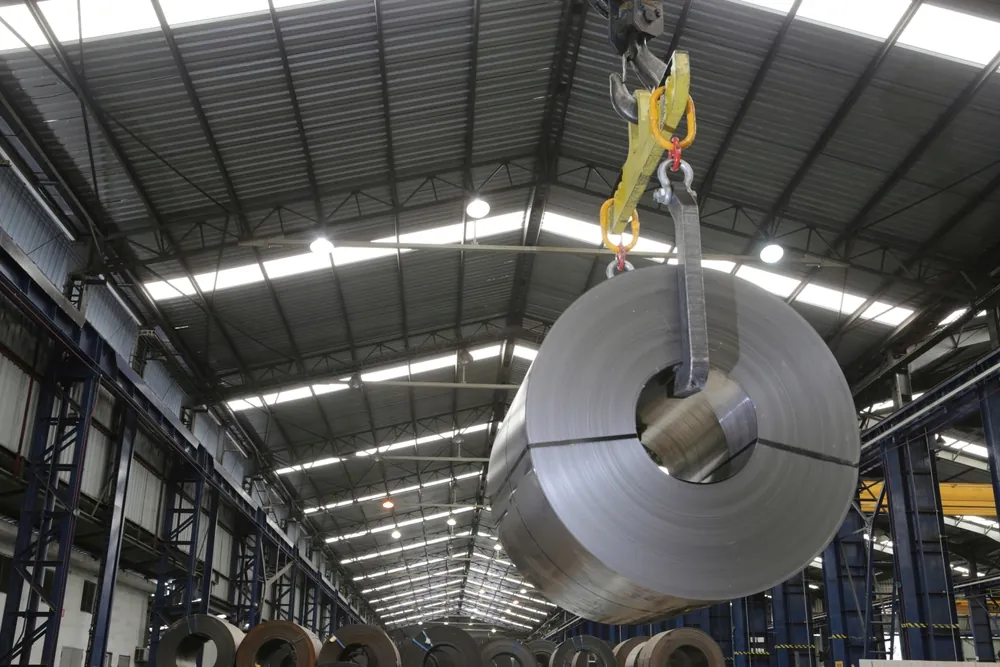
Shipping Steel Coils
Steel coils can be a major challenge to ship. That's why FreightCenter is here to make sure that yours get shipped safely, securely, and affordably.
Related Resources for Steel Coil Shipping
Shipping Metals and Metal Products Shipping Construction Materials Shipping Auto Parts Rail Freight Shipping Intermodal Shipping


Steel coils are some of the most challenging items to move in freight. They’re extremely heavy, tightly wound, and prone to shifting if not secured properly. Because they’re both valuable and potentially hazardous when mishandled, shipping steel coils requires planning, the right equipment, and carriers who know what they’re doing.
That’s why we at FreightCenter are here to help! With over 25 years of shipping experience, you can rest assured that your steel coils will be shipped with care and security.





Thousands of businesses trust FreightCenter to move their freight faster, smarter, and cheaper! From unbeatable rates to top-notch service, our customers are raving about their shipping success.
See why they keep coming back!
Award-Winning Service, Trusted by Shippers Everywhere!
- 2021, 2017 & 2016 Food Logistics’ Top Green Providers
- 2021 & 2018 Supply & Demand Chain Executives’ Pros to Know: Matthew Brosious
- 2020 & 2019 Top Food Logistics’ 3PL & Cold Storage Provider Award
- 2020 & 2019 Business Observer’s Top 500 Companies on the Gulf Coast
- 2020 & 2017 SmartWay® Transport Partner
- 2020 & 2017 Food Logistics’ Champions: Rock Stars of the Supply Chain
- 2020 Best of Palm Harbor Awards for Local Businesses
- 2017 Green Supply Chain Award from Supply & Demand Chain Executive
- 2017 Tampa Bay Business Journal Heroes at Work
- 2016, 2015, & 2012 Food Logistics Top 100 Software and Technology Providers
- 2013 Tampa Bay Business 100 by Tampa Bay Business Journal
- 2013 Top 100 Great Supply Chain Partners by SupplyChainBrain
- 2012 TIA Samaritan Award Honorable Mention
- 2012, 2011 & 2010 TBBJ Fast 50 Recipient
- 2013, 2011, & 2010 Diversity Business Top Businesses

How FreightCenter Assists With Shipping Steel Coils
We make shipping your steel coils easier by offering:
-
Competitive pricing from 50+ vetted national carriers
-
Access to specialized equipment and securement solutions
-
Support with documentation, insurance, and regulations
-
Real-time TMS tracking and delivery notifications
-
A dedicated customer service team ready to help you with your shipping needs
Shipping Your Steel Coils
Preparing steel coils for transport isn’t something to rush. Coils are high-value, heavy, and unforgiving if they’re not packed and secured properly. Taking the right steps at the start helps prevent delays, damage, and costly claims down the road.
1. Protect Against Moisture
Steel is highly susceptible to rust. Even a short exposure to rain or condensation can damage the surface. Use moisture-resistant wrapping like plastic sheeting, VCI paper (vapor corrosion inhibitor), or shrink wrap. If the coils are traveling on open-deck trailers, tarping is non-negotiable.
2. Use Strong Banding and Wrapping
Steel coils should be tightly strapped with steel or heavy-duty polyester banding. Banding prevents the coil from unrolling or shifting during handling. Always double-check that bands are secure before loading.
3. Choose the Right Orientation
There are multiple ways to position your steel coils for shipping, which include:
-
Eye to the Sky: Coils are placed standing up with the “eye” (the hollow center) facing upward. Works well for smaller coils or those shipped in vans.
-
Eye to the Side: The coil rests on its side, with the eye facing out horizontally. Common for large coils on flatbeds, where securement is easier.
-
Eye to the End: Less common, but sometimes used depending on equipment and coil size.
The right orientation will depend on coil size, weight, and available equipment.
4. Palletizing or Cradling
Small coils can be palletized, but industrial-sized coils need coil cradles, bunks, or racks to prevent rolling. These supports are designed to keep the coil stable while still allowing tie-downs to secure it.
5. Clear Labeling and Documentation
Each coil should be clearly marked with weight, dimensions, and handling instructions. Bills of lading should also specify whether the coil was loaded “eye to sky” or “eye to side,” and list the type of packaging used. This information helps carriers plan securement properly.
Safety Regulations and Securement Requirements
Steel coils are one of the most heavily regulated types of freight in the United States. Due to their density and weight, even a minor mistake in securement can create life-threatening situations on the road. Both shippers and carriers must follow FMCSA cargo securement rules under 49 CFR Part 393.
1. Coil Securement Basics
Knowing the basics of securing steel coils is foundational to transportation safety. Coils must be placed in cradles, bunks, or racks to stop them from rolling. Wooden or rubber dunnage should be used to provide friction and cushioning. Utilizing wedges, blocks, or chocks, as needed, promotes extra stability.
2. Tie-Down Requirements
The number and type of tie-downs depend on the coil’s size and orientation:
-
Eye to the Side: Requires at least three chains or straps over the coil, with additional cross-ties to prevent side-to-side shifting.
-
Eye to the Sky: Requires tie-downs across the top and often through the eye for maximum control.
-
Weight-Based Rules: FMCSA requires one tie-down for every 10 feet of load length, with a minimum of two for any single coil.
Chains are preferred over straps for very heavy coils because they provide higher working load limits.
3. Load Distribution
Drivers and carriers must also ensure that coil placement doesn’t exceed axle weight limits. A single 40,000-pound coil placed incorrectly can cause an axle to exceed its legal limit, triggering fines or requiring reloading.
4. Weather Protection
If coils are transported on open-deck trailers, they must be tarped securely. Tarps should be tight, free of holes, and extend past the coil edges to keep water and road spray out.
5. Inspection and Compliance
FMCSA requires drivers to check securement before departure, within the first 50 miles, and at intervals throughout the trip. If tie-downs loosen or equipment shifts, adjustments must be made immediately.
Due to the nature of steel coil shipping, most steel coil freight will be through FTL services. That's why FreightCenter is here to help! We can help explore options and find the solution that fits your shipping needs. We offer many services from flatbed to heavy hauling, our excellent customer care team can walk you through to the best option for you.
This will be the most common method of steel coil shipping. They allow for easy crane or forklift loading.
Useful for taller coils that exceed flatbed height limits. Instead of having only one set height, drop decks have two heights with the lower side of the deck allowing for taller equipment to fit and not exceed legal height limits.
If your coils are smaller, then dry van shipping may work for you! Since coils need to be protected from the elements, dry vans can help keep them safe as long as they are small enough to fit properly in the van.
If your steel coil shipment exceeds the legal limits for height, width, or weight, heavy haul trailers are the best solution for you! FreightCenter will help you out with any permitting, routing, and any potential escort vehicles needed for your shipment.

 Guaranteed competitive pricing every time you ship.

FreightCenter Can Help With Your Steel Coil Shipping Needs!
Shipping steel coils is no ordinary freight job. With extreme weights, strict safety requirements, and specialized equipment needs, it pays to plan ahead and partner with experienced professionals. Whether you’re moving a single coil across state lines or managing a large industrial shipment, understanding the process gives you an edge. That’s why FreightCenter is here to help! With over 25 years of experience, we match you with the right carrier, equipment, and price—so your steel coils arrive safely, on time, and without surprises.
Let’s make sure your steel coils get the treatment they deserve. Get your steel coil shipping quote today or call us at (800) 716-7608.
FAQ: Steel Coil Shipping

Q. What’s the safest way to ship steel coils?
Flatbed trailers with coil racks are the most common choice for large coils. Step-deck trailers are often used for taller coils, while smaller coils can sometimes be shipped in dry vans for added protection from the elements.
Q. What is “eye to the sky” vs. “eye to the side”?
“Eye to the sky” means the coil is standing upright. “Eye to the side” means it’s lying flat on its side. The method depends on coil size and securement needs.
Q. How much can a single steel coil weigh?
Steel coils range widely, from 5,000 lbs to over 40,000 lbs each.
Q. Do steel coils require special permits?
If the total weight or dimensions exceed state road limits, oversize or overweight permits are required.
Q. What happens if coils shift during transport?
Shifting coils can cause severe accidents. That’s why strict FMCSA securement standards exist and why only experienced carriers should haul them.
Q. How long does it take to ship coils across the country?
Transit time depends on distance and mode. For example, a flatbed from Pennsylvania to Texas might take 3–5 business days.
Q. Can multiple steel coils be shipped together?
Yes, but they must be secured individually. Each coil needs its own blocking, bracing, and tie-downs to prevent movement. Carriers often position several smaller coils side by side or in rows, provided weight is evenly distributed.
Q. How do you load steel coils safely?
Most steel coils are loaded with overhead cranes, C-hooks, or forklifts with special attachments. Safe loading requires trained operators and proper alignment on cradles or bunks to prevent rolling.
Q. Do steel coils always require tarping?
If coils are shipped on open-deck trailers, tarping is strongly recommended to protect against moisture and road debris. The only exception might be when coils are already wrapped in heavy-duty, weatherproof packaging. But even so, we recommend protecting your steel coils as much as possible.
Q. What happens if a steel coil is damaged in transit?
If a coil arrives with dents, rust, or bent edges, it may not meet industry standards and could be rejected by the buyer. Filing a claim requires proof of proper packaging, photos before pickup, and accurate documentation on the bill of lading.
Q. Are there size limits for steel coil shipping?
Yes, coils that exceed legal weight or dimension limits are considered oversize or overweight. These require special permits and, in some cases, pilot vehicles, depending on the state and route.
Q. Can steel coils be shipped internationally?
Definitely, steel coils often travel in ocean containers or as breakbulk cargo. Proper moisture protection and secure blocking are crucial for ocean voyages, where humidity and prolonged transit times can significantly impact the condition of your items. FreightCenter can help out with your international shipping needs.
Q. Do seasonal conditions affect steel coil shipping?
Yes, winter shipments may face road restrictions for overweight loads, while humid summer conditions raise the risk of condensation and corrosion. Planning around weather and using moisture-resistant wrapping helps protect the steel.
Q. What role do coil racks play in shipping?
Coil racks cradle the steel coil, preventing it from rolling and making tie-downs more effective. They’re a critical piece of securement equipment for flatbed shipments and are required under FMCSA rules for many coil orientations.
Q. Can I get help choosing the right trailer?
Absolutely! Call us at (800) 716-7608 or use our quote tool—we’ll guide you through it every step of the way.
3 Tips For Better Steel Coil Shipping

Regional and Route Considerations
Certain routes may restrict overweight shipments, or require permits and escorts for coils that exceed standard limits. FreightCenter can help plan the route ahead of time ensures compliance and keep your freight moving smoothly.

Don’t Ship Without Insurance—Ever
Carriers typically cover only $0.10–$0.50 per pound. That won’t even come close to replacing your steel coils. With our 3rd-party insurance options, you'll get the full value of your cargo and ensure peace of mind for your shipment.

Work With Experienced Carriers
Not every flatbed operator is trained for coil shipments. Partnering with carriers who regularly move steel coils ensures they have the right gear, the right know-how, and the confidence to handle such a demanding load. FreightCenter can connect you with those carriers quickly and easily.