
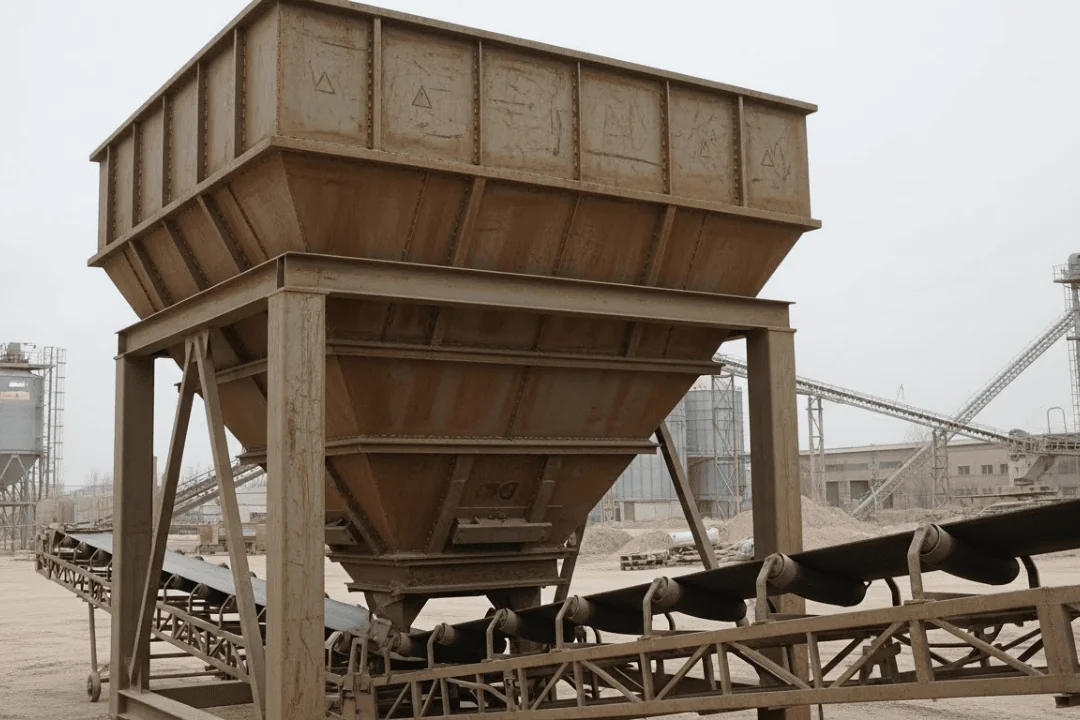
Shipping Hoppers
Expert help with Shipping Hoppers!
With FreightCenter, our team will take care when shipping hoppers! No matter the size or purpose, whether manufacturing or food processing, we can get your Hoppers where there needs to be.
Explore more heavy‑equipment shipping services here!
Shipping Metals and Metal Products Shipping Anvils Shipping Agricultural Machinery Shipping Construction Attachments


Hoppers play a crucial role across multiple industries, including manufacturing, construction, agriculture, mining, and food processing. These versatile containers are designed to store, load, and transport a wide range of materials—from scrap metal and aggregates to grain, sand, and bulk commodities. By streamlining material flow and reducing manual handling, hoppers help improve workplace efficiency and safety. Because they’re often oversized, heavy, or uniquely shaped, many businesses rely on professional hopper shipping services to move them between job sites or facilities. Choosing the right freight carrier ensures your hopper arrives safely, securely, and ready for use.





Thousands of businesses trust FreightCenter to move their freight faster, smarter, and cheaper! From unbeatable rates to top-notch service, our customers are raving about their shipping success.
See why they keep coming back!
Award-Winning Service, Trusted by Shippers Everywhere!
- 2021, 2017 & 2016 Food Logistics’ Top Green Providers
- 2021 & 2018 Supply & Demand Chain Executives’ Pros to Know: Matthew Brosious
- 2020 & 2019 Top Food Logistics’ 3PL & Cold Storage Provider Award
- 2020 & 2019 Business Observer’s Top 500 Companies on the Gulf Coast
- 2020 & 2017 SmartWay® Transport Partner
- 2020 & 2017 Food Logistics’ Champions: Rock Stars of the Supply Chain
- 2020 Best of Palm Harbor Awards for Local Businesses
- 2017 Green Supply Chain Award from Supply & Demand Chain Executive
- 2017 Tampa Bay Business Journal Heroes at Work
- 2016, 2015, & 2012 Food Logistics Top 100 Software and Technology Providers
- 2013 Tampa Bay Business 100 by Tampa Bay Business Journal
- 2013 Top 100 Great Supply Chain Partners by SupplyChainBrain
- 2012 TIA Samaritan Award Honorable Mention
- 2012, 2011 & 2010 TBBJ Fast 50 Recipient
- 2013, 2011, & 2010 Diversity Business Top Businesses
Why Choose FreightCenter For Shipping Hoppers?
Choosing FreightCenter to ship your hopper means partnering with a logistics team that understands oversized, heavy, and uniquely shaped equipment. We connect you with trusted carriers experienced in transporting industrial hoppers, whether you’re moving a small material‑handling hopper or a large, cross‑country unit. Our experts help you compare rates, secure the right truck type, and navigate permits or special handling needs. With real‑time tracking, dedicated support, and competitive pricing, FreightCenter makes hopper shipping simple, safe, and cost‑effective from start to finish.
The Many Ways Hoppers Keep Things Hoppin
Hoppers are specialized containers designed to store, hold, and dispense bulk materials in a controlled and efficient way. Their shape allows materials to flow smoothly through sloped or funnel‑shaped bottoms, making them essential wherever loose, granular, or heavy products need to be moved, loaded, or processed. Because of this, hoppers play a vital role in improving productivity, safety, and consistency across multiple industries.
In manufacturing, hoppers are used to feed raw materials (such as pellets, powders, or metal scraps) into production lines. To help maintain steady supply rates, prevent bottlenecks, and support automated systems that rely on continuous material flow.
In construction, hoppers handle aggregates like sand, gravel, cement, and debris. They make it easier to load materials into trucks, mixers, or conveyors, and speed up job‑site operations.
In agriculture, hoppers are essential for storing and dispensing grain, seed, feed, and fertilizer. Farmers rely on them to move large volumes quickly, protect materials from contamination, and support planting, harvesting, and livestock operations.
In mining, hoppers manage heavy, abrasive materials such as ore, coal, and crushed rock. Their rugged design withstands harsh environments while helping regulate the flow of raw minerals into crushers, conveyors, or processing equipment.
In food processing, hoppers handle ingredients like flour, sugar, spices, and other bulk commodities. They support sanitary, controlled dispensing that keeps production lines running smoothly and maintains product quality.
Across all these industries, hoppers serve the same core purpose: to move materials efficiently, safely, and consistently. Their versatility and durability make them indispensable wherever bulk materials need to be stored, transported, or processed.
To create value for our customers by delivering customized shipping solutions that meet their unique needs and to fulfill shipping demands from simple to complex with expertise, guidance and ingenuity.
LTL freight makes shipping hoppers efficient and affordable by moving them securely on shared trailers. With proper packaging, accurate measurements, and stable skids, hoppers travel safely through terminals without needing full‑truckload transport.
Truckload freight services are ideal for shipping larger hoppers that can’t travel LTL. A full trailer provides better stability, fewer handling points, and safer transport for oversized, heavy, or uniquely shaped hopper designs.
Drop deck and step deck trailers are ideal for shipping taller hoppers because they provide extra height clearance, better stability, and easier loading. Their lower decks help safely transport oversized or top‑heavy hopper designs.
Heavy haul shipping makes transporting oversized hoppers simple by using specialized trailers, expert routing, and proper permits. It ensures large, tall, or heavy hopper designs move safely, efficiently, and compliantly across long distances.
 Guaranteed competitive pricing every time you ship.
Extra Things to Hop On Before Shipping
When shipping hoppers, it’s important to think beyond basic packaging and consider how the unit will move through each stage of the freight network. Shippers should evaluate whether the hopper’s shape could cause stacking issues in terminals, since irregular angles or tall profiles may require special placement on the trailer.
It’s also helpful to confirm whether the hopper has been recently used with materials that could leave odors or residue, as this may affect carrier acceptance. Understanding how temperature changes might impact coatings, seals, or metal expansion is another overlooked factor, especially for long‑distance or winter shipments.
Finally, planning for clear communication with the pickup and delivery teams ensures everyone knows the hopper’s weight, balance points, and safest handling methods.
For Crating Services or Packaging help- Call us today!
Q. Are hoppers considered oversized freight?
Some hoppers qualify as oversized depending on height, width, and length. Carriers determine this based on total footprint, attachments, and whether permits are required for transport.
Q. Can I ship a hopper through LTL freight?
Yes, many hoppers ship LTL when properly secured to a pallet or skid. Stable packaging and accurate measurements help ensure safe terminal handling.
Q. Do I need special equipment to load a hopper?
Most hoppers require a forklift or crane with adequate capacity. Confirm equipment availability at both pickup and delivery locations before scheduling.
Q. Can I ship a food‑grade hopper?
Yes, but it must be thoroughly cleaned and protected. Carriers appreciate knowing if the hopper has sanitary coatings or sensitive surfaces.
Q. Can I ship multiple hoppers at once?
Yes, as long as each hopper is packaged securely and measured individually. FTL-Freight may be a better shipping option for your shipment.
Q. Do I need to remove detachable parts?
Removing loose or detachable components helps prevent damage. Pack them separately in a labeled box secured to the pallet.
Q. How do I prevent my hopper from tipping during transit?
Use a wide, sturdy pallet, heavy‑duty straps, and additional bracing if needed. Stability is essential for LTL terminal movement.
Q. What if my facility doesn’t have a forklift?
You may need a liftgate pickup or delivery. Not all carriers offer this for heavy equipment, so confirm availability before booking.
Q. Can I schedule a specific pickup time?
Carriers offer pickup windows rather than exact times. Providing flexibility helps ensure timely service.
Q. How early should I book hopper shipping?
Booking a few days in advance ensures carrier availability, especially for oversized or heavy units requiring special equipment.
Q. What documents are required for shipping a hopper?
A bill of lading, insurance details, and any special handling notes are typically required for smooth transport.
Q. Can I track my hopper shipment?
Yes, most carriers offer tracking updates. You’ll receive status notifications as the hopper moves through the freight network.
Q. What if my hopper is extremely tall?
Tall hoppers may require step decks, permits, or alternate routing. Providing exact height helps carriers plan safe and compliant transport.
Q. What if my hopper doesn’t fit on a standard pallet?
A custom skid or oversized pallet is recommended. It improves stability and gives carriers safe lifting points for heavy or wide bases.
Q. What if my hopper has wheels or casters?
Wheeled hoppers should be strapped tightly to prevent rolling. Blocking or chocking wheels adds stability during loading and unloading.
Hopper Highlights You Didn’t Know You Needed!
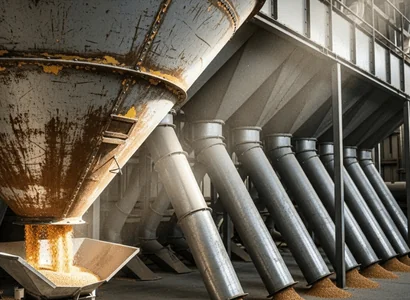
Hoppers were originally inspired by grain chutes
Early hopper designs borrowed ideas from simple wooden grain chutes used on farms. The sloped‑bottom concept proved so effective that it became the foundation for modern industrial hoppers.
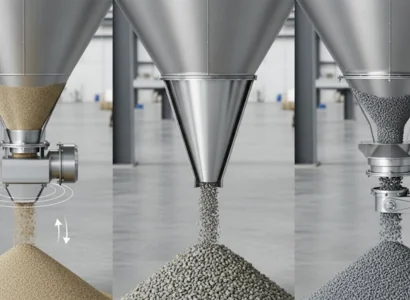
Some hoppers are designed to “self‑empty”
Certain models use gravity and angled walls so efficiently that they can empty completely without shaking or manual assistance, making them surprisingly high‑tech for such a simple shape.
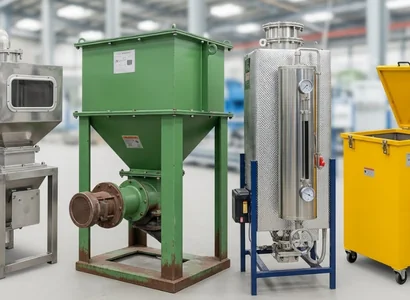
Hoppers can be customized for almost anything
From food‑grade stainless steel to ultra‑heavy mining steel, hoppers can be built to handle powders, pellets, rocks, liquids, or even temperature‑sensitive materials—making them one of the most adaptable tools in material handling.