
Shipping Snow Blowers
Snow blowers are essential winter tools, and the efficient process of shipping them ensures that they reach customers in time for the first snowfall.



Snow Blower Transport Services
Snow blowers are indispensable during winter, providing an efficient solution to the laborious task of snow removal. With powerful engines and versatile designs, these machines simplify the process of clearing snow-covered driveways, walkways, and sidewalks. Yet, understanding the various types of snow blowers is just one part of the equation. Another critical aspect involves the intricate process of safely transporting these valuable tools to their destinations.
Shipping these winter assistants, a crucial aspect of making them available to those in need, involves a well-orchestrated procedure. From meticulous packaging to selecting the right freight trucks, every step ensures the snow blowers arrive intact and ready to conquer snow-covered landscapes. This article delves into both the world of these versatile snow-clearing machines and the intricacies of shipping them to serve winter-weary individuals, all with the aim of making snowy seasons more manageable and enjoyable.






Thousands of businesses trust FreightCenter to move their freight faster, smarter, and cheaper! From unbeatable rates to top-notch service, our customers are raving about their shipping success.
See why they keep coming back!
Award-Winning Service, Trusted by Shippers Everywhere!
- 2021, 2017 & 2016 Food Logistics’ Top Green Providers
- 2021 & 2018 Supply & Demand Chain Executives’ Pros to Know: Matthew Brosious
- 2020 & 2019 Top Food Logistics’ 3PL & Cold Storage Provider Award
- 2020 & 2019 Business Observer’s Top 500 Companies on the Gulf Coast
- 2020 & 2017 SmartWay® Transport Partner
- 2020 & 2017 Food Logistics’ Champions: Rock Stars of the Supply Chain
- 2020 Best of Palm Harbor Awards for Local Businesses
- 2017 Green Supply Chain Award from Supply & Demand Chain Executive
- 2017 Tampa Bay Business Journal Heroes at Work
- 2016, 2015, & 2012 Food Logistics Top 100 Software and Technology Providers
- 2013 Tampa Bay Business 100 by Tampa Bay Business Journal
- 2013 Top 100 Great Supply Chain Partners by SupplyChainBrain
- 2012 TIA Samaritan Award Honorable Mention
- 2012, 2011 & 2010 TBBJ Fast 50 Recipient
- 2013, 2011, & 2010 Diversity Business Top Businesses
Choose FreightCenter for Snow Blower Shipping
Whether you’re shipping a residential snow blower, commercial unit, or snow removal equipment, FreightCenter can help you compare freight options and prepare for pickup.
- Experience Shipping Heavy Equipment: Snow blowers can be bulky, heavy, and difficult to move safely. FreightCenter helps shippers plan for proper freight packaging, handling requirements, and equipment needs based on the size and weight of the shipment.
- Multiple Freight Transportation Options: Compare freight transportation options from a network of carriers to find the right fit for your snow blower, route, budget, and delivery needs.
- Help With Special Pickup and Delivery Needs: Residential locations, businesses without loading docks, and oversized equipment may require services such as liftgates or specialized equipment. FreightCenter can help identify these requirements before your shipment is booked.
- Additional Shipment Protection: For valuable or commercial snow blowers, freight insurance can provide additional protection beyond standard carrier liability in the event of covered loss or damage.
- Shipment Tracking and Expert Support: Track your shipment as it moves and get help from experienced freight professionals when questions or changes come up along the way.
Snow Blower Shipping
Packaging and Preparation: Following freight packaging best practices can help protect a snow blower from shifting, moisture, vibration, and impact during transit. Inspect and clean the machine, secure loose parts and accessories, and fasten it to a sturdy pallet or place it inside a protective crate.
Documentation: Prepare the required bill of lading and freight documents before pickup, along with shipping labels and a detailed packing list. Include accurate pickup and delivery information, contact details, and any special handling or delivery instructions.
Freight Carrier Selection: The right freight carrier depends on the snow blower’s packaged size, weight, route, and handling requirements. FreightCenter can help compare carriers and determine whether less-than-truckload (LTL), full truckload, or another service best fits the shipment.
Shipping Method: Choosing the best freight shipping method depends on the snow blower’s size and weight, shipping distance, delivery timeline, and pickup and delivery requirements. Ground shipping is commonly used for domestic transportation. For equipment moving across borders, international freight shipping may require additional customs documentation, import requirements, and coordination based on the destination country. Larger shipments may be divided into LTL freight, where multiple shipments are consolidated into one truck, or FTL freight, which dedicates an entire truck to a single shipment.
Insurance: For valuable or commercial equipment, freight insurance can provide additional protection against covered loss or damage beyond standard carrier liability.
Tracking and Monitoring: Shippers typically provide tracking information, allowing both the shipper and recipient to monitor the progress of the shipment. This information provides real-time updates on the location and status of the snow blowers during transit.
Customs and Import Regulations (for International Shipping): For international shipping, compliance with customs and import regulations is necessary. This involves ensuring that all necessary documentation is in order and meeting the requirements for the destination country.
Delivery and Unloading: The recipient should be prepared to receive the shipment, with the necessary equipment if needed. Depending on the service selected, the delivery may be made to the doorstep, a loading dock, or a designated receiving area. For heavier snow blowers, a forklift or loading equipment may be necessary to safely unload the equipment.
Inspection and Acceptance: Upon delivery, the recipient should inspect the snow blower for any visible damage. Any issues should be documented and reported to the shipping company. The recipient should also check that the snow blower matches the provided specifications.
In conclusion, shipping snow blowers is a comprehensive process that involves various carefully planned and executed steps, from packaging and documentation to carrier selection, insurance, tracking, customs compliance (for international shipping), delivery, and thorough inspection. This process ensures that the blowers are safely and efficiently transported to their destination, allowing customers to receive their equipment in good working order.
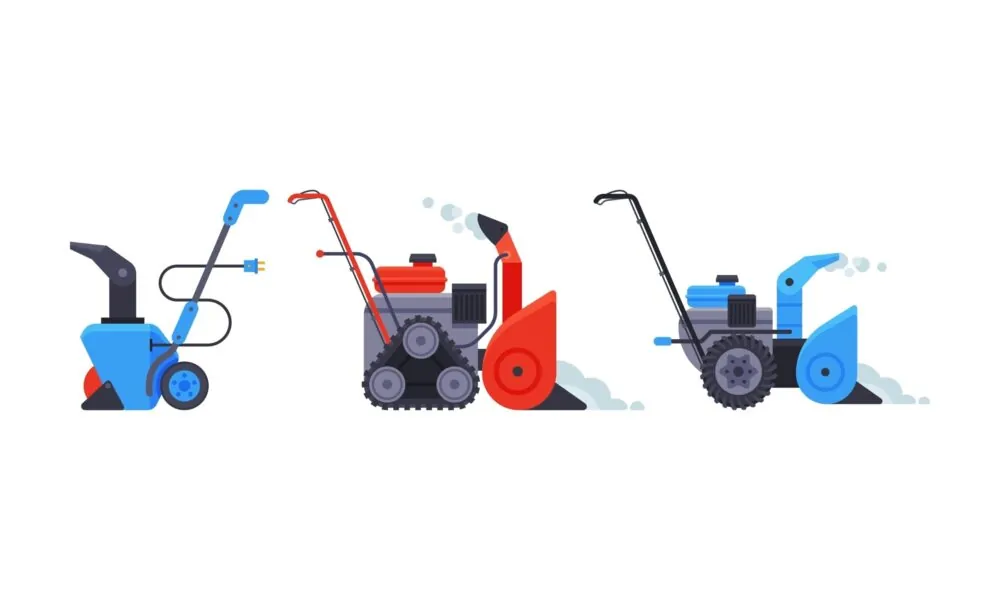
Snow blowers come in various types: electric, gas-powered, automated, and loader-mount, catering to different snow removal needs and preferences.
An electric snow blower is a machine designed for snow removal that operates using electricity, either from a cord or a rechargeable battery. It features an electric motor that powers a spinning auger or impeller. The auger collects and breaks up snow, while the impeller propels the snow through a discharge chute, clearing snow from driveways, walkways, and other surfaces. Electric snow blowers are generally more compact and quieter than gas models, making them suitable for smaller areas with lighter snowfall.
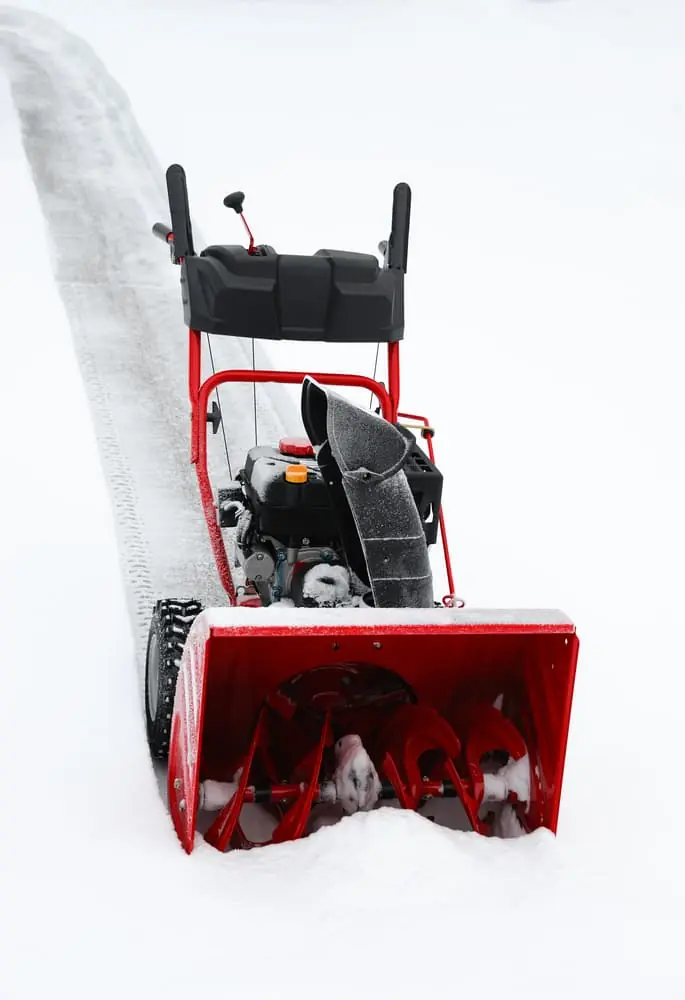
A gas snow blower is a machine that uses a gasoline-powered engine to drive a spinning auger or impeller. The auger collects and breaks up snow, while the impeller propels the snow out of a discharge chute, effectively clearing snow from driveways, walkways, and other surfaces. Gas snow blowers are typically more powerful than electric models, making them suitable for heavy snowfall and large areas.
An automated snow blower, often in the form of a robotic snow blower, is a self-propelled machine equipped with sensors and navigational technology. It operates autonomously to clear snow from driveways and walkways. These robots can detect obstacles and follow predefined paths or use mapping technology to create efficient snow removal routes. Users can control them remotely or program them to work automatically, making snow removal a hands-free process.
A loader-mount snow blower is a heavy-duty snow removal attachment designed to be mounted on the front of a tractor or a heavy equipment loader. It uses the power of the tractor's engine to operate a robust snow blower mechanism. The snow blower typically consists of a large, rotating auger and impeller system that effectively clears snow from roads, parking lots, and other large areas. These attachments are known for their high capacity and efficiency in handling heavy snowfall and are commonly used for commercial snow removal and in regions with frequent and substantial snowfall.
 Guaranteed competitive pricing every time you ship.
Selecting the Right Freight Trucks for Shipping Snow Blowers
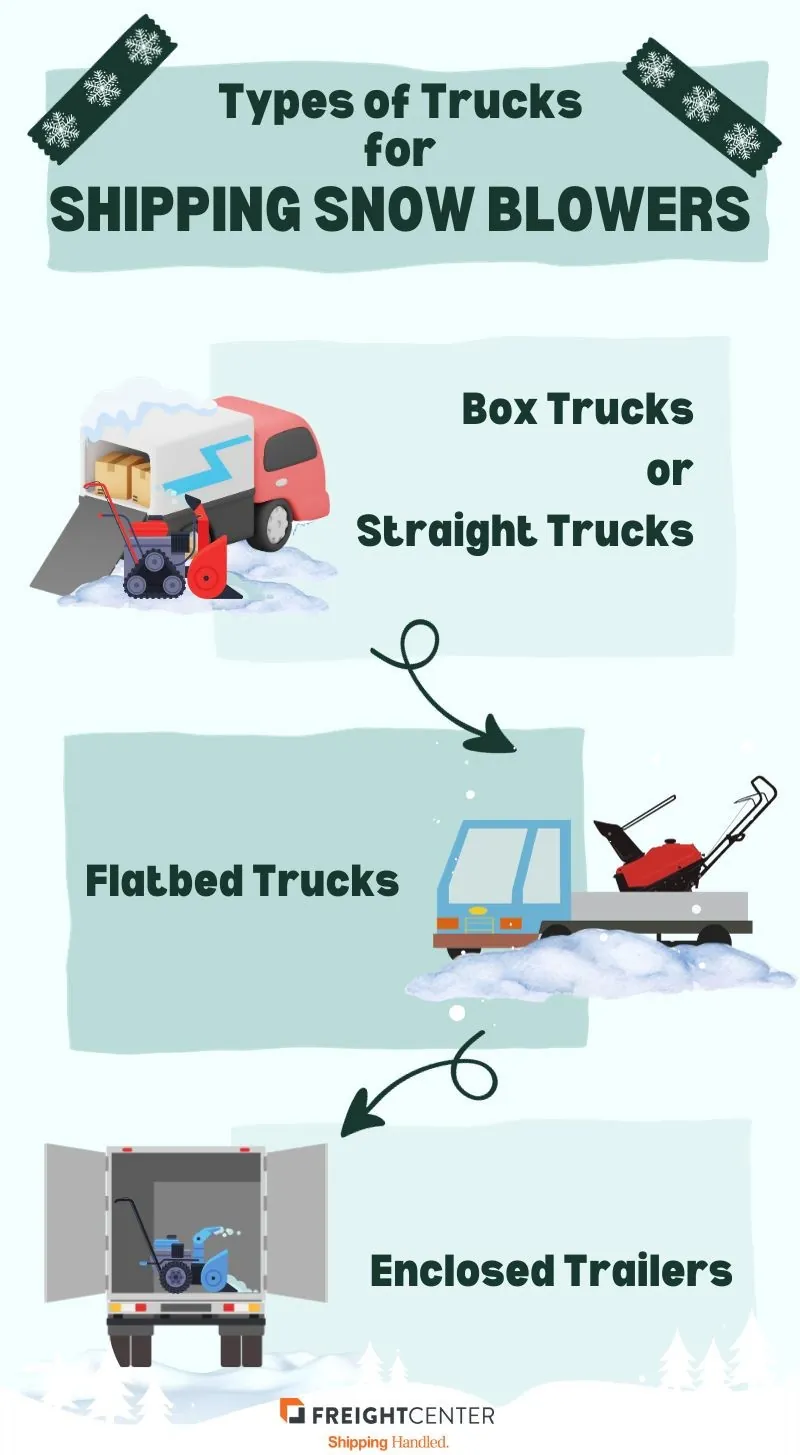
Shipping snow blowers efficiently and safely requires choosing the right freight trucks. Various options are available, each with its advantages and suitability for different snow blower types and shipping requirements.
- 1. Box Trucks or Straight Trucks: Box truck shipping can work well for smaller snow blowers and shorter-distance moves. The enclosed cargo area provides protection from weather and road conditions while keeping the equipment contained during transit.
- 2. Flatbed Trucks: Flatbed freight shipping may be appropriate for larger commercial snow blowers, attachments, or equipment that is difficult to load into an enclosed trailer. The open deck provides greater flexibility when loading oversized or unusually shaped equipment.
- 3. Enclosed Trailers: Dry van freight shipping provides an enclosed trailer that protects palletized or crated snow blowers from weather and road conditions during transit. It can be a practical option for equipment that fits within standard trailer dimensions and does not require open-deck loading.
The selection of the right freight truck depends on the size, weight, and specific needs of the snow blowers, as well as the distance and protection requirements during transit. Choosing the appropriate truck ensures that snow blowers arrive at their destination in good condition and on time.
Frequently Asked Questions About Snow Blower Shipping
Q. How much does it cost to ship a snow blower?
The cost to ship a snow blower depends on its weight, dimensions, pickup and delivery ZIP codes, packaging, shipping distance, and whether you need extra services like residential pickup, liftgate delivery, or expedited shipping. A small electric snow blower will usually cost less to ship than a large two-stage or commercial snow blower because it is lighter and easier to handle.
The best way to estimate your snow blower shipping cost is to measure the machine after it is packaged, weigh it as accurately as possible, and compare freight quotes.
Q. What is the cheapest way to ship a snow blower?
The cheapest way to ship a snow blower is usually LTL freight if the machine is too large or heavy for parcel shipping but does not need a full truck. LTL lets your snow blower share trailer space with other freight, which helps lower the cost.
To keep costs down, package the snow blower securely on a pallet, avoid last-minute shipping when possible, and make sure the pickup and delivery details are accurate before booking.
Q. What types of freight trucks are best suited for shipping snow blowers?
The choice of freight truck depends on factors like the size and weight of the snow blowers and the specific shipping requirements. Options include box trucks, flatbed trucks, enclosed trailers, and more.
Q. Can I ship a snow blower by freight?
Yes. Snow blowers are often shipped by freight, especially larger gas-powered models, commercial snow blowers, snow blower attachments, or units being moved between homes, businesses, dealers, auctions, or repair shops.
Freight shipping is a good option when the snow blower is too heavy, awkward, or valuable for standard parcel delivery.
Q. Does a snow blower need to be on a pallet for shipping?
In most cases, yes. A snow blower should be secured to a pallet or placed in a crate before freight shipping. This helps carriers move it safely with a forklift or pallet jack and reduces the risk of damage during loading, unloading, and transit.
The snow blower should not be loose on the trailer. Secure the wheels or tracks, protect the controls, and wrap or crate the unit so it does not shift.
Q. Should I crate a snow blower before shipping it?
Crating is a smart choice for high-value snow blowers, commercial units, or machines with exposed controls, handles, chutes, or attachments. A crate gives the snow blower more protection than stretch wrap alone and can help prevent dents, scratches, and impact damage.
A pallet may be enough for some snow blowers, but a crate is often better when the shipment will travel a long distance or pass through multiple terminals.
Q. Do I need to drain the gas before shipping a snow blower?
Yes. Gasoline should generally be drained before shipping a gas-powered snow blower, especially when required by the carrier. Federal rules for transporting machinery containing fuel address how fuel tanks, residual fuel, and batteries must be handled during transportation. Carrier requirements may be stricter, so confirm the snow blower is properly prepared before pickup.
Q. Can I ship a used snow blower?
Yes. Used snow blowers can be shipped by freight as long as they are properly prepared, packaged, and described. Before shipping, clean off snow, dirt, salt, and debris. Take photos of the machine, note any existing damage, and secure any loose parts or attachments.
This is especially helpful when shipping a snow blower sold online, purchased at auction, sent to a repair shop, or moved to another property.
Q. What freight class is a snow blower?
The freight class for a snow blower is class 100. *Please note that Freight Classes are updated regularly. Please reach out to a FreightCenter account manager to verify the correct class.
Q. Can FreightCenter ship a snow blower from a residence?
Yes. FreightCenter can help arrange residential pickup or residential delivery for a snow blower. This is useful if you are moving equipment from your home, shipping to a buyer, or receiving a snow blower at a house instead of a business with a loading dock.
If the location does not have a forklift or dock, you may also need liftgate service.
Q. What is the best way to package a snow blower for freight shipping?
The best way to package a snow blower is to clean it, drain the fuel, secure all loose parts, protect the chute and controls, and fasten the machine to a sturdy pallet. Use straps, blocking, padding, and stretch wrap to keep the unit from moving.
For heavier or more expensive snow blowers, use a crate for added protection. Take photos before pickup so you have a clear record of the condition and packaging.