
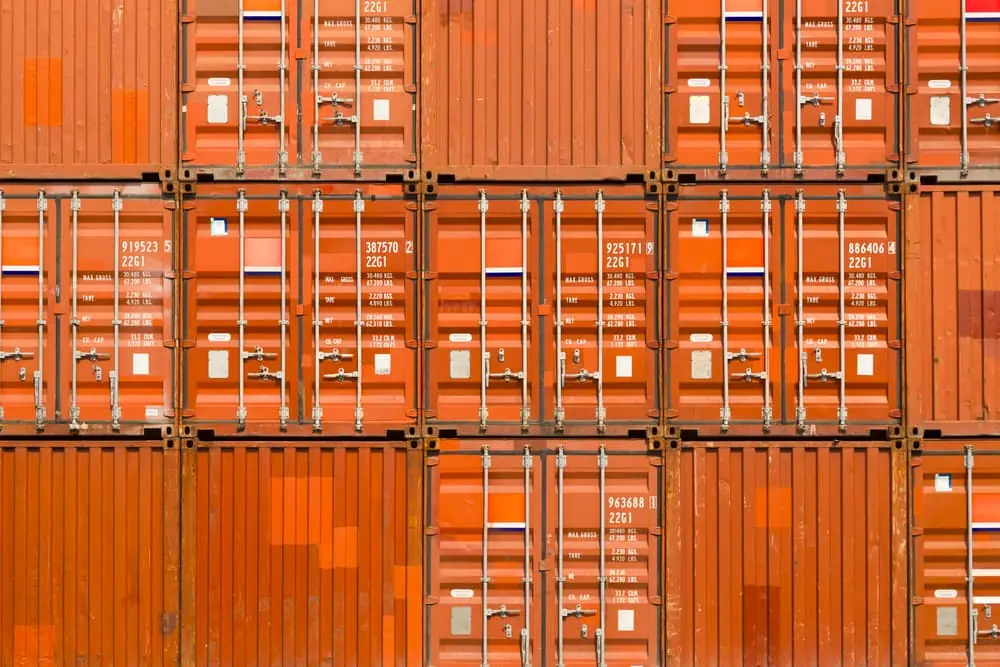
What Is A Cargo Container
Standard 20' & 40' cargo containers can be moved easily from truck to rail or ship. FreightCenter arranges pickup and delivery of container freight.
Explore Related FreightCenter Services
Container Shipping Services Intermodal Shipping Services International Shipping Services


What Is A Cargo Container?
A sea cargo container is a large metal container used for shipping goods via sea transport. These containers are designed to be durable and able to withstand the harsh conditions of long ocean voyages. Sea cargo containers come in standard sizes of 20 feet, 40 feet, and 45 feet in length, and are generally 8 feet wide and 8.5 feet high. They are constructed with heavy-duty steel walls, floors, and roofs, and are typically lined with wood or other materials to protect the cargo from damage during transit.
The use of standardized sea cargo containers has revolutionized the shipping industry, as it allows for easy loading and unloading of goods from ships, trains, and trucks without the need for extensive handling or repackaging of the cargo. This has greatly reduced transportation costs and improved efficiency in global trade.
Why Choose Us For A Freight Quote?
- Shipping Quotes anytime
- Get Freight Shipping Quotes to anywhere in the U.S. & Canada.
- Unbeatable discounts on your freight LTL, truckload, rail, air, and more
- Automated Freight tracking, paperwork & invoices
- Manage all quotes & shipments in one place
- 24+ years of logistics experience working for you!





Thousands of businesses trust FreightCenter to move their freight faster, smarter, and cheaper! From unbeatable rates to top-notch service, our customers are raving about their shipping success.
See why they keep coming back!
Award-Winning Service, Trusted by Shippers Everywhere!
- 2021, 2017 & 2016 Food Logistics’ Top Green Providers
- 2021 & 2018 Supply & Demand Chain Executives’ Pros to Know: Matthew Brosious
- 2020 & 2019 Top Food Logistics’ 3PL & Cold Storage Provider Award
- 2020 & 2019 Business Observer’s Top 500 Companies on the Gulf Coast
- 2020 & 2017 SmartWay® Transport Partner
- 2020 & 2017 Food Logistics’ Champions: Rock Stars of the Supply Chain
- 2020 Best of Palm Harbor Awards for Local Businesses
- 2017 Green Supply Chain Award from Supply & Demand Chain Executive
- 2017 Tampa Bay Business Journal Heroes at Work
- 2016, 2015, & 2012 Food Logistics Top 100 Software and Technology Providers
- 2013 Tampa Bay Business 100 by Tampa Bay Business Journal
- 2013 Top 100 Great Supply Chain Partners by SupplyChainBrain
- 2012 TIA Samaritan Award Honorable Mention
- 2012, 2011 & 2010 TBBJ Fast 50 Recipient
- 2013, 2011, & 2010 Diversity Business Top Businesses
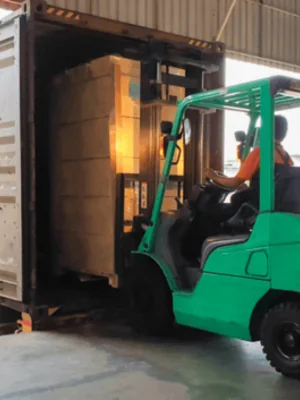
Types of Cargo Containers
Not all containers are created equal. Here are some of the most common types you’ll come across:
-
Standard Dry Containers (20-ft and 40-ft): Used for most general cargo.
-
High Cube Containers: Similar to standard, but with an extra foot of vertical space.
-
Refrigerated Containers (Reefers): Temperature-controlled for perishables.
-
Open Top Containers: Ideal for tall or oddly shaped cargo loaded from above.
-
Flat Rack Containers: Great for heavy machinery or oversized equipment.
-
Tank Containers: Used for liquids, chemicals, or hazardous materials.
Knowing which type fits your cargo ensures safe transit and avoids costly damage or delays.
Standard Sizes and Uses of Cargo Containers
Cargo containers can easily be moved from one transportation mode to another. This is called intermodal shipping. This means the cargo is carried by more than one transportation system. Carriers that use cargo containers to transport goods over long distances by train or ship internationally use these containers.
There are two types of freight shipping: full container load (FCL) and partial container load (PCL). Freight that travels by rail or ship is typically less expensive than freight that moves by truck or air because the transit time is much longer.
Choosing the Right Container for Your Freight
The right container protects your goods and streamlines your logistics. Here’s what to consider:
-
Dimensions and volume: Will your cargo fit comfortably?
-
Weight: Overweight shipments may need specialized permits.
-
Cargo type: Is refrigeration or special handling needed?
-
Port and route access: Not every port or rail yard supports every container type.
Our logistics experts can help you make the right call for your freight and avoid costly mistakes.
At FreightCenter, we don’t believe in one-size-fits-all shipping. Our finely-tuned freight solutions are designed around you—from small business LTL shipments to complex global container moves. Whether your cargo needs a standard dry container, a flat rack, or something custom, we deliver precision, reliability, and industry know-how at every step.
Need to ship pallets, crates, or loose freight? Our LTL experts find you the best rates across top carriers—no guesswork, just reliable service. Ideal for businesses shipping cargo that doesn’t fill a whole truck or container.
When you need more space or control, we deliver full or partial truckload options with dry van, flatbed, and refrigerated equipment. FreightCenter simplifies everything from pickup to drop-off—at rates that make sense.
On a deadline? Our expedited services move freight fast—across town or across the country. We handle everything from urgent single shipments to full truckloads that just can’t wait.
From oversized machinery to international container shipments, FreightCenter handles freight that doesn’t fit the mold. We coordinate specialized equipment, permits, white glove service—and global shipping via cargo containers.
 Guaranteed competitive pricing every time you ship.
How FreightCenter by BlueGrace Can Help
At FreightCenter by BlueGrace, we’ve been connecting shippers with the right containers and carriers since 1998. We offer:
-
Nationwide and international container shipping
-
Access to trusted intermodal and ocean freight carriers
-
Support with FCL and LCL shipments
-
Guidance on customs, documentation, and freight insurance
-
Real-time tracking and visibility tools
No matter what you’re shipping, we make container logistics easy to manage—and easier to afford.
Look Up More Freight Terms
- ACCESSORIALS
- BILL OF LADING (BOL)
- BILLING ADJUSTMENT
- BLANKET WRAPPED FREIGHT
- BLIND SHIPMENT
- CARGO CARRIERS
- CARGO COMPANIES
- CARGO CONTAINERS
- CARRIER LANES
- CARTAGE SERVICES
- CHEAPEST FREIGHT
- COMMERCIAL TRUCKING
- COMMON CARRIERS
- CONSIGNOR / CONSIGNEE
- CONSOLIDATED FREIGHT
- CONTAINER FREIGHT
- CRATING SERVICES
- CURBSIDE PICKUP
- DENSITY CALCULATOR
- DISCOUNT FREIGHT
- DOMESTIC FREIGHT
- DRAYAGE
- DROP DECK
- DROP SHIPPING
- DRY VAN
- EBAY FREIGHT SHIPPING
- ENGINE SHIPPING
- EQUIPMENT SHIPPING
- ESTATE SHIPPING
- EXPEDITED FREIGHT
- FAST FREIGHT SERVICES
- FINAL MILE
- FIRST MILE
- FREEZE PROTECTION
- FREIGHT ACCESSORIALS
- FREIGHT AGENCY
- FREIGHT AGENTS
- FREIGHT BILL AUDIT
- FREIGHT BROKER
- FREIGHT CARRIER
- FREIGHT CENTER
- FREIGHT CLASS
- FREIGHT COMPANIES
- FREIGHT CONSOLIDATION
- FREIGHT COST
- FREIGHT FORWARDER
- FREIGHT FORWARDING
- FREIGHT HAULER
- FREIGHT HAULING
- FREIGHT INSURANCE
- FREIGHT LIABILITY
- FREIGHT LINES
- FREIGHT LOAD
- FREIGHT MATCHING
- FREIGHT QUOTE
- FREIGHT RATE CALCULATOR
- FREIGHT RATES
- FREIGHT SERVICES
- FREIGHT SHIPPING
- FREIGHT SHIPPING CALCULATOR
- FREIGHT SHIPPING COST
- FREIGHT SHIPPING QUOTES
- FREIGHT SHIPPING RATES
- FREIGHT SHIPPING SERVICES
- FREIGHT TERMINAL
- FREIGHT TRANSPORTATION
- FREIGHTWAYS
- GOVERNMENT SHIPPING
- GROUND FREIGHT
- HANDLING UNIT
- HAZMAT
- HEAVY FREIGHT
- INSIDE DELIVERY & PICKUP
- INTERNATIONAL FREIGHT SHIPPING
- INTERSTATE FREIGHT
- INTERSTATE TRUCKERS
- LIFT GATE
- LIMITED ACCESS
- FREIGHT LOGISTICS COMPANIES
- LTL
- LTL TRANSPORTATION
- LTL TRUCKING
- MILITARY FREIGHT
- MOTOR FREIGHT
- MOVING COMPANIES
- MOVING FREIGHT
- NOT OTHERWISE INDICATED (NOI)
- OVERSIZE FREIGHT
- OVERWEIGHT OR HEAVY FREIGHT
- PARCEL SHIPPING
- PERSONAL EFFECTS
- POUNDS PER CUBIC FEET (PCF)
- PROOF OF DELIVERY
- REFRIGERATED FREIGHT
- SEA CARGO CONTAINER
- SHIPPERS
- SHIPPING
- SHIPPING COMPANIES
- SHIPPING COST
- SHIPPING FURNITURE
- SHIPPING LABELS
- SHIPPING RATES
- SHIPPING SERVICE
- SMALL BUSINESS SHIPPING
- SUPPLY CHAIN LOGISTICS
- THIRD-PARTY LOGISTICS (3PL)
- TRADESHOW SHIPPING
- TRANSPORTATION BROKERS
- TRANSPORTATION COMPANIES
- TRUCKING
- TRUCKING BROKER
- TRUCKING BUSINESS
- TRUCKING COMPANIES
- TRUCKING COST PER MILE
- TRUCKING RATES
- TRUCKING SERVICE
- WHITE GLOVE SERVICE
- YELLOW FREIGHT
Frequently Asked Questions About Cargo Containers
Q. What is a cargo container?
A cargo container is a large, durable metal box used to transport goods via truck, train, or ship. It allows for intermodal shipping without unloading and reloading.
Q. What are the standard sizes of cargo containers?
The most common sizes are 20-foot and 40-foot containers. High cube containers are also available, offering extra vertical space (9’6” high instead of 8’6”).
Q. What is the difference between a cargo container and a shipping container?
There is no difference—“cargo container” and “shipping container” are used interchangeably in logistics.
Q. How much does it cost to ship a cargo container?
Costs vary by distance, container size, transportation mode, and services required. Domestic shipments may start under $2,000, while international shipments often exceed $5,000.
Q. What can be shipped in a cargo container?
You can ship machinery, electronics, furniture, food, construction materials, and even vehicles. Special containers may be needed for hazardous or refrigerated items.
Q. What is FCL vs. LCL shipping?
FCL (Full Container Load) means you book the entire container. LCL (Less than Container Load) means you share space with other shipments. FCL is better for larger loads or high-value items.
Q. Are cargo containers waterproof?
Yes, standard shipping containers are designed to be weather-resistant and protect cargo from rain, wind, and seawater during transit.
Q. How much weight can a cargo container hold?
A 20-ft container typically holds up to 44,000 pounds of cargo. A 40-ft container can carry around 59,000 pounds, depending on regulations and transport method.
Q. What types of cargo containers are there?
Common types include dry containers, refrigerated containers (reefers), open-top containers, flat racks, and tank containers for liquids.
Q. Can I track my cargo container in real time?
Yes. Many freight providers, including FreightCenter, offer real-time GPS tracking and shipment visibility tools for cargo containers.
Q. Do I need insurance when shipping a cargo container?
Insurance is highly recommended. While carriers have limited liability, freight insurance protects you from financial loss due to damage or delays.
Q. How do I choose the right container for my shipment?
Consider cargo size, weight, temperature needs, and loading requirements. Our team at FreightCenter can help you match your freight with the right container.
Q. What paperwork is required for container shipping?
You may need a bill of lading, commercial invoice, packing list, and customs forms, especially for international shipments.
Q. Can I use a cargo container for domestic U.S. shipping?
Yes, containers are commonly used for long-haul freight across the U.S. by truck or rail, especially for large or bulk shipments.
Q. How do I book a cargo container through FreightCenter?
Simply use our free quote tool or call us at (800) 716-7608. We’ll help you compare rates, carriers, and transit options.
Surprising Facts About Cargo Containers
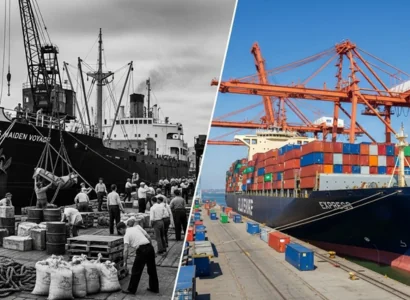
One Invention That Changed the Entire World
Before standardized cargo containers, shipping was expensive, slow, and labor-intensive. The invention of the modern intermodal container by Malcolm McLean in 1956 cut loading times significantly and slashed shipping costs—revolutionizing global trade and giving rise to our modern supply chains.
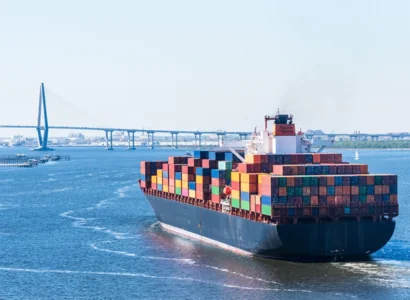
Over 90% of Global Trade Moves in Containers
Roughly 90% of the world’s goods are transported in cargo containers at some point in their journey. That includes everything from cars and clothing to electronics and medical supplies—all packed inside the same steel boxes that stack like LEGO bricks on ships, trains, and trucks.

If You Lined Up All Shipping Containers, They’d Circle the Earth
There are an estimated over 20 million shipping containers in active use today. If you stacked them end to end, they’d wrap around the planet more than twice—a testament to how vital these containers are in keeping the global economy moving.